



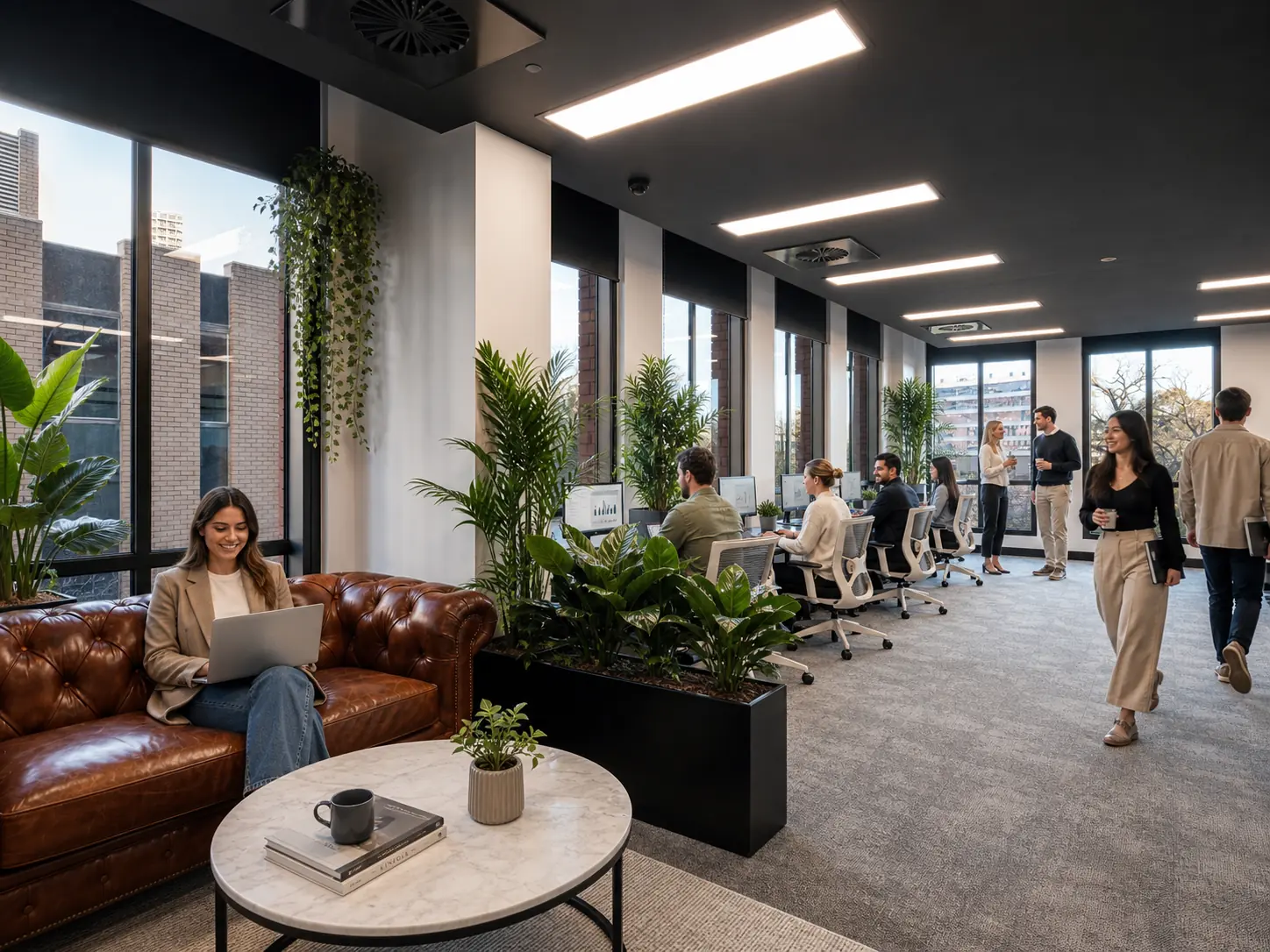
Coworking Spaces: How Small Teams Replace Traditional Offices
For decades, securing a traditional office was considered an essential step in building a credible business.
You found a property, signed a long-term lease, purchased furniture, connected utilities and hoped the space would continue to suit your team for years.
That model no longer works for every small business.
Changing remote work trends, rising operating costs and unpredictable growth have encouraged small teams to reconsider what they need from a workplace. Increasingly, businesses are replacing traditional offices with professionally managed coworking spaces.
The shift is not simply about saving money. It is about creating a workplace that can move at the same speed as the business.
Why Small Teams Are Moving Away From Traditional Offices
A traditional office can provide control and privacy, but it also creates significant financial and operational responsibilities.
Small businesses may need to manage:
- Long-term lease commitments
- Rental bonds or bank guarantees
- Furniture and office fit-outs
- Internet, electricity and utilities
- Cleaning and maintenance
- Meeting room infrastructure
- Reception and visitor management
- Security and access systems
- Repairs and ongoing administration
These costs continue whether the office is busy, half-empty or no longer suitable.
For a small team, the office can quickly become another operation to manage.
Coworking changes that equation. Instead of building and operating an office independently, businesses can access a ready-to-use workplace through one flexible agreement.
What Does Office Replacement Through Coworking Look Like?
An office replacement does not mean placing the entire team around a shared table.
Modern coworking spaces provide private, secure offices inside professionally managed workplaces. Teams retain their own dedicated space while gaining access to shared facilities and services.
Depending on the location and membership, this can include:
- Furnished private offices
- High-speed internet
- Meeting rooms and boardrooms
- Reception services
- Business lounges
- Kitchens and breakout areas
- Event and project spaces
- Podcast and content studios
- Mail and package management
- Cleaning and utilities
- On-site support teams
- Community events
The result is a complete business environment without the burden of establishing and operating every component independently.
1. Coworking Spaces Provide Greater Cost Clarity
The true cost of a traditional office extends well beyond rent.
Businesses must consider fit-out expenses, furniture, utilities, internet, cleaning, maintenance, security, technology and meeting room equipment.
Coworking spaces typically consolidate many of these expenses into one regular payment. This can simplify budgeting and provide a clearer understanding of the total monthly workplace cost.
When comparing options, businesses should evaluate the complete cost of occupancy, not simply compare a coworking membership with base rent.
Costs to include in a fair comparison
- Base rent and outgoings
- Fit-out and refurbishment
- Furniture
- Utilities
- Internet and technology
- Cleaning
- Repairs and maintenance
- Security and access
- Meeting room facilities
- End-of-lease make-good obligations
- Internal time spent managing the office
A traditional lease may initially appear cheaper. Once every expense is included, the result can look very different.
2. Flexible Workspaces Support Business Growth
Small businesses rarely grow in a perfectly predictable line.
A team might hire quickly after securing a major client, reduce its footprint during a quieter period or bring contractors together for a specific project. A fixed office can make each change expensive and disruptive.
Flexible workspaces allow businesses to adjust their workplace more easily.
A team may begin with a small private office, move into a larger space as it grows, add temporary project space or use meeting rooms only when required.
That flexibility helps businesses avoid paying for space they do not need today because they might need it in three years.
It is the workplace equivalent of building a strong bench. You gain access to additional capacity when required without carrying the full cost every day.
3. Coworking Complements Remote Work Trends
Remote work has changed the purpose of the office.
For many teams, the workplace is no longer where every employee completes every task. It is where people come together to collaborate, make decisions, meet clients and maintain a shared culture.
Businesses may not need a large permanent office for every employee. They may need a smaller, better-equipped workplace that supports purposeful attendance.
Coworking spaces can support hybrid teams by combining:
- Private areas for focused work
- Meeting rooms for collaboration
- Informal spaces for conversation
- Professional settings for client meetings
- Technology for video calls
- Flexible access for different schedules
Instead of abandoning the office, small businesses can reshape it around how their teams work.
4. Small Team Workspaces Can Improve Productivity
Working from home can be effective, but it is not ideal for every person or task.
Employees may face distractions, limited space, isolation, unreliable technology or difficulty separating work from personal life. Meetings in cafés can also create challenges around privacy, noise and professionalism.
Purpose-built small team workspaces create clearer conditions for productive work.
A well-designed coworking space should support different working styles through:
- Quiet work areas
- Private offices
- Phone booths
- Meeting rooms
- Breakout spaces
- Informal lounges
- Technology-enabled collaboration areas
Productivity is not created by putting everyone in the same room. It comes from giving people the right environment for the work they need to perform.
5. Collaborative Work Environments Build Connection
Small businesses can feel isolated in private offices, particularly when teams are working hybrid schedules.
Coworking spaces place businesses inside broader collaborative work environments. This creates opportunities to connect with founders, professionals, suppliers, customers and potential partners.
The value is not networking for the sake of collecting contacts. Strong coworking communities can create practical commercial outcomes through introductions, referrals, partnerships and shared knowledge.
The best coworking communities create energy without compromising privacy or productivity.
6. Coworking Can Strengthen the Employee Experience
The quality of a workplace can influence how employees feel about their organisation.
A small business may struggle to independently provide premium meeting rooms, breakout areas, hospitality services, wellness amenities and professional event spaces.
Coworking allows smaller teams to access facilities that may otherwise only be available to larger organisations.
This can support:
- Employee attraction and retention
- Team connection
- Workplace satisfaction
- Professional development
- Client confidence
- A stronger sense of belonging
For employees, the workplace becomes more than a desk. It becomes a place where they can work effectively and feel connected.
7. Businesses Can Focus on Their Actual Work
Operating an office takes time.
Someone must handle deliveries, internet issues, meeting room bookings, visitors, repairs, supplies, access cards and service providers. In a small business, those responsibilities often fall to a founder or manager whose time could be better spent elsewhere.
Managed coworking spaces remove much of that operational load.
An on-site team can support the daily workplace experience, allowing business leaders to focus on customers, employees and growth.
A small team should be playing the game, not maintaining the stadium.
Traditional Office vs Coworking Space
| Consideration | Traditional office | Coworking space |
|---|---|---|
| Commitment | Usually longer-term | More flexible options |
| Initial investment | Often substantial | Usually lower |
| Furniture and fit-out | Managed by the business | Commonly included |
| Utilities and internet | Separately managed | Often included |
| Meeting rooms | Created and maintained internally | Shared access available |
| Reception | Additional staffing cost | Often available |
| Growth | May require relocation | Space can often be adjusted |
| Community | Limited to your team | Broader business ecosystem |
| Administration | Managed internally | Supported by the operator |
| Customisation | Greater control | Depends on the provider |
Neither model is automatically right for every business. The best choice depends on how the team works, how quickly it may change and how much operational responsibility the business wants to carry.
How to Evaluate a Coworking Space
Not all coworking spaces provide the same level of privacy, service or flexibility.
Before moving, small businesses should assess the complete experience.
Location and accessibility
Consider whether the space is convenient for employees, clients and business partners.
Review:
- Public transport
- Parking
- Nearby cafés and services
- Accessibility
- Employee travel times
- Proximity to customers
A beautiful workplace will not solve much if the team finds it difficult to reach.
Privacy and security
Ask how private offices are secured and whether confidential conversations can be conducted comfortably.
Review:
- Building access controls
- Guest management
- Network security
- Lockable storage
- Acoustic privacy
- After-hours access
Meeting room availability
Meeting rooms are valuable only when the team can access them.
Review how bookings work, what is included and whether additional charges apply. Check that the rooms suit internal meetings, client presentations and video calls.
Membership flexibility
Understand how easily the business can add desks, change offices or access other locations.
Ask about:
- Minimum commitment periods
- Notice requirements
- Expansion options
- Additional users
- Multi-location access
- Meeting room inclusions
- Project and event spaces
Workplace atmosphere
Visit the space during a normal working day.
The environment should feel active and welcoming without becoming distracting. Observe the noise levels, professionalism, cleanliness and how the on-site team interacts with members.
Community and support
A strong operator should do more than provide keys and internet access.
Look for a team that actively supports members, manages the workplace well and creates meaningful opportunities for connection.
Questions to Ask Before Making the Move
- What is included in the monthly cost?
- Are utilities, internet and cleaning included?
- How many meeting room hours does the team receive?
- Can the office expand as the business grows?
- What happens if the team becomes smaller?
- Are private offices lockable and acoustically suitable?
- Can employees access other locations?
- What support is available on-site?
- Are there additional charges for visitors or services?
- What are the notice period and exit conditions?
- Is the environment appropriate for clients?
- Can the space support hybrid attendance patterns?
Clear answers help teams compare each option based on practical value, not appearance alone.
When Coworking May Not Be the Right Choice
Coworking spaces are not suitable for every organisation.
A traditional office may remain preferable when a business requires:
- Extensive custom infrastructure
- Highly specialised security
- Large amounts of permanent storage
- Complete control over branding and layout
- Industrial or technical facilities
- A consistently occupied headquarters
The decision should reflect the business model rather than workplace fashion.
Coworking works best when flexibility, service and access to shared infrastructure are more valuable than complete control over the property.
Creating a Smooth Transition to Coworking
Involve the team
Ask employees what they need to work effectively. Consider commuting patterns, privacy, collaboration, technology and preferred attendance days.
Test the environment
Where possible, use the space before making a longer commitment. Hold a team day, book a meeting room or arrange a short trial.
Establish hybrid work expectations
Clarify when employees should attend, how desks and rooms are booked and which activities are best completed together.
Communicate the benefits
Explain why the business is making the move. Focus on improved facilities, flexibility, connection and support rather than presenting the decision purely as a cost-saving exercise.
Review the arrangement regularly
Team requirements will continue to change. Review the workplace after the first few months and adjust the membership, office size or attendance model when required.
The Future of Small Business Workspaces
The office is not disappearing. Its role is changing.
Small businesses still need places where employees can connect, clients can be welcomed and important work can happen. What they increasingly reject is the assumption that they must carry a long lease and operate every part of the workplace themselves.
Coworking spaces provide a more flexible alternative.
They combine private offices, professional facilities, shared infrastructure and community within one managed environment. For many small business teams, this makes coworking a credible long-term workplace strategy rather than a temporary solution.
The right workplace should support the business as it is today while creating room for what it could become tomorrow.
Find the Right Coworking Space for Your Team
CreativeCubes.Co provides flexible private offices, coworking memberships, meeting rooms, event spaces and professional business facilities across a growing network of locations.
Whether your team is replacing a traditional office, moving beyond remote work or preparing for its next stage of growth, our spaces are designed to help your people connect, perform and grow.
Book a tour and discover a more flexible way to work.
Frequently Asked Questions
Are coworking spaces suitable for small businesses?
Yes. Coworking spaces can provide small businesses with private offices, meeting rooms, internet, reception services and shared facilities without requiring them to establish and manage a traditional office.
Is coworking cheaper than renting an office?
It depends on the location, team size and facilities required. Compare the total cost of a traditional office, including rent, outgoings, fit-out, utilities, cleaning, technology and maintenance.
Can a team have a private office inside a coworking space?
Yes. Many coworking providers offer furnished, lockable private offices within a broader shared workplace.
How do coworking spaces support hybrid work?
Coworking spaces allow businesses to maintain a professional team base without providing one permanent desk for every employee. Teams can use private offices, shared desks and meeting rooms according to their schedules.
What should a business look for in a coworking space?
Evaluate location, cost, privacy, meeting room access, internet quality, flexibility, security, on-site support and the ability to expand or reduce the space.
Can coworking permanently replace a traditional office?
Yes. For many small teams, coworking can serve as a long-term office replacement by providing the facilities, privacy and professional services required to operate effectively.
Book a tour today and discover why thousands of Australian businesses are replacing traditional offices