



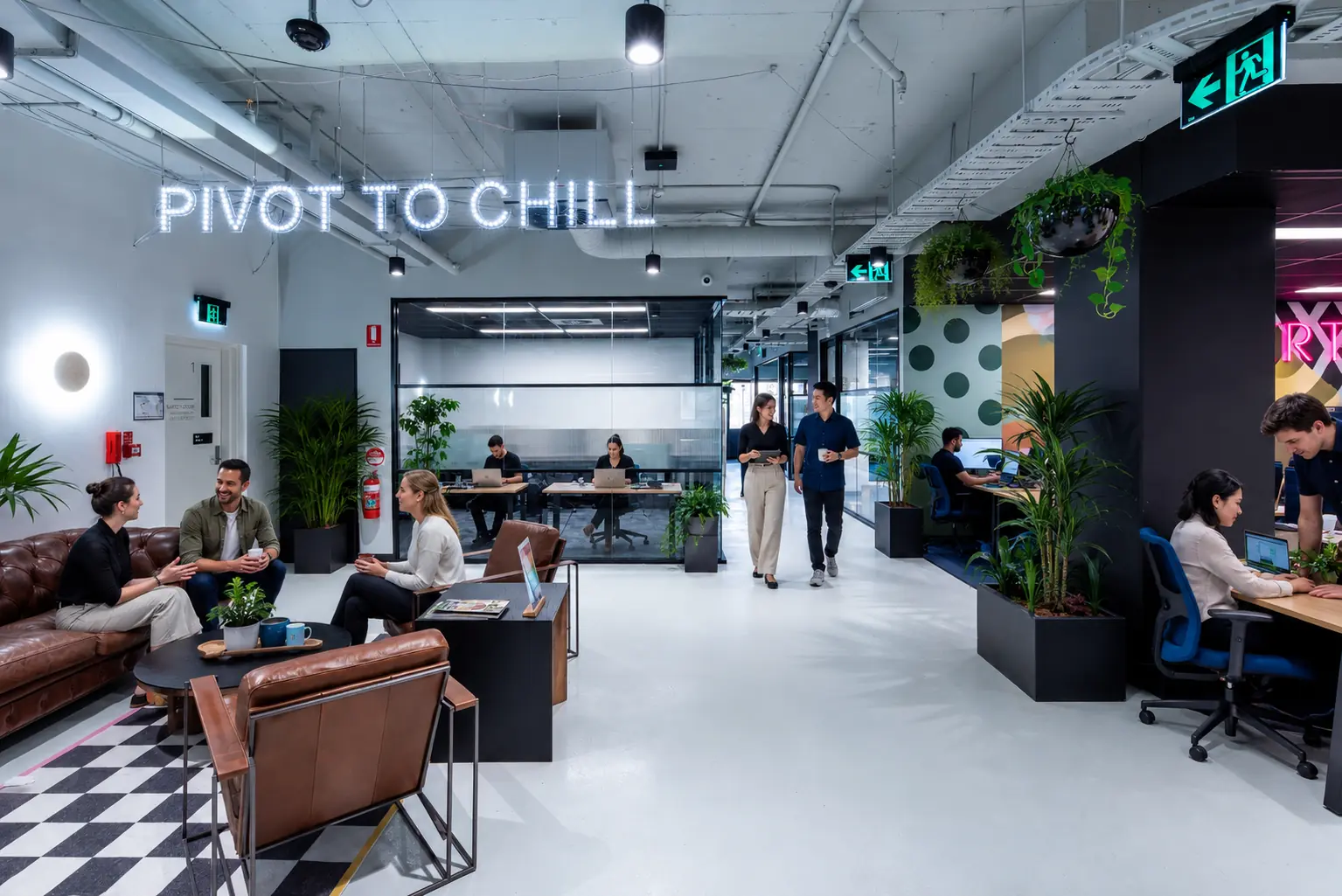
For a growing small or medium-sized business, securing an office can feel like a major milestone. It signals progress, creates a home for the team and provides a professional environment for clients.
But the wrong office commitment can quickly become a handbrake on growth.
Traditional leases often require businesses to predict their team size, operating model and workspace requirements years in advance. For an SME moving at speed, that is like selecting a stadium before knowing how many players will make the squad.
The right workspace should support momentum, not restrict it. Here are the most common office lease mistakes growing SMEs should avoid, and why coworking spaces and flexible workspaces can offer a smarter path to scale.
1. Committing to More Space Than You Need
One of the most common mistakes is leasing an office based on optimistic future headcount rather than current requirements.
Business owners may secure enough space for the team they expect to have in three or five years. Until that growth arrives, the company carries the cost of empty desks, unused rooms and unnecessary overheads.
This creates a difficult trade-off:
- Lease too little space and the business may quickly outgrow it.
- Lease too much space and capital is tied up in an underused asset.
- Choose the wrong configuration and productivity can suffer.
Coworking spaces reduce this risk by allowing businesses to start with the space they need now and expand as the team grows. This creates genuine office space scalability without paying years in advance for growth that has not happened yet.
2. Underestimating the True Cost of a Traditional Lease
Base rent is only one part of the cost of operating a traditional office.
Growing SMEs also need to account for:
- Fitout and furniture
- Internet and technology infrastructure
- Electricity and utilities
- Cleaning and maintenance
- Security and access systems
- Meeting room equipment
- Kitchen facilities and supplies
- Repairs and ongoing building management
- Make-good obligations at the end of the lease
These costs can turn an apparently competitive rental rate into a significant operational commitment.
Flexible workspaces typically consolidate many of these expenses into a predictable membership fee. This provides clearer cost visibility and allows businesses to direct more capital towards people, technology, sales and customer growth.
3. Signing a Lease That Does Not Match the Growth Plan
Traditional commercial leases commonly operate over several years. That structure may suit a stable organisation with highly predictable workplace requirements, but growing SMEs rarely operate in a straight line.
A business may:
- Hire faster than expected
- Enter a new market
- Restructure its team
- Move to a hybrid operating model
- Win a major contract
- Need project space for a limited period
- Reduce its permanent office footprint
Without long-term lease flexibility, each of these changes can create unnecessary cost or operational friction.
Before signing any office agreement, leaders should test it against multiple growth scenarios. What happens if the team grows by 30 per cent? What if fewer employees attend the office each day? What if the business needs space in another city?
Coworking spaces allow businesses to adapt their workspace as operating conditions change. The space can move with the business rather than forcing the business to work around the lease.
4. Treating Every Employee as a Full-Time Desk Requirement
Many office plans still assume every employee needs a dedicated desk five days a week. For hybrid teams, this can result in large sections of the office sitting empty.
A better approach is to understand how the team actually works.
Consider:
- How many people attend on peak days?
- Which employees need dedicated desks?
- How often are meeting rooms used?
- Does the team need quiet areas or collaborative zones?
- Are employees working across multiple locations?
- How much space is needed for clients and visitors?
Coworking spaces can support different work patterns through private offices, flexible desks, business lounges, bookable meeting rooms and collaborative areas.
This provides SMEs with a more efficient small business workspace while still giving employees a professional and engaging place to work.
5. Ignoring Future Expansion Requirements
A traditional office can work well when a team moves in. The real test comes when the business adds another five, ten or twenty employees.
If the building cannot provide additional space, the company may need to:
- Operate across disconnected offices
- Place too many people into the existing workplace
- Sublease another space
- Relocate earlier than planned
- Pay for an expensive new fitout
These disruptions consume time, money and leadership attention.
Office space scalability should be assessed before an agreement is signed. Flexible workspaces make expansion simpler because businesses can often add offices, desks or meeting room access within the same location or broader network.
That flexibility provides a stronger platform for growth without forcing the business through a complete office relocation every time the team reaches its next stage.
6. Overlooking Employee Experience
An office is not simply a container for desks. It influences collaboration, energy, wellbeing, culture and an employee’s connection to the business.
A low-cost traditional office may appear financially attractive, but the saving becomes less meaningful if the environment is difficult to access, poorly equipped or uninspiring.
SME office needs should include the experience the workplace creates. Important considerations include:
- Natural light and comfortable work areas
- Reliable technology
- Convenient transport access
- Quality meeting facilities
- Breakout and collaboration spaces
- Hospitality and front-of-house support
- Events and community experiences
- Nearby food, retail and lifestyle amenities
Well-designed coworking spaces give SMEs access to workplace experiences that can be difficult or expensive to create independently.
7. Choosing Location Based Only on Rent
Rent matters, but location affects far more than the monthly occupancy cost.
An inconvenient office can make recruitment harder, reduce attendance and create unnecessary travel for employees and clients. A strong location can improve accessibility, increase visibility and help the business connect with customers, partners and talent.
Before committing, businesses should assess:
- Public transport access
- Proximity to clients and partners
- Availability of parking
- Surrounding hospitality and services
- Employee commuting patterns
- Access to other business districts
- The professional impression created by the address
Flexible workspaces give SMEs the opportunity to establish a presence in well-connected locations without carrying the full cost of operating a standalone office.
8. Failing to Plan for Hybrid Work
Hybrid work has changed what businesses need from an office.
The workplace must now compete with the convenience of working from home. It needs to provide a clear reason for people to attend, whether that is collaboration, connection, focus, learning or access to better facilities.
A traditional office replacement should not simply reproduce rows of desks in a different building. It should create a more useful and adaptable workplace experience.
Effective hybrid workspaces may include:
- Private areas for focused work
- Meeting rooms for collaboration
- Informal spaces for team connection
- Technology for virtual meetings
- Flexible access for different schedules
- Event spaces for larger gatherings
- Multiple locations for distributed teams
Coworking spaces provide many of these features without requiring the business to design, build and operate them independently.
9. Forgetting About Meeting and Client Space
Some businesses focus entirely on desk capacity and underestimate the importance of meeting rooms, presentation spaces and private areas.
This can become a serious issue for client-facing teams. Employees may struggle to find appropriate rooms, confidential conversations may be compromised and the workplace may not reflect the quality of the brand.
When assessing a small business workspace, leaders should consider both everyday desk requirements and peak meeting demand.
A flexible workspace can provide access to professionally designed meeting rooms without requiring the business to lease spaces that remain unused for most of the week.
10. Accepting Unnecessary Operational Distractions
Managing an office requires ongoing attention. Someone needs to coordinate maintenance, technology, deliveries, cleaning, supplies, access, contractors and unexpected issues.
For a growing SME, every hour spent managing the office is an hour not spent serving customers or building the business.
Coworking spaces remove much of this operational load. A dedicated workspace team can manage the environment while the business remains focused on growth.
This is one of the most valuable differences between a traditional lease and a flexible workspace. It is not only about the space. It is about the service, support and time returned to the business.
11. Ignoring Community and Business Connections
A standalone office can provide privacy, but it can also isolate a growing team from the broader business community.
Coworking spaces bring different companies, professionals and industries into the same environment. This can create opportunities for:
- New customer relationships
- Professional referrals
- Supplier connections
- Employee networking
- Knowledge exchange
- Business partnerships
- Community events and learning
These connections cannot be guaranteed, but the right environment increases the opportunity for them to happen.
For SMEs, a workspace should do more than accommodate the team. It should help the business build momentum.
12. Waiting Until the Office Becomes a Problem
Businesses often delay reviewing their workspace until the team is overcrowded, the lease is approaching expiry or operating costs become unmanageable.
At that point, the available options may be limited.
Workspace planning should begin well before a major trigger. Leaders should regularly review:
- Current attendance patterns
- Workspace cost per employee
- Meeting room demand
- Employee feedback
- Expected headcount
- Geographic expansion
- Lease expiry dates
- Operational workload
Early planning gives the business more control and creates time to compare traditional leases, serviced offices, private offices and coworking spaces properly.
Why Flexible Workspaces Make Sense for Growing SMEs
A flexible workspace gives SMEs the ability to match their office commitment to the reality of the business.
Instead of taking on a long lease, managing a fitout and forecasting requirements years ahead, businesses can access ready-to-use spaces with shorter commitments and built-in services.
The key advantages can include:
- Greater long-term lease flexibility
- Easier expansion and contraction
- Predictable workspace costs
- Access to premium meeting rooms
- Professional front-of-house support
- Reduced fitout and setup requirements
- Multiple workspace options
- Community and networking opportunities
- Less day-to-day office administration
For growing businesses, flexibility is not a lack of commitment. It is a strategic advantage.
Find a Workspace That Moves With Your Business
CreativeCubes.Co provides coworking spaces, private offices, meeting rooms, business lounges and event spaces designed for ambitious Australian businesses.
Our flexible workspaces give growing SMEs the professional environment, community and operational support they need, without being locked into a workplace that may no longer suit them in two years.
Whether you are building a team, introducing hybrid work or looking for a traditional office replacement, CreativeCubes.Co can help you create a workspace strategy that supports your next stage of growth.
Explore CreativeCubes.Co locations or book a tour to find a workspace built to move at the speed of your business.
FAQs
What are the biggest risks of signing a traditional office lease?
The main risks include committing to the wrong amount of space, underestimating operating costs, losing flexibility and taking responsibility for fitout, maintenance and make-good obligations. These risks are greater for SMEs whose team size and workplace requirements may change quickly.
Are coworking spaces suitable for established SMEs?
Yes. Modern coworking spaces can provide private offices, meeting rooms, reception services, business lounges and customised workspace solutions. They can support established SMEs that want a professional office with greater flexibility and less operational complexity.
How do flexible workspaces support business growth?
Flexible workspaces allow businesses to add or reduce space as their team changes. They can also provide access to shared amenities, additional locations, meeting rooms and community connections without requiring a new long-term lease.
Are coworking spaces only for freelancers and startups?
No. Coworking spaces are used by freelancers, startups, SMEs, project teams and established organisations. Many businesses choose private offices within coworking environments to combine privacy with shared amenities and professional support.
What should an SME consider when choosing an office?
An SME should consider cost, location, flexibility, team attendance, growth plans, meeting room access, technology, employee experience and operational support. The workspace should meet current requirements while providing room to adapt.
Can a flexible workspace replace a traditional office?
Yes. A flexible workspace can act as a complete traditional office replacement by providing private offices, furniture, internet, meeting facilities, reception support and shared amenities under a flexible agreement.
How much office space does a growing SME need?
The answer depends on daily attendance, team structure, meeting demand and expected growth. Businesses should plan around actual utilisation rather than total employee numbers, particularly when operating a hybrid work model.
What is the difference between a private office and coworking?
A private office provides a dedicated, enclosed workspace for one business. Coworking generally provides access to shared desks, lounges and common areas. Many flexible workspaces offer both options, allowing businesses to combine privacy with shared facilities and community access.
How do I choose the right CreativeCubes.Co location?
Consider where you live, where your clients are based and how frequently you travel. Compare the workspace options, meeting facilities, transport connections and surrounding amenities available at each CreativeCubes.Co location.