



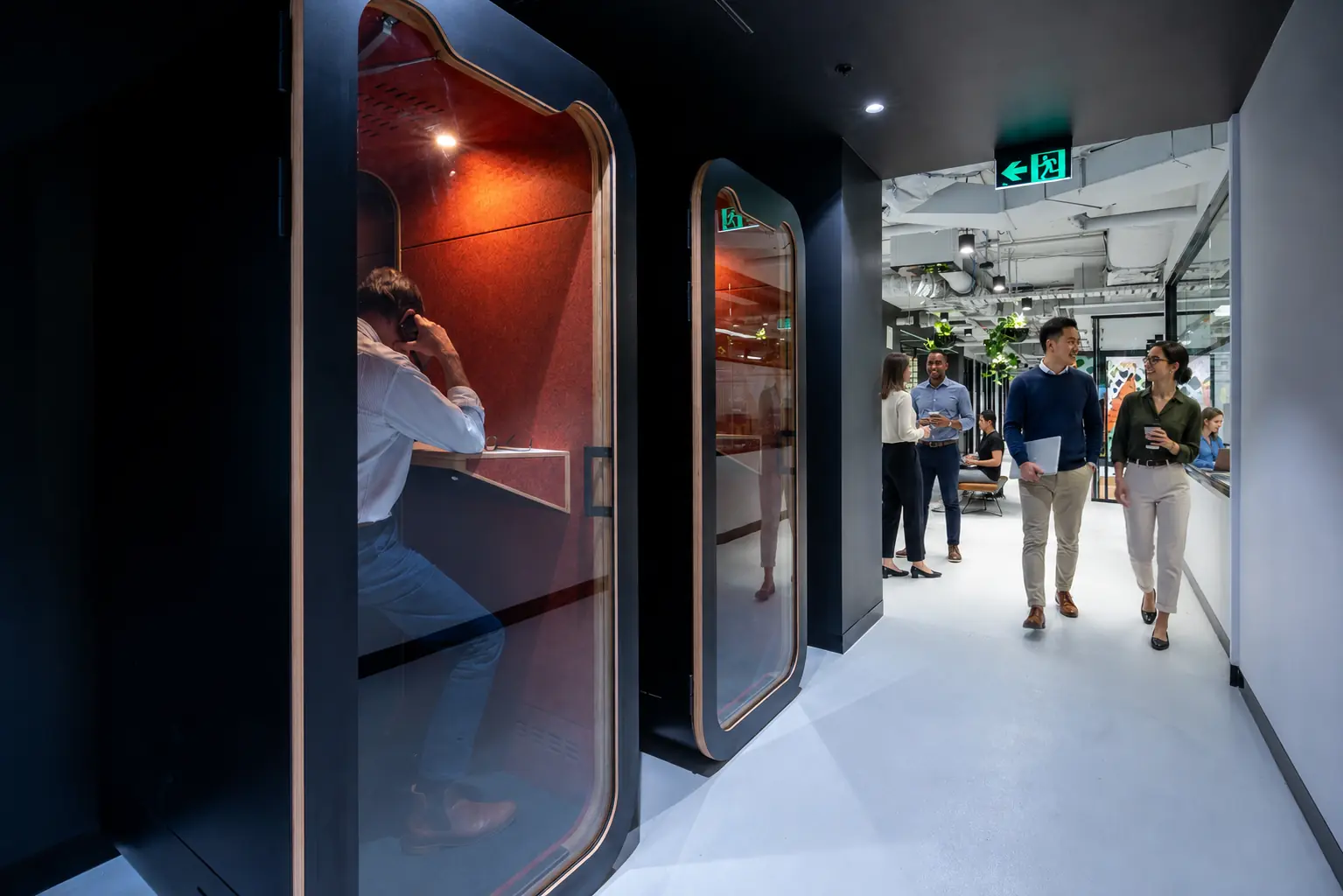
The Complete Guide to Scalable Office Space
Growing a business is exciting. Outgrowing your office every 12 months is not.
As teams expand, contract and adopt new ways of working, traditional leased offices can quickly become a constraint. A space that felt right when the lease was signed may soon be too small, too expensive or poorly suited to how the team actually works.
Flexible office space gives growing businesses a more adaptable alternative. It allows organisations to adjust their workspace as headcount, working patterns and operational priorities change, without repeatedly navigating expensive office relocations or restrictive long-term leases.
This guide explains how office space scalability works, where traditional offices fall short and what businesses should consider when choosing a flexible workspace.
What Is Scalable Office Space?
Scalable office space is a workplace that can adjust alongside a business.
Rather than committing to one fixed footprint for several years, businesses can access private offices, shared workspaces, meeting rooms and additional facilities based on their current requirements.
A scalable workplace may allow a business to:
- Add desks as its team grows
- Move into a larger private office
- Reduce its footprint when working patterns change
- Accommodate project teams for shorter periods
- Support employees working across home and office
- Access meeting rooms without maintaining them permanently
- Expand into additional locations
- Adjust its agreement without completing a full office relocation
The objective is not simply to find a bigger office. It is to create a workspace strategy that can move with the business.
Think of it like building a strong sporting squad. You need enough depth to perform today, without locking every position into a five-year contract before you know what next season requires.
Why Growing Businesses Outgrow Traditional Offices
Traditional commercial real estate is generally designed around certainty. Businesses agree to a fixed premises, lease term and cost structure.
Growing businesses rarely operate with the same level of certainty.
Headcount forecasts change. New contracts are won. Teams restructure. Hybrid work alters attendance. A business might need 20 desks today, 30 next quarter and only 24 permanent workstations once flexible working patterns settle.
This creates a mismatch between a changing business and a static office.
The most common traditional office limitations include:
Fixed Capacity
A traditional office has a defined number of desks, meeting rooms and collaboration areas.
Once the space reaches capacity, businesses may have to accept overcrowding, divide teams across different locations or begin another office search.
Taking substantially more space at the beginning can provide capacity, but it also means paying for empty desks while the business grows into the office.
Long-Term Commitments
Commercial leases can commit businesses to the same premises for several years.
That may suit established organisations with predictable workspace requirements. It can be more difficult for smaller businesses experiencing rapid growth, changing team structures or uncertain demand.
High Setup Costs
A leased office may require investment in:
- Design and fitout
- Furniture
- Internet infrastructure
- Utilities
- Security systems
- Cleaning
- Repairs and maintenance
- Kitchen facilities
- Meeting room technology
- Compliance and professional services
These costs can consume capital that could otherwise support recruitment, technology, marketing or product development.
Slow Expansion
Finding, negotiating, designing and fitting out a larger office takes time.
If a business wins a major contract or builds a new division, its workspace may need to expand much faster than the traditional commercial real estate process allows.
Underused Space
Businesses sometimes lease extra space to prepare for future business growth. If that growth takes longer than expected, the organisation carries the cost of unused desks and rooms.
Hybrid work can make this problem even more visible. A large office may be busy on Tuesday and Wednesday, then largely empty for the rest of the week.
How Flexible Office Space Supports Business Growth
Flexible office space separates workplace access from the limitations of one fixed, long-term footprint.
Instead of trying to predict exactly how much space the business will need several years from now, leaders can choose a workspace that supports the current team while preserving room to adapt.
1. Space Can Grow With Headcount
A scalable flexible workspace may allow a business to begin in one private office and move into a larger office or additional suite as the team expands.
This helps growing businesses avoid two expensive extremes:
- Leasing too little space and quickly becoming overcrowded
- Leasing too much space and paying for capacity they do not yet need
The right flexible workspace provides a practical runway for growth without forcing a business to fund the entire runway on day one.
2. Agreements Can Match Business Conditions
Flexible terms allow leaders to make workspace decisions based on a more realistic planning period.
This can be particularly valuable for:
- Startups approaching a funding milestone
- Professional firms building new service lines
- Project teams with defined delivery periods
- Businesses entering Melbourne, Sydney, Adelaide or Brisbane
- Organisations testing a new location
- Companies navigating mergers or restructures
- Teams moving from remote work into a physical office
Flexibility does not remove the need to plan. It reduces the cost of forecasts changing.
3. Shared Facilities Increase Usable Capacity
A private office does not need to contain every space a business might occasionally require.
Teams can use shared meeting rooms, breakout areas, kitchens, lounges and event spaces when needed. This gives businesses access to a wider workplace environment without having to lease and maintain every square metre exclusively.
For example, a 12-person business may require a large boardroom several times per month. In a traditional office, that boardroom occupies space every day. In a flexible workspace, the team can access it when required.
4. Hybrid Work Becomes Easier to Manage
Hybrid workspaces recognise that maximum headcount and daily attendance are not always the same.
A business may employ 30 people without requiring 30 assigned desks every day. Flexible configurations can combine private offices, shared areas, meeting rooms and bookable workspace to support changing attendance.
This helps teams build around how people work, rather than maintaining a desk-per-person model that may no longer reflect reality.
5. Operational Complexity Is Reduced
Managing an office involves more than paying rent.
Internet, cleaning, maintenance, utilities, furniture, reception, security and meeting room systems all require time, suppliers and internal oversight.
In a serviced flexible workspace, many of these responsibilities are managed as part of the workplace experience. This allows smaller teams and operations leaders to focus on running the business rather than becoming part-time facility managers.
No one starts a company because they are passionate about coordinating an internet technician and a broken dishwasher on the same Monday morning.
Signs Your Business Needs More Scalable Office Space
A business does not need to wait until every desk is occupied before reviewing its workplace.
Common signs include:
Your Team Has Outgrown Its Current Layout
Crowded desks, limited quiet space and constant competition for meeting rooms suggest the office is no longer supporting the team effectively.
You Are Paying for Empty Space
If substantial areas remain unused throughout the week, the business may be carrying more fixed space than it needs.
Headcount Is Difficult to Predict
When recruitment depends on new contracts, funding or market conditions, a long-term fixed footprint can create unnecessary risk.
Hybrid Attendance Is Creating Friction
An office that is empty on some days and overcrowded on others requires a more considered hybrid workspace strategy.
Client Meetings Are Becoming Difficult
If teams regularly struggle to find professional, private and technology-enabled rooms, the workplace may no longer support the organisation’s commercial needs.
Your Lease Is Influencing Business Decisions
Workspace should support strategy. It should not prevent a business from hiring, restructuring, relocating or entering a new market.
Office Management Is Consuming Too Much Time
When leaders spend increasing amounts of time managing facilities and suppliers, the true cost of the office is extending beyond rent.
Flexible Workspace Options for Growing Businesses
Flexible office space is not one standard product. Businesses can select and combine different workspace options according to team size, privacy requirements and working patterns.
Serviced Private Offices
A serviced private office provides a dedicated, secure workspace within a professionally managed environment.
It can suit businesses that need privacy and brand presence while still wanting access to shared amenities and flexible terms.
Team Offices
Team offices are designed for growing groups that want to work together in a dedicated area. Depending on the workspace, businesses may be able to expand into neighbouring offices or move to a larger suite as headcount changes.
Coworking Memberships
Coworking memberships provide access to shared professional workspaces. They can support mobile employees, smaller teams, remote workers and businesses that do not need a permanent desk for every person.
Dedicated Desks
Dedicated desks give individuals or smaller teams a consistent workstation while retaining access to a broader shared environment.
Meeting Rooms
Bookable meeting rooms allow businesses to access professional spaces when required without carrying the cost of permanent meeting facilities.
Project and Satellite Space
Flexible workspace can provide temporary capacity for project teams or a satellite office closer to employees, clients or key commercial districts.
Day Offices and Casual Access
Day offices can support occasional collaboration, interviews, planning sessions or periods when remote teams need to work together in person.
How to Assess Office Space Scalability
Not every flexible office offers the same ability to scale. Before committing, examine how the workspace would respond if your business changed.
Review Your Current and Future Headcount
Consider:
- Current employee numbers
- Expected recruitment
- Typical daily attendance
- Peak attendance
- Contractor and project team requirements
- Potential restructuring scenarios
Use realistic ranges rather than one perfect forecast.
For example, assess what the business would need at 12, 18 and 25 employees. This reveals whether the workspace has genuine expansion options.
Understand the Expansion Process
Ask the workspace provider:
- Can we move into a larger office within the same location?
- Are adjacent offices sometimes available?
- Can we add coworking memberships temporarily?
- Can we access other locations?
- What happens if our requirements decrease?
- How much notice is required to change our agreement?
A flexible agreement is valuable, but operational flexibility inside the location matters just as much.
Assess the Whole Workspace
Do not evaluate only the private office.
Review the meeting rooms, quiet areas, shared spaces, kitchens, event facilities and breakout zones. These spaces form part of your team’s effective workplace capacity.
Calculate the Total Occupancy Cost
Compare the full cost of each option, including:
- Rent or membership fees
- Fitout
- Furniture
- Internet
- Electricity
- Cleaning
- Repairs and maintenance
- Security
- Meeting room access
- Reception support
- End-of-lease obligations
- Internal administration time
A traditional lease may appear competitive until the additional costs and responsibilities are included.
Test the Hybrid Work Experience
Consider how employees will use the space across the entire week.
Look at:
- Desk availability on peak days
- Video conferencing facilities
- Quiet rooms
- Informal collaboration areas
- Meeting room booking
- Accessibility
- Transport connections
- End-of-trip facilities
A strong hybrid workspace should make office days valuable, not simply mandatory.
Consider Culture and Community
The right environment can create connections beyond the walls of a private office.
A professionally managed workspace may provide networking, events and opportunities to meet other businesses. For smaller teams, this can bring energy and connection that is difficult to create in an isolated office.
Community should still be relevant and well managed. The goal is meaningful business connection, not forced networking over lukewarm coffee.
Scalable Office Space Versus a Traditional Lease
| Consideration | Traditional leased office | Flexible office space |
|---|---|---|
| Commitment | Typically longer-term | More adaptable terms |
| Capacity | Fixed to one footprint | Greater ability to expand or adjust |
| Fitout | Usually managed and funded by the tenant | Commonly ready to use |
| Furniture | Purchased or leased separately | Often included |
| Operations | Managed by the business | Many services are managed |
| Meeting rooms | Permanently included in the leased footprint | Often shared and bookable |
| Hybrid work | Can leave fixed space underused | Can better align access with attendance |
| Expansion | May require a new lease and relocation | May be possible within the location or network |
| Upfront capital | Usually higher | Often lower |
| Community | Dependent on the individual building | May include events and business connections |
The best option depends on the organisation. A long-term lease may still suit a mature business with stable headcount and specialist fitout requirements.
Flexible workspace is particularly compelling when speed, adaptability and capital efficiency matter.
Building a Scalable Workspace Strategy
A scalable strategy begins with business requirements, not an arbitrary desk count.
Step 1: Establish Your Baseline
Document current headcount, attendance patterns, team structure and space usage.
Step 2: Create Growth Scenarios
Model several realistic outcomes, including stable growth, rapid expansion and slower-than-expected recruitment.
Step 3: Separate Permanent and Occasional Requirements
Identify which facilities must be dedicated and which can be shared or booked when needed.
Step 4: Define the Employee Experience
Determine what the workspace must provide for focus, collaboration, privacy, wellbeing and connection.
Step 5: Compare Total Costs
Assess the complete operational and financial commitment rather than comparing rent alone.
Step 6: Confirm Expansion Pathways
Understand how the workspace can support additional people, teams or locations.
Step 7: Review Regularly
Workspace requirements should be reviewed as business conditions change, rather than only when an agreement is approaching its end.
Find Flexible Office Space That Moves With Your Business
Growth should create momentum, not another property problem.
CreativeCubes.Co provides flexible office space for businesses that need a professional home with room to evolve. From private offices and coworking memberships to meeting rooms and collaborative spaces, businesses can build a workplace around their people, operations and next stage of growth.
Whether you are moving beyond remote work, outgrowing a traditional office or preparing for your next round of recruitment, the right flexible workspace can give your team the platform to perform today and the capacity to grow tomorrow.
Explore CreativeCubes.Co locations or book a tour to find a workspace that fits where your business is heading.
FAQs
What is flexible office space?
Flexible office space is a professionally managed workplace offered with more adaptable terms than a conventional commercial lease. It can include private offices, coworking areas, dedicated desks, meeting rooms and shared facilities.
What makes an office scalable?
An office is scalable when a business can adjust its workspace as headcount and operational requirements change. This may include adding desks, moving into a larger office, accessing shared facilities or using additional locations.
Is flexible office space suitable for small businesses?
Yes. Flexible office space can help small businesses access professional facilities while reducing fitout costs, operational responsibilities and long-term property commitments.
How does flexible workspace support hybrid teams?
Flexible workspace can combine private offices, shared work areas and bookable meeting rooms. This allows businesses to plan around daily attendance rather than maintaining a permanent desk for every employee.
Is flexible office space more expensive than a traditional lease?
The answer depends on the space and the business. Decision-makers should compare total occupancy costs, including fitout, furniture, utilities, cleaning, internet, maintenance, meeting rooms and internal management time, rather than rent alone.
Can a business expand within a flexible workspace?
Many flexible workspace providers offer options to add memberships, move into larger offices or access additional locations. Availability and agreement terms vary, so businesses should confirm the expansion process before committing.
When should a business move from a traditional office?
A review may be worthwhile when the current office is overcrowded, significantly underused, difficult to manage or unable to support changing headcount and hybrid work patterns.
What should I look for in a flexible workspace?
Consider location, transport access, office privacy, meeting room availability, internet reliability, shared amenities, expansion options, agreement terms and the overall experience provided for employees and visitors.