



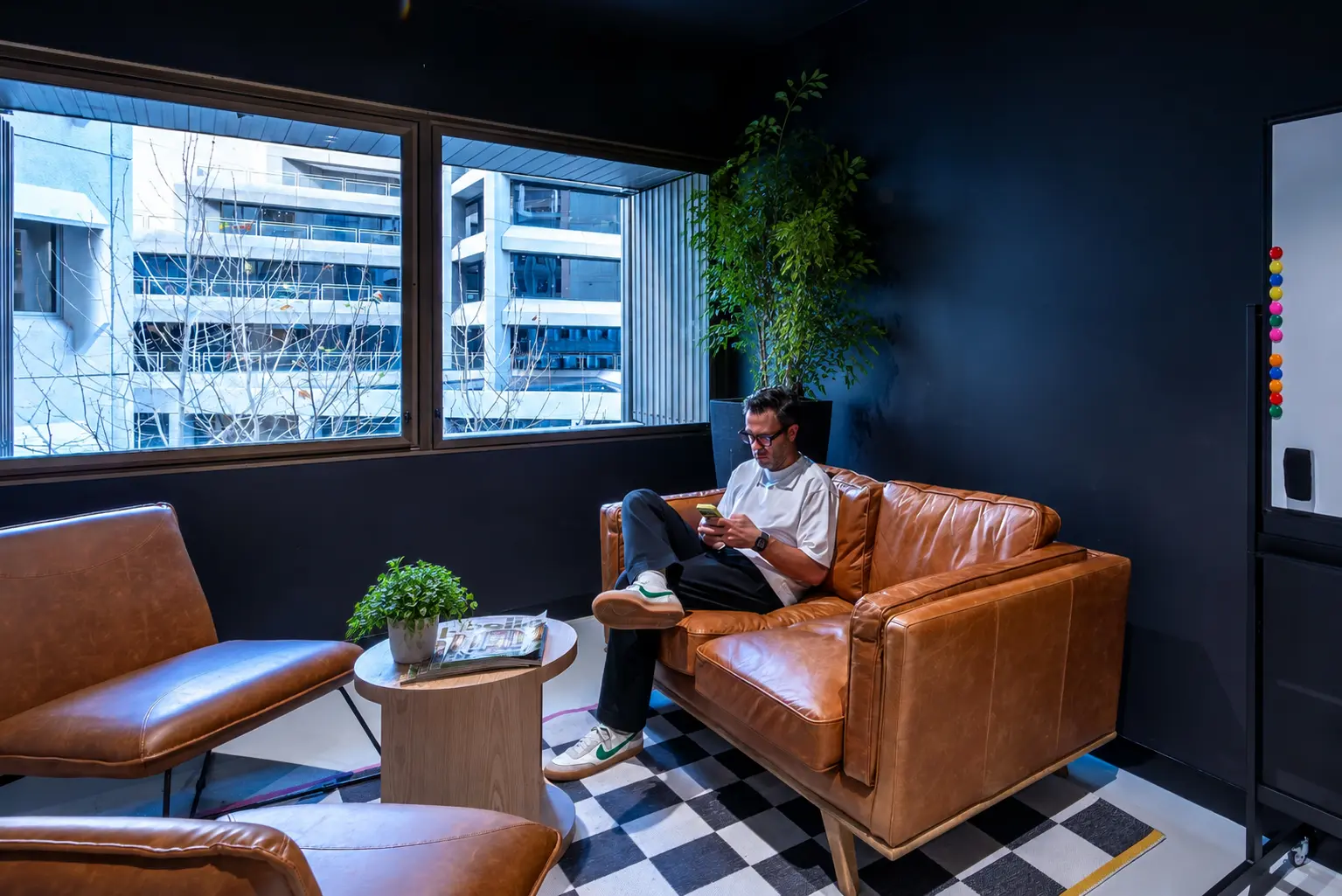
Why Professional Firms Lose Staff in Traditional Offices
Professional firms rarely lose talented people for one reason alone. Salary matters. Leadership matters. Career progression matters. But the environment in which people work every day also sends a powerful message about what the business values.
When an office feels rigid, disconnected or poorly suited to modern work, engagement can begin to slip. People collaborate less, energy falls and small frustrations become part of the daily routine. Over time, the workplace stops supporting performance and starts working against it.
This is the hidden challenge of employee engagement in traditional offices. A conventional office may provide desks and meeting rooms, yet still fail to deliver the flexibility, connection and experience that talented professionals increasingly expect.
For mid-sized professional firms competing for capable people, the office is no longer just an operational cost. It is part of the employee value proposition. The right workplace can strengthen culture, improve employee motivation and support staff retention. The wrong one can quietly push good people towards the exit.
What does employee engagement in traditional offices look like?
Employee engagement is the level of connection, commitment and energy people bring to their work. It is visible in how employees contribute, collaborate, solve problems and support the wider goals of the firm.
In traditional offices, engagement can be mistaken for attendance. A full office may look productive, but physical presence does not automatically mean people feel motivated, connected or equipped to perform at their best.
Warning signs often include:
- Employees coming in only when required
- Low energy across shared areas
- Teams operating in silos
- Meeting rooms sitting empty or constantly overbooked
- Limited interaction between departments
- Growing resistance to office-based work
- Difficulty attracting or retaining high-quality talent
- An office culture that feels functional rather than inspiring
These issues are rarely solved by adding a coffee machine or repainting a wall. They usually point to a deeper mismatch between the workplace and the way the firm now operates.
Why traditional offices reduce engagement in professional firms
1. The office was designed for a different way of working
Many traditional offices were built around fixed attendance, fixed teams and fixed routines. Professional work has moved on.
Today, employees may divide their time between focused work, client calls, collaboration, mentoring, video meetings and remote work. A floor filled with identical desks cannot effectively support every mode.
When the environment does not match the task, people improvise. They take confidential calls in corridors, search for quiet corners or stay home because it is easier to concentrate there. That daily friction reduces workplace engagement and makes the office feel less relevant.
2. Long leases lock firms into yesterday’s requirements
Professional firms change. Teams grow, contracts end, new service lines emerge and hybrid work alters how much space is needed.
A conventional commercial lease usually assumes that workspace requirements will remain relatively stable. That can leave a firm with too much space, too little space or the wrong configuration for years.
An oversized office can feel flat and empty. An undersized office creates noise, crowding and frustration. Both weaken office culture because the space no longer reflects the energy or needs of the team.
3. One environment is expected to support every task
Professional work requires different settings. Lawyers, accountants, consultants, recruiters and advisers may need confidentiality, concentration, team interaction and client-facing professionalism in the same day.
Traditional offices often force these activities into one standard environment. Open-plan areas become too distracting for focused work, while enclosed rooms are unavailable when privacy matters.
The result is a workplace that is technically operational but consistently inconvenient. Like asking a team to play every position with the same pair of shoes, it may be possible, but performance will suffer.
4. Employees lose control over how they work
Autonomy is a major driver of employee motivation. People perform better when they have appropriate choice over where and how they complete different tasks.
Rigid attendance rules and fixed seating can remove that sense of control. Employees may feel they are being measured by visibility instead of contribution.
Flexible workplaces support a more mature approach. Teams can use quiet areas for focus, shared spaces for collaboration and professional meeting rooms for clients. The office becomes a tool employees can use, rather than a location they must simply occupy.
5. The workplace experience becomes an internal burden
In a traditional lease, the firm is responsible for almost everything, including utilities, internet, cleaning, repairs, reception, security, meeting-room technology and day-to-day office issues.
When these details are not managed consistently, employees feel the impact. A broken screen, unreliable internet or poorly maintained kitchen may seem minor, but repeated friction shapes how people perceive the organisation.
It also pulls internal teams away from higher-value work. Office managers and operations leaders spend time solving property problems instead of improving employee experience and business performance.
6. Culture becomes confined to individual teams
Professional firms often speak about culture as a company-wide strength. Yet traditional office layouts can divide people by department, floor or hierarchy.
Closed doors, isolated executive areas and limited shared space reduce spontaneous interaction. Junior employees receive less informal exposure to experienced colleagues. Teams become efficient within their own lanes but disconnected from the broader firm.
Strong culture needs places where people can cross paths, exchange ideas and build relationships without scheduling another meeting.
7. Hybrid work exposes weak reasons to attend
The office now competes with the convenience of working from home. Commuting needs to lead to something worthwhile, such as better collaboration, stronger relationships, access to quality facilities or a clear sense of shared momentum.
If the office offers little more than a desk and Wi-Fi, employees will naturally question the value of attending. Mandating more office days may increase occupancy, but it will not necessarily improve engagement.
The better question is not, “How do we make people come back?” It is, “How do we create a workplace people value using?”
8. The environment does not reflect the firm’s ambition
People read signals from their surroundings. A tired, inflexible or poorly located office can suggest that the employee experience is not a business priority.
This matters for existing staff, prospective hires and clients. Professional firms sell expertise, trust and confidence. Their workplace should reinforce those qualities.
When the physical environment feels disconnected from the firm’s brand and ambition, it creates a credibility gap. Employees may be told the business is progressive while working in a space that feels anything but.
9. Social connection is left to chance
Hybrid work can reduce the informal moments that once helped people build relationships. Traditional offices do not automatically solve this problem, particularly when employees arrive on different days and remain within their immediate teams.
Without shared experiences, community activity or welcoming common areas, people can feel isolated even while surrounded by colleagues.
That lack of connection can be especially damaging for new starters and emerging leaders. They need exposure, context and relationships to understand how the firm really works.
10. The total experience falls behind employee expectations
Talented professionals compare more than remuneration. They notice flexibility, technology, location, wellness, hospitality, design and the quality of everyday interactions.
An office does not need to be extravagant. It does need to be reliable, considered and appropriate for the people using it.
When competing employers offer a better workplace experience, a traditional office can become a staff retention risk. The issue is not that people leave because of one uncomfortable chair. They leave because the overall experience signals that another organisation may support them better.
The commercial cost of disengagement
Low engagement does not remain an HR issue. It reaches into performance, client service and profitability.
Professional firms may experience:
- Higher recruitment and onboarding costs
- Lost knowledge when experienced employees leave
- Reduced collaboration between teams
- Lower discretionary effort
- Slower development of junior employees
- Greater pressure on remaining staff
- Inconsistent client experiences
- Difficulty building a strong employer brand
Replacing an employee also takes time. Leaders must recruit, interview, onboard and rebuild trust with clients and colleagues. Retaining strong people is usually more efficient than repeatedly rebuilding the team.
The workplace cannot correct poor management or unclear career pathways. However, it can either reinforce those problems or help create the conditions for people to connect, contribute and grow.
How flexible workspaces improve culture and staff retention
Flexible workspaces are designed around changing business needs and different styles of work. For professional firms, this can create a more responsive employee experience without sacrificing privacy or credibility.
Choice of work settings
Employees can move between private offices, quiet areas, breakout spaces, meeting rooms and collaborative zones. This gives people a better setting for the task at hand and reduces unnecessary friction.
Space that can change with the firm
Flexible agreements allow firms to adjust their footprint as headcount and work patterns change. Instead of waiting for a lease event, the workspace can evolve with the business.
This keeps the environment aligned with the team, whether the firm is hiring, consolidating or testing a new market.
A stronger reason to come together
Quality flexible workspaces offer more than desks. They create professional environments where employees can collaborate, meet clients, attend events and connect with a broader business community.
This turns office attendance from an obligation into a useful experience.
Better-supported daily operations
On-site teams can manage reception, cleaning, technology, meeting rooms and workplace presentation. Employees receive a consistent experience, while internal leaders regain time to focus on their people and clients.
Professional client experience
Well-designed meeting rooms, welcoming reception areas and reliable technology help firms present confidently without carrying the full cost of underused facilities.
The right flexible workspace should feel credible enough for clients and energising enough for employees.
Connection beyond the immediate firm
A curated business community can expose employees to new ideas, events and relationships. For professional firms, this broader ecosystem can create learning, referral and collaboration opportunities that a standalone office rarely provides.
Flexible does not mean unstructured
Some professional firms assume flexible workspace means hot desks, noise and limited privacy. That is an outdated view.
Modern flexible workspaces can provide secure private offices, dedicated team areas, confidential meeting rooms, controlled access and enterprise-grade services. The flexibility relates to how the space is accessed, managed and scaled, not a lack of professional standards.
The key is choosing a workspace that matches the firm’s operating requirements. Privacy, acoustics, data security, client experience and room availability should be assessed carefully.
How to evaluate whether your office is affecting retention
Leaders should look beyond occupancy and ask how well the workplace supports their people.
Consider these questions:
- Do employees have suitable spaces for focus, collaboration and confidential work?
- Are people choosing to use the office, or attending only because they must?
- Does the workplace reflect the firm’s culture and professional standards?
- Can the space adjust if headcount changes over the next 12 to 24 months?
- Are operational issues regularly distracting employees or internal teams?
- Do junior employees have enough opportunities to connect with senior colleagues?
- Does the office create a strong first impression for candidates and clients?
- Are shared spaces genuinely used, or merely included in the floor plan?
- Does the location support commuting, client access and employee wellbeing?
- Would your best people view the workplace as a reason to stay?
If several answers are uncomfortable, the office may already be contributing to disengagement.
What professional firms should look for in a flexible workspace
Not every flexible workspace will suit a professional services environment. Before making a decision, assess:
- Privacy: Secure offices, appropriate acoustics and confidential meeting spaces
- Flexibility: Terms and space options that can adapt to changing headcount
- Technology: Reliable connectivity and well-supported meeting-room systems
- Professional presentation: A workplace that builds confidence with clients and candidates
- Location: Convenient access to transport, clients and local amenity
- Choice: Different settings for focused, collaborative and social work
- Service: An experienced on-site team that keeps the workplace running smoothly
- Community: Relevant events and connections that add value without distracting the team
- Wellbeing: Natural light, quality amenities and spaces that support energy throughout the day
- Scalability: A pathway to expand, contract or enter another location without starting again
The best decision is not simply the workspace with the longest amenities list. It is the one that removes friction and helps the firm perform.
Improving employee engagement starts with listening
Before changing the workplace, ask employees what is helping and hindering them. Use surveys, interviews and observation to understand how different teams work.
Avoid assuming every employee wants the same experience. Senior leaders, junior professionals, client-facing teams and operational staff may have very different needs.
The goal is not to design an office around every individual preference. It is to identify the shared conditions that support strong performance, connection and motivation.
Once those needs are clear, the firm can assess whether its existing office can realistically meet them. If it cannot, moving to a flexible workspace may be more effective than repeatedly patching a model that no longer fits.
The workplace is part of your retention strategy
Professional firms win when talented people can do their best work, build meaningful relationships and see a future within the business.
Traditional offices often struggle because they were designed around occupancy rather than experience. They lock firms into fixed space, limit choice and place the operational burden back on the business. Over time, those constraints can weaken employee motivation, office culture and staff retention.
A flexible workspace creates room to respond. It can give teams better work settings, stronger service, valuable community and a workplace that evolves with the firm.
The office will not replace strong leadership. But, like a well-designed home court, it can create the conditions for people to connect, perform and want to stay.
Ready to create a workplace your best people value?
Explore CreativeCubes.Co flexible workspaces and discover a professional environment built to support stronger culture, better engagement and sustainable growth.
Frequently asked questions
What causes low employee engagement in traditional offices?
Low engagement can develop when the office does not support how employees actually work. Common causes include rigid layouts, limited privacy, poor technology, weak social connection, inflexible attendance expectations and an environment that does not reflect the firm’s culture or ambitions.
How does office design affect staff retention?
Office design influences comfort, concentration, collaboration and the quality of everyday interactions. When employees regularly experience noise, crowding, isolation or a lack of suitable spaces, frustration can build. A considered workplace helps people feel supported and can strengthen their connection to the firm.
Can flexible workspaces suit professional firms?
Yes. Modern flexible workspaces can provide secure private offices, dedicated team areas, confidential meeting rooms, professional reception and reliable technology. Firms should evaluate privacy, acoustics, security and client-facing standards before selecting a workspace.
How can flexible workspaces improve employee motivation?
Flexible workspaces give employees more choice over where they complete focused, collaborative and client-facing work. They can also remove everyday operational friction and provide a more energising environment, helping people use the office with greater purpose.
What is the link between office culture and workplace engagement?
Office culture is shaped by how people interact and experience the business each day. A workplace that supports connection, visibility and shared experiences can reinforce belonging. A fragmented or uninspiring office can deepen silos and make culture harder to sustain.
Should a professional firm move from a traditional lease to flexible workspace?
It may be worth considering if the current office no longer matches headcount, hybrid work patterns or employee expectations. Firms should compare total occupancy costs, operational workload, flexibility, privacy, client experience and the ability to scale before deciding.
How can leaders measure workplace engagement?
Leaders can combine employee surveys, attendance patterns, retention data, utilisation reviews and structured conversations. The strongest insights often come from asking employees which activities bring them into the office and what prevents them from performing effectively once there.