



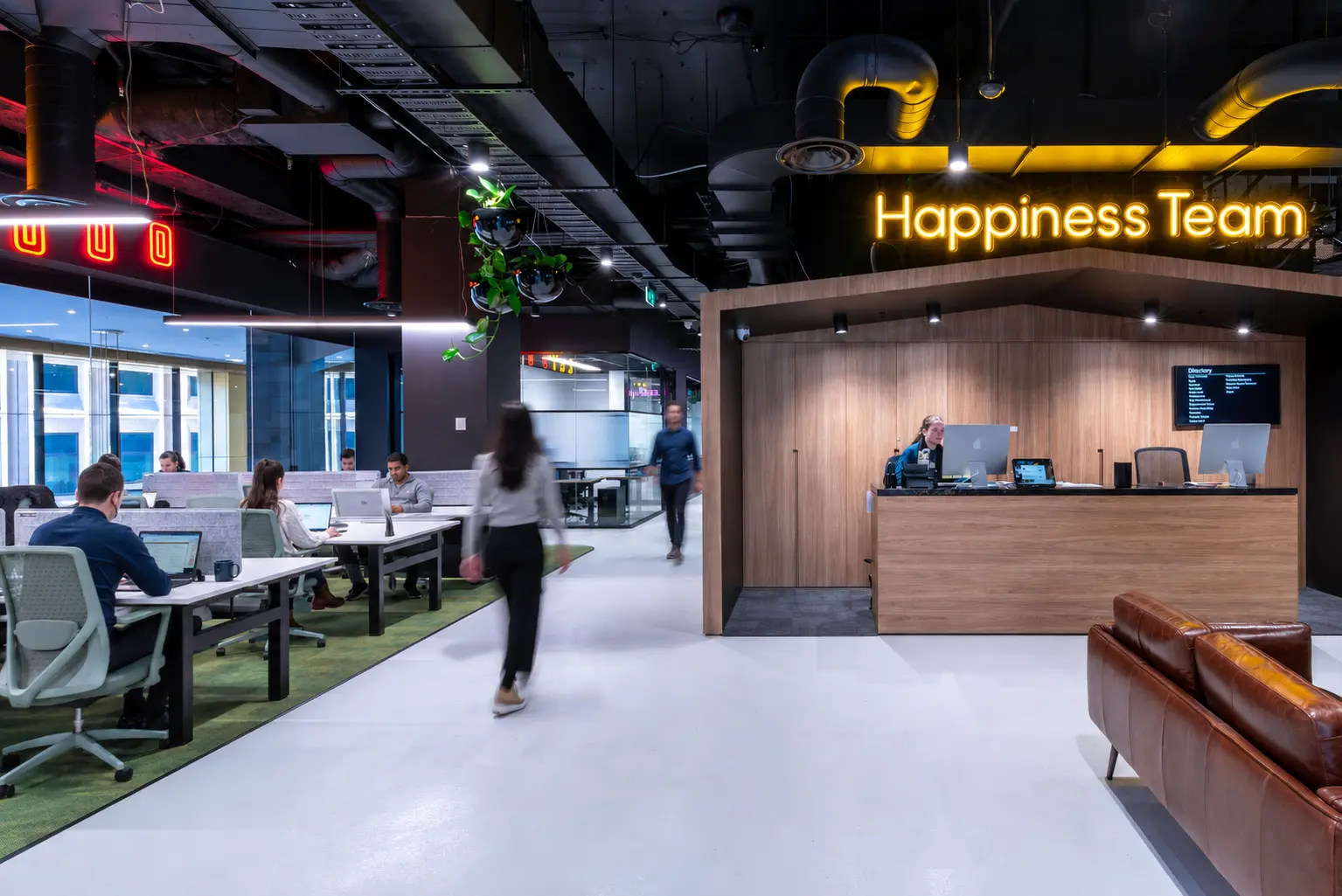
Everything You Need to Know About Flexible Workspace
Growth is exciting, but it can make office decisions complicated.
A space that works for eight people today may feel crowded at 15. A large office secured for future growth may sit half-empty if recruitment slows or hybrid working changes attendance patterns. Either way, the business can end up carrying a workspace that no longer matches how the team operates.
That is why office space scalability matters.
For growing Melbourne businesses, the right workspace should support momentum without locking the company into unnecessary space, cost or complexity. Flexible workspace gives small businesses and operations leaders more room to adapt as headcount, customer demand and working patterns change.
This guide explains how flexible workspace operates, why businesses outgrow traditional leases and what to consider when choosing a space that can scale with you.
What is flexible workspace?
Flexible workspace is office space that can be used under adaptable commercial terms, often with furniture, utilities, internet, meeting rooms, reception support and shared amenities included.
Depending on the provider and location, flexible workspace options may include:
- Private offices
- Team suites
- Coworking memberships
- Dedicated desks
- Day offices
- Meeting and boardrooms
- Project spaces
- Business lounges
- Virtual office services
- Event and activation spaces
The key difference is flexibility. Instead of taking a largely fixed premises and building every operational layer from scratch, a business can select the space, services and term that suit its current needs.
It is less like purchasing a team bus before the season begins and more like having access to the right vehicle for every round. The business can move quickly without carrying more capacity than it needs.
What does office space scalability mean?
Office space scalability is the ability to increase, reduce or reconfigure workspace as business requirements change.
A scalable office strategy may allow a company to:
- Add desks as new employees join
- Move into a larger private office within the same location
- Use meeting rooms only when required
- Support hybrid employees without allocating a permanent desk to everyone
- Establish a project team for a defined period
- Enter a new Melbourne market without committing to a full lease
- Reduce space if the team structure changes
- Access additional locations as the business expands
Scalability is not simply about getting bigger. It is about maintaining the right fit through every stage of growth.
Why growing businesses outgrow traditional leased offices
Traditional leased offices can offer control and permanence. However, they are often designed around a relatively stable headcount, predictable attendance and a long planning horizon.
Growing businesses rarely operate that neatly.
1. Headcount changes faster than the premises
Recruitment plans can change within a quarter. An office lease may continue for years.
If a business grows faster than expected, employees can become crowded into an unsuitable layout. Meeting rooms turn into offices, quiet areas disappear and teams compete for the same facilities.
If growth is slower than expected, the company may pay for desks and rooms that remain unused. Both outcomes can limit productivity and put pressure on cash flow.
2. Hybrid work changes daily attendance
The number of employees on the payroll no longer tells you exactly how much office space you need.
Attendance may peak on certain days and fall significantly on others. A traditional one-person, one-desk model can create empty capacity for much of the week while still feeling congested at peak times.
Flexible office space can support a more responsive mix of private offices, shared work areas, meeting rooms and bookable spaces.
3. Long-term office leases reduce agility
Long-term office leases can make sense for businesses with highly stable requirements. For companies moving through a growth phase, they can create a mismatch between commercial commitments and operational reality.
A business may need to make decisions today based on uncertain forecasts several years ahead. Predicting future headcount, work patterns, technology requirements and customer needs with that level of precision is difficult.
When conditions change, exiting, assigning or modifying a lease may also involve additional cost, negotiation and delay.
4. Expansion requires more than extra desks
Business growth creates demand for more than floor area.
Growing teams may also need:
- Additional meeting rooms
- Better technology and connectivity
- Breakout and collaboration areas
- Reception and visitor management
- Event space
- End-of-trip facilities
- More professional client-facing environments
- Operational support
Traditional leased offices can require each new need to be funded, sourced and managed separately. A flexible workspace can provide access to a broader operating platform from day one.
5. Fixed offices can become a distraction
Managing an office involves internet, utilities, cleaning, maintenance, security, furniture, repairs, access systems and supplier relationships.
For a small business, these tasks often fall to an operations leader who could be focused on customers, people and growth. Flexible workspace consolidates many of these responsibilities into one managed environment.
The risks associated with traditional leased offices
The headline rent is only one part of the commercial decision.
Traditional leased offices may also involve:
- Fitout and design costs
- Furniture and equipment
- Legal and advisory fees
- Security deposits or guarantees
- Utilities and internet
- Cleaning and maintenance
- Building outgoings
- Repairs and replacements
- Make-good obligations
- Costs associated with unused space
These commitments can absorb capital before the office contributes any value to the business.
The central risk is not that a traditional lease is always the wrong choice. It is that the business may be forced to predict its future too early and then continue paying for that prediction when circumstances change.
How flexible workspace reduces business risk
Lower upfront capital requirements
Many flexible workspaces are furnished, connected and ready to use. This can reduce the need for a large upfront investment in fitout, furniture and office infrastructure.
That preserves capital for recruitment, marketing, technology, product development and other growth priorities.
Greater cost visibility
Flexible workspace agreements often combine multiple occupancy costs into a more predictable recurring fee.
Inclusions vary, so every proposal should be reviewed carefully. However, consolidating rent, utilities, internet, cleaning and shared amenities can make budgeting simpler.
Faster market entry
A business can often move into flexible office space far sooner than it could source, negotiate, design and fit out a traditional office.
This can be valuable when launching a Melbourne team, opening a new division or responding to an opportunity that cannot wait for a lengthy property process.
Space that can change with the team
The strongest benefit is the ability to adjust.
As the business expands, it may be possible to take a larger office, add dedicated desks or access more meeting capacity. If requirements contract, the company may have options that do not involve carrying a large amount of redundant space for years.
Shared amenities without sole ownership costs
Boardrooms, event spaces, lounges and breakout areas are valuable, but many businesses do not need exclusive access to them every hour of the week.
A flexible workspace allows multiple businesses to share high-quality amenities while using private space for their day-to-day operations. This can improve the workplace experience without requiring each company to fund the full footprint independently.
How flexible workspace supports business growth
The right office should do more than contain a growing team. It should help that team perform.
It creates a professional base
A well-designed workplace gives employees, customers and partners confidence. It provides a consistent place to meet, collaborate and represent the brand professionally.
It improves the employee experience
People expect more from the office than a desk and a chair. They value choice, natural connection, quality amenities and spaces designed for different types of work.
A flexible workplace can provide quiet areas, private offices, collaboration zones, meeting rooms and community spaces within one environment.
It connects businesses with a wider community
Flexible workspaces can place small teams alongside other founders, professionals and growing organisations. The value is not forced networking. It is the natural proximity to people, ideas and opportunities that would not exist in an isolated office.
It gives leaders more room to focus
When the workspace is managed effectively, business leaders spend less time solving facility problems and more time building the company.
That operational leverage matters. Growth is hard enough without becoming the part-time internet technician, furniture buyer and meeting-room referee.
Flexible workspace options for different stages of growth
Coworking memberships
Coworking can suit founders, freelancers and small teams that want a professional environment without a dedicated private office.
It can also support hybrid employees who need a productive base for part of the week.
Dedicated desks
A dedicated desk provides a consistent workstation within a shared environment. It can suit individuals and small teams that value routine while still wanting community and shared amenities.
Serviced private offices
Private offices combine privacy and brand presence with access to managed services and shared facilities. They are often well suited to growing teams, professional firms and businesses that handle confidential work.
Team suites
Larger team suites can provide a more self-contained workspace while retaining the flexibility and operational support of a managed location.
Project and swing space
Shorter-term office space can support project teams, temporary relocations, contract employees or businesses waiting for permanent premises.
Meeting rooms and day offices
Businesses that work remotely may not need a permanent office. Bookable rooms can provide a professional setting for client meetings, workshops, interviews and planning sessions.
How to assess your office space scalability needs
Before comparing locations, build a realistic picture of how your team works.
Ask:
- What is our current headcount?
- What is our likely headcount in six, 12 and 24 months?
- How many people attend the office on our busiest day?
- Which roles need permanent desks?
- How many meetings happen at the same time?
- Do we need private rooms for confidential calls or focused work?
- Are we likely to establish teams in other locations?
- What services are currently managed internally?
- How much capital are we prepared to invest upfront?
- What happens if our growth plan changes?
The last question is critical. A strong workspace decision should work when growth exceeds the forecast and remain manageable when it does not.
What to look for in a flexible workspace provider
Not all flexible workspaces offer the same experience or commercial flexibility.
Consider the following factors.
Location and transport
Choose a location that works for employees, customers and business partners. Consider public transport, cycling access, parking, surrounding amenity and travel time from key parts of Melbourne.
Expansion options
Ask what happens when your team grows. Can you add desks, move into a larger office or access another location within the provider’s network?
Agreement terms
Review the commitment period, notice requirements, deposit, inclusions and potential additional charges. Flexibility should be clear in the agreement, not simply implied in the marketing.
Technology and reliability
Confirm internet capacity, network security, meeting-room technology, access systems and available technical support.
Meeting and collaboration space
Assess the quantity, quality and booking process for meeting rooms. A private office can quickly feel restrictive if the broader workplace does not support calls, workshops and collaboration.
Workplace experience
Visit during a normal working day. Look at the energy, acoustics, cleanliness, lighting and how the team manages the space.
The real test is not how the office photographs. It is how well your people can perform there on a busy Tuesday.
Community and business support
Consider whether the workspace creates useful opportunities for connection, learning, events and business exposure. The right community should add value without becoming a distraction.
When does a traditional office lease still make sense?
Flexible workspace is not the answer for every business.
A traditional lease may be suitable when a company has:
- Stable long-term headcount
- Highly specialised fitout requirements
- A strong need for complete premises control
- Sufficient capital for fitout and ongoing operations
- An internal facilities capability
- Confidence that the same location and footprint will remain suitable
The decision should be based on the total commercial and operational picture, not rent alone.
For many small and growing businesses, flexible workspace is valuable because it delays irreversible decisions until the organisation has greater certainty.
Build workspace flexibility into your growth strategy
The workplace is no longer a static overhead. Used well, it can become a platform for performance, culture and expansion.
Office space scalability gives Melbourne businesses the ability to respond as teams, markets and working patterns evolve. It reduces the pressure to predict the future perfectly and helps leaders direct capital and attention towards growth.
CreativeCubes.Co provides flexible office space, private offices, coworking, meeting rooms and event spaces across a growing network of locations. Our spaces are built to help ambitious businesses work effectively, connect with a genuine community and move forward without the weight of a traditional office model.
If your current office is limiting your team or your next lease feels bigger than the certainty behind it, it may be time to explore a more flexible path.
Talk to the CreativeCubes.Co team about a workspace that can grow with your business.
Frequently asked questions
What is office space scalability?
Office space scalability is the ability to adjust the size, configuration and services of a workplace as business needs change. It can include adding desks, moving to a larger office, accessing more meeting rooms or reducing unused capacity.
How is flexible office space different from a traditional lease?
Flexible office space generally provides shorter or more adaptable terms, managed facilities and ready-to-use infrastructure. A traditional lease typically gives the tenant greater control but may require a longer commitment, upfront fitout and direct management of office operations.
Is flexible workspace suitable for a growing small business?
Yes. Flexible workspace can help a growing small business add capacity, preserve capital and avoid committing to a fixed office footprint before future requirements are clear.
Can a flexible workspace provide enough privacy?
Yes. Serviced private offices and team suites can provide dedicated, lockable space while still giving businesses access to shared meeting rooms, lounges and amenities. Businesses with particular confidentiality or security requirements should confirm the provider’s systems before committing.
Does flexible workspace cost more than leasing an office?
The monthly rate may appear higher when compared only with base rent. A fair comparison should include fitout, furniture, internet, utilities, cleaning, maintenance, outgoings, meeting rooms, staff time and the financial impact of unused space.
How much flexible office space does my team need?
Start with peak daily attendance rather than total headcount. Then account for meeting patterns, focused work, private calls, future recruitment and hybrid schedules. A workspace provider should help model the right mix of dedicated and shared space.
What agreement length should a growing business choose?
The right term depends on the company’s growth visibility, budget and need for certainty. A longer agreement may offer commercial advantages, while a shorter term can preserve agility. The key is ensuring the commitment aligns with the confidence of the business forecast.
Can flexible workspace support teams across multiple Melbourne locations?
Some providers offer access across a network of locations. This can help distributed teams, travelling employees and businesses that want to establish a presence in different parts of Melbourne without taking multiple traditional leases.