



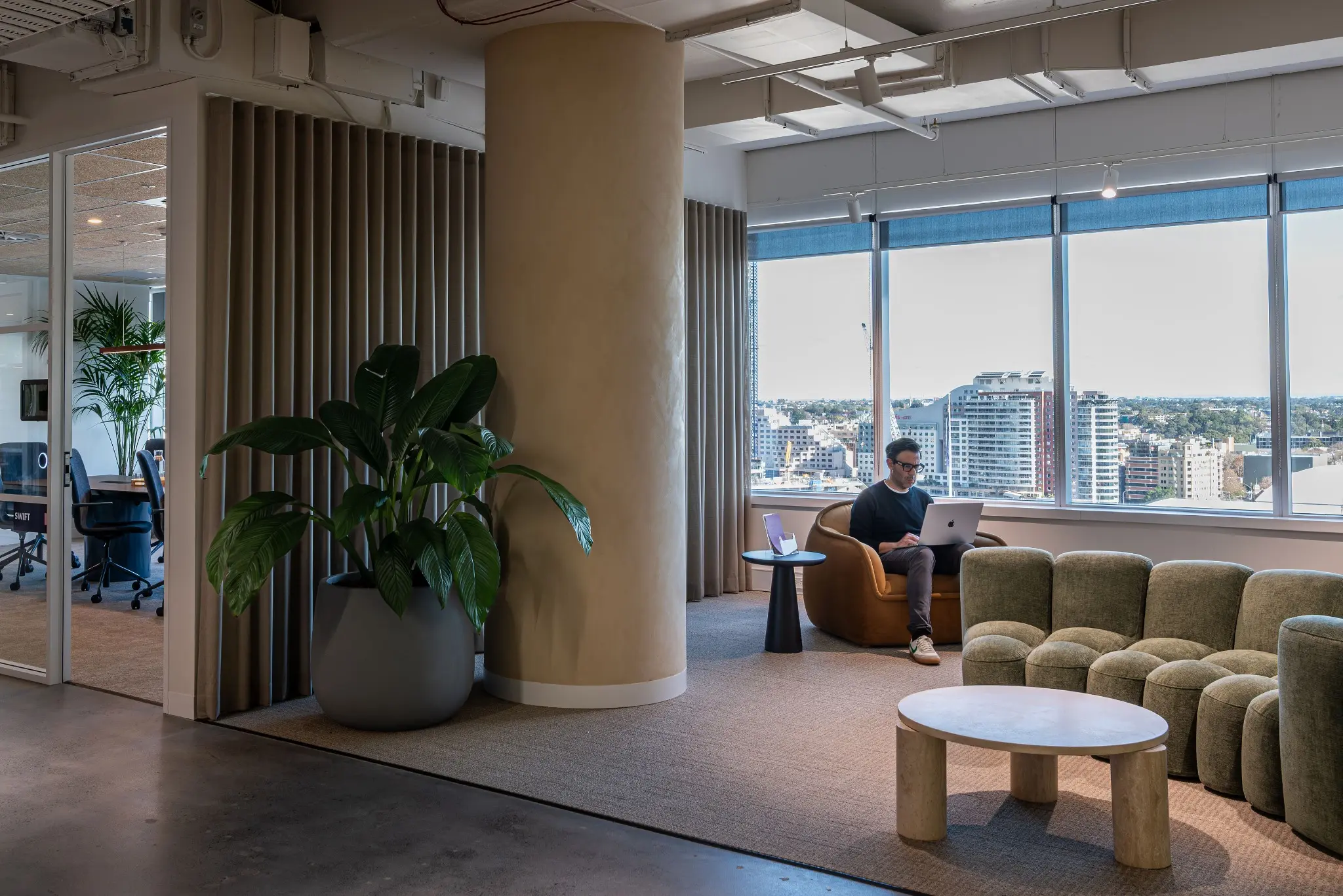
Choosing an office is no longer simply a property decision. It is a decision about how your team works, how clients experience your brand and how confidently your business can grow.
For startups, small businesses and freelance professionals, a traditional commercial lease can create more cost, complexity and commitment than the business needs. Serviced private offices offer another path: a secure, professional workspace with essential services included and terms that can move with the business.
The challenge is that not every serviced office delivers the same experience. The right space should do more than provide desks and Wi-Fi. It should support productivity, make a strong impression on clients and give your team room to adapt.
This guide explains how to compare serviced private offices and choose the one that fits your people, operations and next stage of growth.
What Is a Serviced Private Office?
A serviced private office is a furnished, ready-to-use office located within a professionally managed workspace. Your team has a secure room of its own while sharing access to facilities and services such as:
- Meeting rooms
- Reception services
- Business-grade internet
- Kitchens and breakout areas
- Cleaning and utilities
- Mail and parcel handling
- Community spaces
- On-site support
Unlike a conventional office lease, most operating costs are consolidated into a regular membership or licence fee. Businesses can move in quickly without purchasing furniture, installing internet or managing multiple suppliers.
This makes serviced private offices particularly attractive to startups, project teams, consultants and growing businesses that want a professional base without taking on a long, rigid lease.
Why Businesses Choose Serviced Private Offices
The strongest serviced office solutions combine privacy with flexibility. Your team gains a dedicated space while still benefiting from shared amenities, hospitality and a broader business community.
Key advantages include:
- Lower upfront costs than establishing a traditional office
- Faster move-in with minimal operational setup
- One regular fee covering many occupancy expenses
- Flexible lease terms that reduce long-term risk
- Access to professional meeting rooms without leasing extra floor space
- Reception services that strengthen the client experience
- The ability to scale as the team changes
- A practical base for hybrid office setups
In sporting terms, it is the difference between building and maintaining the entire stadium yourself and arriving with a professional venue, support team and change room already prepared. Your business can focus on playing the game.
1. Start With What Your Team Actually Needs
Before touring spaces, define how the office will be used. A team of eight does not automatically need eight desks every day, particularly if employees work across home, client sites and the office.
Consider:
- How many people will attend on a typical day?
- What is the maximum number likely to attend at once?
- Does the team need assigned desks or can some desks be shared?
- How often are clients or partners invited into the office?
- Are confidential calls or focused work common?
- Will the team grow or contract over the next 6 to 24 months?
- Do employees need access outside standard business hours?
These questions help distinguish between what looks impressive during a tour and what will genuinely work each week.
For hybrid office setups, plan around peak attendance rather than average attendance. If Tuesdays and Thursdays are your busiest days, the office must work comfortably on those days, not just when half the team is working remotely.
2. Compare the Full Cost, Not Just the Headline Price
The advertised monthly rate is only useful when you understand exactly what it includes.
Ask each provider for a complete breakdown covering:
- Furniture
- Internet
- Electricity and utilities
- Cleaning
- Meeting room credits or charges
- Printing
- After-hours access
- Reception services
- Mail handling
- Storage
- Parking
- Security deposits
- Setup, administration or exit fees
A lower base price can become expensive when essential services are charged separately. Conversely, a higher all-inclusive rate may offer stronger overall value and make cash flow easier to forecast.
Compare options using the total expected monthly cost, not simply the cost per desk. Small business offices should be financially clear from the opening whistle, with no surprise charges appearing late in the game.
3. Examine the Flexible Lease Terms Carefully
Flexibility is one of the primary reasons businesses choose serviced private offices, but the word can mean different things across providers.
Review:
- Minimum commitment period
- Notice required to leave or renew
- Deposit requirements
- Renewal conditions and potential price increases
- Options to add or remove desks
- Ability to transfer to a larger or smaller office
- Access to other locations
- Early termination conditions
- Restoration or make-good obligations
The best flexible lease terms create options without making costs unpredictable. A shorter agreement may reduce commitment, while a longer term may secure better pricing. The right balance depends on your confidence in future headcount, cash flow and location requirements.
Startups may value the ability to scale quickly. Established professional teams may prefer greater price certainty. Neither approach is automatically better. The right agreement should match the stage and rhythm of the business.
4. Test the Meeting Rooms
Meeting rooms are often listed as an amenity, but their availability and quality can vary considerably.
When inspecting a workspace, assess:
- How many meeting rooms are available?
- How far ahead can they be booked?
- Are bookings included, credited or charged by the hour?
- Is there a fair-use policy?
- Do rooms support video conferencing?
- Are screens, whiteboards and presentation tools included?
- Is sound privacy adequate?
- Are there rooms suitable for both quick calls and larger workshops?
- Can external guests access them easily?
If your business regularly meets clients, pitches work or runs confidential discussions, meeting room quality is central to the value of the office.
Ask to book or test a room during your tour. Check the camera, screen, acoustics and connection process. A polished room is useful only if the technology works when the client arrives.
5. Evaluate the Reception and Client Experience
Reception services can make a small team feel established, credible and well supported. They also remove interruptions by ensuring guests, deliveries and day-to-day enquiries are handled professionally.
Find out whether the reception team will:
- Welcome and direct your guests
- Notify you when visitors arrive
- Accept mail, parcels and couriers
- Support meeting room setup
- Help with catering or event requirements
- Provide general on-site assistance
Then consider the broader arrival experience. Is the entrance easy to find? Is signage clear? Are shared areas clean and well presented? Does the environment reflect the standard your clients expect?
Your office is part of your brand. Clients form an impression before the meeting begins, so the journey from the building entrance to the meeting room matters.
6. Confirm Privacy, Security and Technology
A private office should deliver genuine privacy, not simply four walls and a door.
Assess:
- Lockable office access
- Building and floor security
- Visitor management procedures
- CCTV coverage in common areas
- Acoustic privacy between offices
- Secure internet options
- Network reliability and backup systems
- Phone booth availability
- Document and equipment storage
- After-hours access controls
Professional services firms may also need to consider client confidentiality, data handling and industry-specific compliance requirements.
Ask what happens if the internet fails, how technical issues are escalated and whether a separate network is available for your team. Reliable technology should be treated as core infrastructure, not a bonus feature.
7. Consider Location and Daily Convenience
The best office is not necessarily the one with the most impressive address. It is the one your team and clients can use consistently.
Review:
- Public transport connections
- Parking and bicycle facilities
- Travel time for employees
- Accessibility for clients
- Nearby cafés, restaurants, gyms and services
- Building access and disability access
- Safety when arriving early or leaving late
Location affects recruitment, attendance and client experience. An office that saves each employee 20 minutes of travel can create a meaningful improvement in energy and productivity across the week.
For hybrid teams, accessibility becomes even more important. When people are choosing where to work, the office must be easy to reach and worth the trip.
8. Inspect the Workspace Experience
Photographs rarely show how a workplace feels during a normal business day. Visit during operating hours and pay attention to:
- Noise levels
- Natural light
- Airflow and temperature
- Desk and chair quality
- Cleanliness
- Kitchen capacity
- Breakout space
- Phone booth availability
- Occupancy levels
- The professionalism of the on-site team
If possible, request a trial day. Work from the space, connect to the internet, make a call, use a meeting room and observe how the environment performs when it is busy.
An office can look excellent on inspection and still feel distracting or overcrowded in practice. A trial gives you evidence, not just a brochure.
9. Look Beyond the Office Walls
For many small businesses and startups, the wider workspace community can be a valuable advantage. The right environment can create introductions, partnerships, referrals and access to expertise that would not emerge from an isolated office.
Ask about:
- Member events
- Business education and workshops
- Networking opportunities
- Introductions facilitated by the team
- Wellness initiatives
- Social activities
- Access to other locations
- Opportunities to promote your business within the community
Community should never feel forced. Its value comes from relevant people, thoughtful programming and a team that understands how to connect members with purpose.
10. Assess Whether the Office Can Grow With You
Moving offices can consume time, cash and management attention. Before committing, ask what happens if your team adds three, five or ten people.
Can the provider offer:
- A larger office in the same location?
- Adjacent offices for project teams?
- Additional desks on short notice?
- Access to meeting rooms at other locations?
- Temporary project space?
- Business lounge or day-pass access for remote employees?
Serviced private offices should provide a runway for growth, not create another move the moment your team gains momentum.
Questions to Ask During a Serviced Office Tour
Take this checklist to every inspection:
- What is included in the monthly fee?
- Which services attract additional charges?
- How many meeting room hours or credits are included?
- How easy is it to book a meeting room during peak periods?
- What reception services are provided?
- What are the minimum term and notice period?
- Can we expand, reduce or relocate our office during the agreement?
- Is access available 24 hours a day, seven days a week?
- How is internet reliability supported?
- How are visitors and deliveries managed?
- Are there any setup, administration or exit fees?
- Can we trial the workspace before committing?
A Simple Comparison Scorecard
Score each shortlisted office from 1 to 5 across the following areas:
| Category | What to assess |
|---|---|
| Total cost | Complete monthly cost and fee transparency |
| Flexibility | Term, notice period and ability to scale |
| Location | Convenience for the team and clients |
| Workspace quality | Comfort, light, noise and presentation |
| Meeting rooms | Availability, technology and pricing |
| Reception | Guest experience and day-to-day support |
| Technology | Internet, security and technical support |
| Community | Relevant events, connections and opportunities |
| Growth capacity | Ability to add people or access other locations |
Weight the categories according to your priorities. A client-facing consultancy may place greater weight on reception and meeting rooms. A fast-growing startup may prioritise flexibility and expansion options.
Common Mistakes to Avoid
Choosing on price alone
The cheapest office can cost more if meeting rooms, internet, printing and essential services are added later.
Taking too much space
Plan for realistic peak attendance, particularly when using a hybrid model. Empty desks are expensive furniture.
Ignoring meeting room access
An office may suit the team but fail when client meetings, interviews and confidential calls compete for limited rooms.
Failing to read the exit conditions
Understand notice periods, renewal terms and exit charges before signing.
Skipping a trial day
A normal working day reveals noise, connectivity and service quality more clearly than a short guided tour.
Summary
The right serviced private office should make the business easier to run. It should give your team privacy and focus, offer a professional setting for clients and preserve enough flexibility for the next stage of growth.
Do not judge the options on appearance or price alone. Compare the complete cost, flexible lease terms, meeting rooms, reception services, technology, location and ability to scale.
The strongest choice will feel less like rented space and more like operational infrastructure: ready when you arrive, reliable when pressure builds and flexible when the game changes.
Ready to find a private office that fits your team? Explore our serviced private offices, book a tour and experience a workspace built around the way modern businesses work.
Frequently Asked Questions
What is included in a serviced private office?
Most serviced private offices include furniture, business-grade internet, utilities, cleaning and access to shared amenities. Many also provide meeting rooms, reception services, kitchens, breakout areas and mail handling. Inclusions vary, so request a complete written breakdown before committing.
How much do serviced private offices cost?
Pricing depends on the location, office size, building quality, services included and agreement length. Compare the total monthly occupancy cost rather than the advertised desk rate, as meeting rooms, printing, parking and after-hours access may be charged separately.
Are serviced private offices suitable for startups?
Yes. Serviced private offices allow startups to move in quickly, control upfront costs and adjust space as the team grows. Flexible lease terms can also reduce the risk of committing to more space than the business needs.
What is the difference between a serviced office and coworking?
A serviced private office gives one business a secure, dedicated room within a managed workspace. Coworking often refers to shared desks or open work areas used by multiple members. Many modern workspace providers offer both options within the same location.
Can a serviced office support a hybrid team?
Yes. Serviced offices can work well for hybrid office setups because businesses can combine a private team base with shared meeting rooms, lounges and day access. The office should be sized around peak attendance and supported by enough collaborative space.
Are meeting rooms included in a serviced office?
Some providers include a monthly allocation of meeting room credits, while others charge by the hour. Ask about availability, booking rules, peak-time demand and whether video conferencing equipment is included.
What do reception services usually cover?
Reception services may include welcoming visitors, managing arrivals, accepting parcels, handling mail and supporting meeting room bookings. The exact level of service varies by provider and location.
How long is a serviced office agreement?
Terms can range from short rolling arrangements to agreements of 12 months or longer. Longer commitments may deliver better pricing, while shorter terms provide greater flexibility. Check the notice period, renewal terms and exit conditions as well as the initial commitment.
Can I expand my office as my business grows?
Many providers allow members to move into a larger office, add adjacent space or access additional locations. Availability is not guaranteed, so discuss likely headcount growth and transfer options before signing.
Can I use a serviced private office as my business address?
Often, yes. Many serviced office providers allow members to use the location as a business address and may offer mail handling. Confirm whether the address can be used for business registration, marketing and mail before entering the agreement.