



8 Things to Know About Serviced Private Offices
Choosing an office is no longer simply a question of location and square metres. Small businesses and professional firms must also consider flexibility, operating costs, team experience, client expectations and how easily the space can support growth.
That is why serviced private offices have become a practical option for businesses that want the privacy of a traditional office without taking on a long-term lease, fitout project or full list of operating responsibilities.
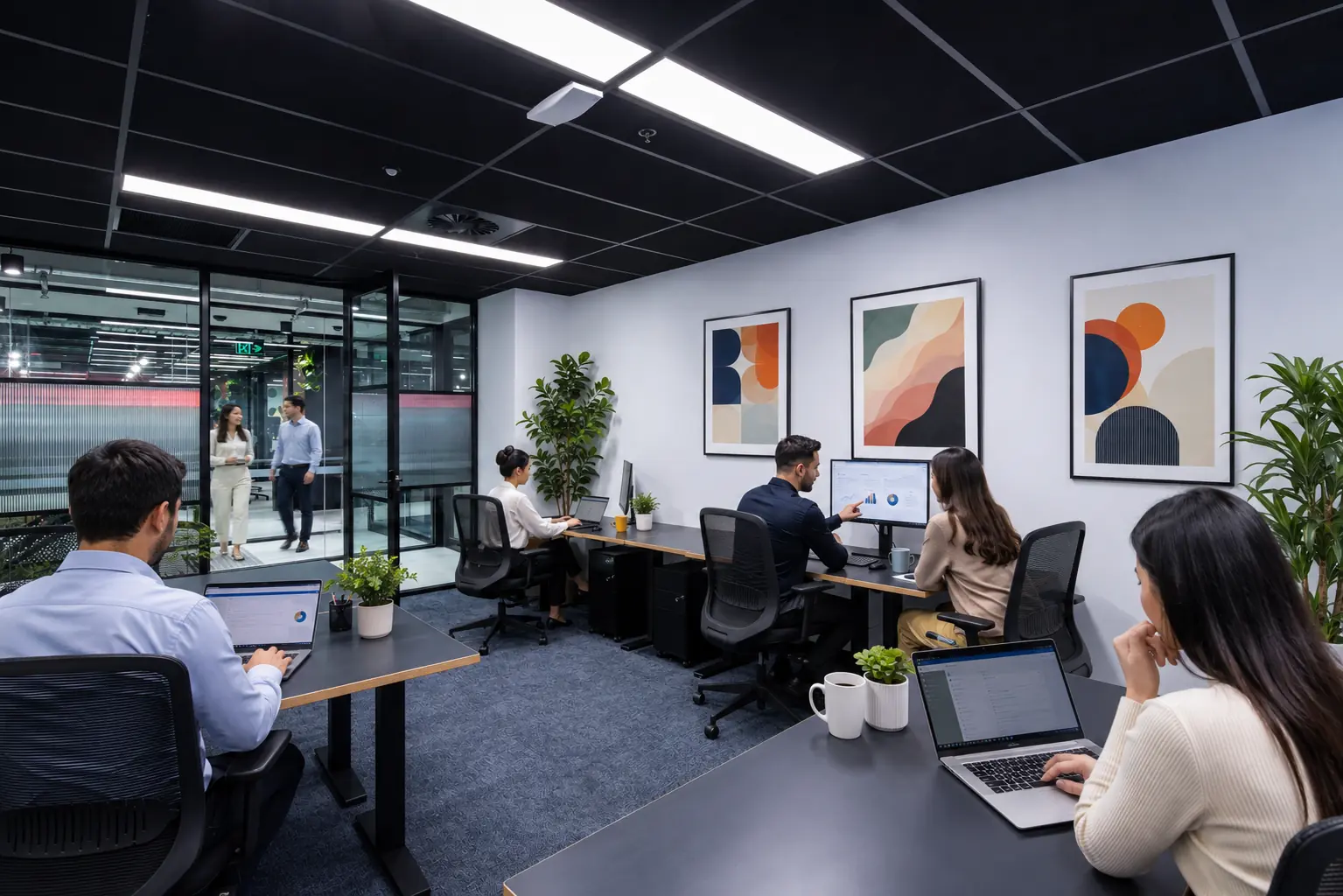
A serviced private office provides your team with a secure, dedicated workspace inside a professionally managed environment. Depending on the provider, your agreement may also include furniture, internet, utilities, cleaning, reception support, shared breakout areas and access to meeting rooms.
Before choosing a workspace, here are eight things every business owner and office decision-maker should know.
1. Serviced Private Offices Offer More Flexibility Than Traditional Leases
Traditional commercial leases can lock a business into a fixed space for several years. That can work for established organisations with predictable headcounts, but it may create unnecessary risk for growing or changing teams.
Serviced private offices typically offer more flexible lease terms, allowing businesses to choose an agreement that better reflects their current stage and future plans.
This can be particularly valuable when your business is:
- Hiring new team members
- Entering the Melbourne market
- Establishing a project team
- Testing a new location
- Transitioning from remote work
- Moving out of a home office
- Waiting for a permanent office to become available
Flexibility does not mean choosing a space without commitment. It means creating an agreement that supports the business rather than forcing the business to work around the property.
Before signing, confirm the minimum term, notice period, renewal process and options for moving into a larger or smaller office.
2. The Monthly Price Should Cover More Than Four Walls
The advertised rent for a traditional office rarely represents its complete cost.
A conventional lease may require separate spending on furniture, internet, electricity, cleaning, maintenance, security, access systems, office equipment and ongoing facility management. There may also be legal fees, deposits, make-good obligations and fitout costs.
Serviced private offices can consolidate many of these expenses into a more predictable monthly fee.
Inclusions may cover:
- Office furniture
- High-speed internet
- Electricity and utilities
- Cleaning
- Building access
- Shared kitchens
- Breakout spaces
- Mail handling
- Reception services
- Community events
- Facility management
When comparing small business office solutions, ask each provider for a complete list of inclusions and potential additional charges. Pay close attention to meeting room fees, printing, parking, after-hours access and additional memberships.
The cheapest monthly rate is not always the best value. Like selecting a player based only on salary, ignoring their contribution to the wider team can produce an expensive mistake.
3. Meeting Room Access Can Change the Value of the Office
A private office may be where your team completes its focused work, but meeting rooms are often where important conversations happen.
Client presentations, interviews, workshops, strategy sessions and confidential discussions require more than a spare chair beside someone’s desk. Having access to professional meeting rooms allows small teams to operate with the presence and capability of a larger organisation.
When evaluating serviced private offices, consider:
- How many meeting rooms are available?
- What room sizes can be booked?
- Are meeting credits included?
- What are the hourly rates after credits are used?
- How far in advance can rooms be reserved?
- Is video-conferencing technology provided?
- Are boardrooms available for larger presentations?
- Can external guests access the rooms easily?
- Is catering available?
The right meeting room access can also prevent a business from paying for a larger private office simply to accommodate occasional gatherings.
This is one of the main advantages of flexible office space. Your business can maintain a right-sized private office while accessing larger shared facilities only when required.
4. Reception Support Shapes the Client Experience
First impressions begin before a visitor enters your office.
Professional reception support can give clients, candidates and partners a more polished arrival experience. Instead of asking a team member to watch the door or interrupting someone’s work whenever a guest arrives, reception staff can welcome visitors and direct them appropriately.
Depending on the workspace, reception support may include:
- Greeting visitors
- Managing guest arrivals
- Receiving mail and deliveries
- Providing directions
- Supporting room bookings
- Coordinating catering
- Answering basic location enquiries
Meeting rooms and reception services are particularly important for accountants, consultants, legal professionals, recruiters and other client-facing firms.
Ask whether reception is staffed throughout standard business hours and what happens when visitors arrive after hours. The quality of the service matters as much as its availability. Reception should feel like an extension of your team, not simply a desk near the entrance.
5. Privacy and Security Still Require Careful Review
Serviced private offices provide separation from open coworking areas, but privacy standards can vary between spaces.
Professional firms may need to protect confidential conversations, commercial information, employee records or client documents. A lockable door is useful, but it should not be the end of the assessment.
Review the following:
- Office access controls
- Building security
- Visitor management
- Internal office locks
- Acoustic privacy
- Wi-Fi and network arrangements
- Secure storage options
- After-hours access
- Document disposal
- Emergency procedures
If your team regularly holds confidential calls, inspect the space during a busy period. This will help you understand whether sound travels between offices or into shared areas.
Businesses with specific regulatory or technology requirements should also confirm whether the provider can support private networks, dedicated connections or additional access controls.
Privacy is not only about compliance. It gives employees and clients the confidence to communicate openly.
6. The Best Office Should Support Growth Without Forcing a Move
A serviced private office should solve today’s workspace problem without creating another one six months later.
Ask the provider what happens if your team grows. Can you add desks, move into a larger office or secure a second room nearby? Can new employees access the shared areas before a larger office becomes available?
A scalable workspace provider may offer:
- Private offices in multiple sizes
- Additional coworking memberships
- Project rooms
- Casual day passes
- Larger meeting rooms
- Access across multiple locations
- Options to expand within the building
- Support moving between offices
This matters for startup office space and established small businesses alike. Growth is rarely perfectly linear. A team may expand after winning a major client, reduce its footprint after a project ends or need temporary space for visiting employees.
Your workspace should absorb these changes without sending the business back to the starting line.
7. The Wider Environment Affects Team Experience
A private office cannot be evaluated in isolation from the rest of the workplace.
Employees will also use the kitchen, bathrooms, breakout areas, meeting rooms and common spaces. The design, maintenance and atmosphere of these areas can influence how people feel about coming to work.
Consider whether the workplace provides:
- Natural light
- Comfortable furniture
- Quiet areas
- Informal collaboration spaces
- Reliable temperature control
- End-of-trip facilities
- Kitchen amenities
- Nearby cafés and transport
- Wellness facilities
- Professional community events
Hybrid workspaces need to earn the commute. If employees can complete focused tasks at home, the office should offer something more: useful collaboration, better amenities, professional energy and stronger connection.
Location is part of that experience. Review public transport, parking, cycling access and nearby food options. A beautiful office will not support attendance if reaching it becomes a weekly endurance event.
8. Culture and Community Can Add Value Beyond the Office
Some businesses want complete separation. Others benefit from being surrounded by founders, professionals and growing teams.
A well-managed workspace community can create opportunities for introductions, partnerships, referrals and knowledge sharing. Events and shared spaces can also give employees greater energy and connection without taking away the privacy of their dedicated office.
When visiting a space, ask:
- What types of businesses work here?
- Are community events optional?
- How are professional introductions facilitated?
- Are there networking or educational programs?
- Does the environment feel active without becoming distracting?
- Is the workplace aligned with your brand and team culture?
Community should be an advantage, not an obligation. The strongest serviced private offices allow your team to engage when it is useful and retreat to its own secure space when focus is required.
How to Compare Serviced Private Offices
A structured comparison will help you look beyond polished photography and promotional pricing.
Score each option against these criteria:
- Location: Is it convenient for employees, clients and partners?
- Total cost: What is included, and what attracts an additional fee?
- Agreement flexibility: Can the terms adapt to business change?
- Office quality: Does the room provide enough light, comfort and privacy?
- Meeting facilities: Are the right room sizes and technologies available?
- Reception support: Will visitors receive a professional welcome?
- Growth options: Can the space accommodate a larger or changing team?
- Shared amenities: Do the common areas improve the working day?
- Technology: Is the internet fast, reliable and appropriate for your needs?
- Community fit: Does the environment suit your people and brand?
Where possible, tour the workspace during a normal business day. A quiet Friday afternoon may not reveal how the environment performs on a busy Tuesday morning.
Are Serviced Private Offices Right for Your Business?
Serviced private offices can be a strong fit for businesses that want a dedicated workplace without carrying the complete cost and operational burden of a conventional office.
They are particularly useful for:
- Small teams preparing to grow
- Professional firms hosting clients
- Businesses moving beyond remote work
- Interstate companies establishing a presence
- Startups seeking flexibility and credibility
- Hybrid teams that need a consistent home base
- Project teams requiring temporary space
- Businesses between long-term property decisions
The central question is not whether a serviced office costs more or less than rent alone. The better comparison is between the complete cost, flexibility and capability of each option.
A well-chosen private office can reduce operational friction, improve the employee experience and give the business space to build momentum.
Find a Serviced Private Office at CreativeCubes.Co
CreativeCubes.Co provides serviced private offices designed for businesses that want privacy, professional infrastructure and the energy of a connected workplace community.
With flexible workspace options, bookable meeting rooms, welcoming shared areas and support from an experienced on-site team, your business can focus on growth while we take care of the workplace.
Ready to find a better office for your team?
Explore CreativeCubes.Co locations or book a tour to compare private office options across Australia.
FAQs
What is included in a serviced private office?
Inclusions vary between providers but may include furniture, internet, electricity, cleaning, secure access, shared kitchens, reception support and access to meeting rooms. Always request a complete schedule of inclusions before signing an agreement.
How is a serviced private office different from coworking?
A serviced private office gives one business a secure, dedicated room. Coworking commonly refers to shared desk areas used by different members. Private office members may still access coworking lounges, kitchens, meeting rooms and community facilities.
Are serviced private offices suitable for small businesses?
Yes. Serviced private offices can give small businesses access to professional facilities without requiring them to fund and manage an entire office. Flexible terms can also help the workplace adapt as the business grows.
Can serviced private offices support hybrid teams?
Yes. Hybrid workspaces can provide a consistent base for collaboration while allowing the business to choose an office size that reflects actual attendance rather than total headcount. Meeting rooms and shared areas can support larger team days.
Do serviced private offices include meeting rooms?
Access is commonly available, although pricing structures vary. Some agreements include monthly meeting room credits, while others charge by the hour. Check room availability, booking rules and technology before choosing a space.
What agreement terms are available?
Terms depend on the provider, location and office. Options may range from short-term arrangements to longer agreements with more favourable pricing. Review the minimum term, notice period, renewal process and expansion options.
Can my business use the workspace address?
Many providers allow members to use the location as their business address, although conditions may apply. Confirm whether mail handling, business registration and address use are included in your agreement.
What should I inspect during a private office tour?
Check natural light, noise, privacy, temperature, furniture, internet connectivity, meeting room availability, shared facilities and transport access. Tour during a busy period to gain a realistic view of the environment.