



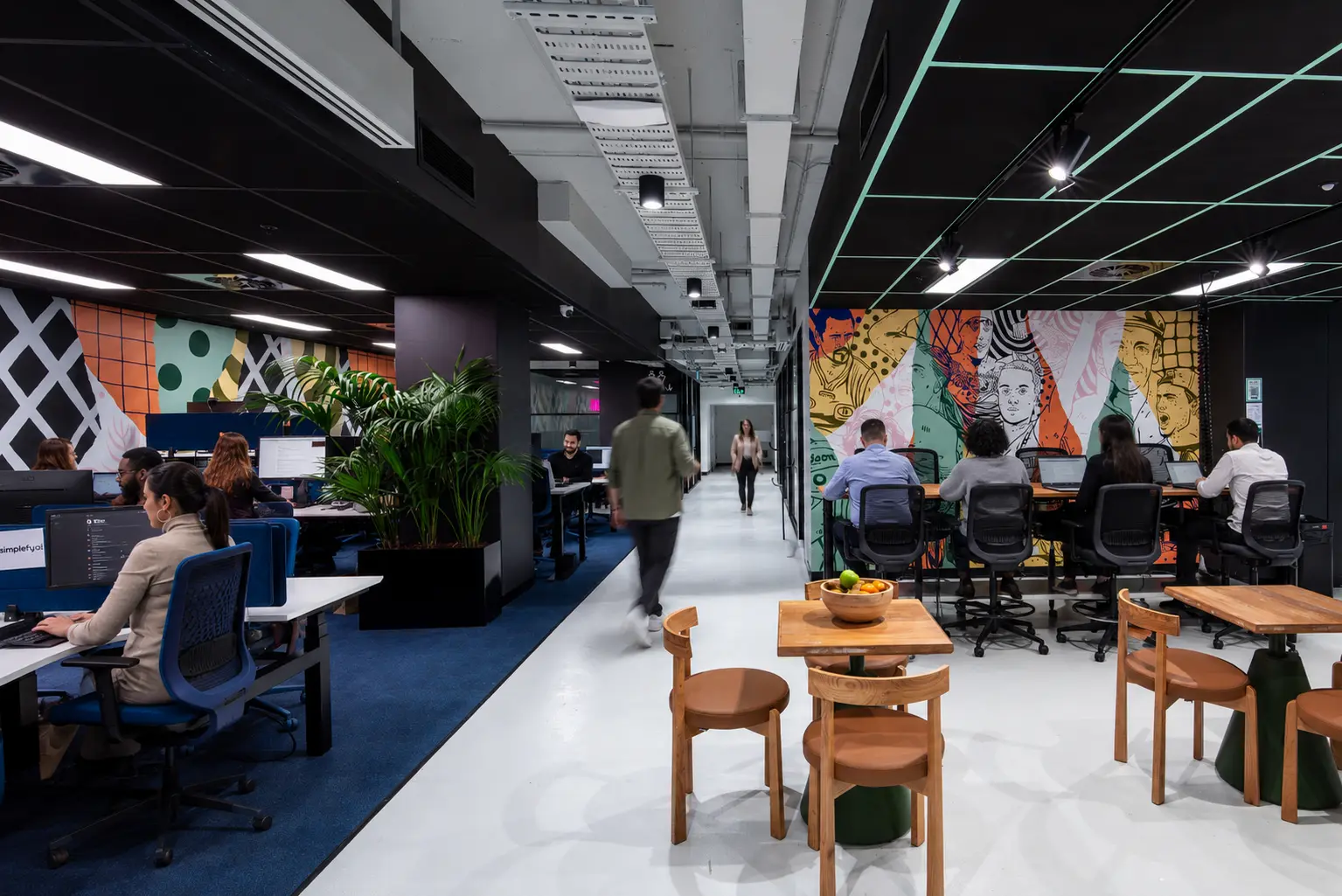
Why Traditional Offices Reduce Staff Engagement
Employee engagement in traditional offices is becoming a serious challenge for professional firms.
The problem is not always the people, the leadership or the work itself. Sometimes, the workplace simply no longer supports how teams want to operate.
Fixed layouts, limited choice and uninspiring environments can slowly reduce energy across a business. Employees still turn up, complete their work and attend meetings, but the connection to the workplace begins to fade.
For small business owners and professional firm managers, this matters. Lower engagement can affect collaboration, employee motivation, office culture and staff retention.
The modern workplace must do more than provide desks. It should help people connect, perform and feel part of something.
What Is Employee Engagement in the Workplace?
Employee engagement describes the emotional connection people have with their work, colleagues and organisation.
An engaged employee is not simply productive. They are invested in the outcome. They contribute ideas, support their colleagues and care about the success of the business.
Workplace engagement is shaped by several factors, including:
- Leadership and communication
- Recognition and development
- Team relationships
- Autonomy and flexibility
- Workplace design
- Access to the right tools and spaces
- A sense of belonging
The office cannot solve every engagement challenge. However, it can either support these factors or make them harder to achieve.
Why Employee Engagement in Traditional Offices Declines
Traditional offices were typically designed around predictable attendance, fixed teams and long-term occupancy.
Work has changed.
Teams are more mobile. Hybrid working is common. Businesses grow and restructure faster. Employees also expect greater choice in how and where they complete different types of work.
When the office remains static while the team evolves, engagement can suffer.
1. Fixed Layouts Limit How People Work
A traditional office commonly gives each employee one desk and one primary place to work.
That approach may appear efficient, but different tasks require different environments. Focused work needs quiet. Collaboration needs space and energy. Confidential conversations require privacy.
When every activity must happen in the same setting, employees are forced to adapt their work to the office.
Flexible workspaces reverse that relationship. They give people access to private offices, breakout areas, meeting rooms, shared lounges and quiet spaces based on what they need to achieve.
Like a strong sporting team, people perform better when they are placed in the right position for the job.
2. Uninspiring Environments Reduce Energy
Workplace design influences how people feel when they enter the office.
Poor lighting, dated furniture, blank walls and limited natural elements can create an environment that feels functional but flat. Over time, this can affect employee motivation and pride in the workplace.
Professional firms do not need novelty for the sake of novelty. They need an environment that feels considered, comfortable and aligned with the quality of their brand.
Natural light, greenery, quality furniture, artwork and well-designed communal areas can help the workplace feel more energising and welcoming.
When employees feel good in their surroundings, they are more likely to use the office, connect with colleagues and contribute to the broader office culture.
3. Isolation Weakens Workplace Engagement
An office can be full of people and still feel disconnected.
Closed doors, separated departments and limited communal areas can reduce spontaneous conversations. Employees may spend most of their day communicating through email or messaging platforms, even when colleagues are sitting nearby.
This limits the small moments that strengthen professional relationships.
Shared kitchens, breakout spaces and community areas create more opportunities for natural interaction. These moments can lead to better communication, stronger relationships and unexpected ideas.
Culture is rarely built through one major initiative. It grows through hundreds of small interactions.
4. Traditional Offices Offer Limited Flexibility
Employees increasingly value choice over where and how they work.
A rigid workplace can create friction when people need to manage focused tasks, client meetings, collaboration or personal responsibilities. If the office only supports one working style, employees may see attendance as an obligation rather than an advantage.
That mindset can reduce engagement.
Flexibility does not mean removing structure. It means giving people practical options within a clear operating framework.
Professional firms can support flexibility through:
- A combination of private and shared workspaces
- Bookable meeting and focus rooms
- Hybrid work arrangements
- Flexible office access
- Spaces that accommodate changing team sizes
- Technology that supports work across locations
The objective is to make the workplace useful enough that employees have a reason to engage with it.
5. Poor Amenities Create Daily Frustration
Employee engagement can be affected by seemingly small operational issues.
Slow internet, insufficient meeting rooms, unreliable technology or uncomfortable furniture create repeated interruptions. One problem may be manageable. When those problems happen every day, they begin to influence how employees feel about the business.
For small businesses and professional firms, maintaining office amenities can also consume valuable management time.
Serviced and flexible workspaces can remove much of that operational burden. Internet, cleaning, reception, meeting rooms and workplace support can be included within the workspace experience.
This allows managers to focus on their people and clients instead of managing the office printer like it is a difficult employee.
6. A Lack of Community Reduces Belonging
People want to feel connected to something larger than their individual workload.
Traditional offices can become isolated environments, particularly for smaller professional firms. Employees may interact with the same small group every day with limited exposure to new people, ideas or industries.
A flexible workspace can introduce a broader professional community around the business.
Events, shared areas, introductions and informal conversations can create valuable connections without compromising the privacy of the firm’s own office.
This can be especially useful for smaller teams that want the culture and energy of a larger workplace while retaining their identity and independence.
7. Static Offices Struggle to Support Growth
Businesses rarely remain the same size throughout a long-term office lease.
A professional firm may hire new employees, adopt hybrid working, establish project teams or enter new markets. A fixed office can quickly become too small, too large or poorly configured.
Both situations can damage workplace engagement.
An overcrowded office creates noise and frustration. An underused office can feel empty and disconnected. Neither creates the energy employees expect from a modern workplace.
Flexible office space allows businesses to adjust their workspace as requirements change. That could mean adding desks, moving into a larger private office or accessing additional meeting rooms without relocating the entire business.
The workspace can move with the team instead of holding it back.
8. Traditional Offices Can Make Culture Harder to Maintain
Office culture is not defined by the address, furniture or number of days employees attend.
It is shaped by behaviours, relationships and shared experiences. However, the environment plays an important supporting role.
If the office makes collaboration difficult, feels uninspiring or offers employees little flexibility, leadership must work harder to maintain engagement.
A well-designed workplace makes positive cultural behaviours easier. It provides spaces for teams to gather, gives employees choices and creates opportunities for people to connect naturally.
The workplace becomes part of the culture rather than simply the location where work happens.
How Flexible Workspaces Can Improve Employee Engagement
Flexible workspaces give professional firms the infrastructure of a larger workplace without the rigidity of a traditional office lease.
Depending on the business, this may include:
- Serviced private offices
- Meeting and boardrooms
- Quiet areas for focused work
- Breakout and collaboration spaces
- Reception and business support
- Professional events and networking
- Flexible membership options
- The ability to scale workspace requirements
The strongest flexible workspaces balance privacy with community. A team can operate from its own secure office while accessing shared amenities and a broader professional environment.
This gives employees more choice, creates additional energy and helps the business adapt as its needs change.
How to Assess Your Current Office
Professional firm managers should regularly review whether their workplace is supporting engagement.
Consider asking:
- Do employees have suitable spaces for different types of work?
- Does the office encourage connection or create isolation?
- Are meeting rooms and shared spaces easy to access?
- Does the environment reflect the quality of our brand?
- Are employees proud to bring clients into the workplace?
- Can the office accommodate changes in headcount?
- Are workplace problems consuming management time?
- Does attending the office add value to the employee experience?
If several answers raise concerns, the issue may not be a lack of employee motivation. The workplace itself may need to change.
Build a Workplace People Want to Use
Improving employee engagement in traditional offices requires more than adding new furniture or introducing another team activity.
Businesses need to reconsider the role of the office.
The workplace should support focused work, collaboration, client engagement, flexibility and community. It should give employees the tools and environment they need to perform at their best.
For professional firms, flexible workspace thinking provides a practical alternative. It can improve the daily experience, support staff retention and give the business more room to evolve.
CreativeCubes.Co creates flexible workspaces where teams can work privately, connect naturally and grow with confidence.
Ready to create a workplace that works harder for your people? Explore CreativeCubes.Co private offices and flexible workspace solutions today > Book A Tour
FAQs
What causes low employee engagement in traditional offices?
Low employee engagement in traditional offices can be caused by rigid layouts, uninspiring design, limited flexibility, poor amenities and a lack of connection between employees. Leadership and communication remain important, but the workplace can either support or weaken engagement.
Can office design affect employee motivation?
Yes. Office design can influence comfort, concentration, collaboration and how employees feel about attending the workplace. Natural light, ergonomic furniture, quiet areas and collaborative spaces can create a more positive working experience.
How can professional firms improve workplace engagement?
Professional firms can improve workplace engagement by offering greater flexibility, creating spaces for different work styles, strengthening communication and providing more opportunities for team connection. The office should support these initiatives through its design and amenities.
Do flexible workspaces help with staff retention?
Flexible workspaces can support staff retention by improving the employee experience. They can provide greater choice, quality amenities, professional surroundings and more opportunities for connection. However, retention also depends on leadership, career development, recognition and workplace culture.
Are flexible workspaces suitable for professional firms?
Yes. Professional firms can use secure private offices while accessing shared meeting rooms, reception services and communal facilities. This provides privacy for confidential work while offering the flexibility and energy of a broader workspace community.
What should a small business look for in a flexible workspace?
Small businesses should consider privacy, location, internet reliability, meeting room access, workspace design, support services, flexibility and the ability to scale. The workspace should meet current requirements while allowing the business to grow.