



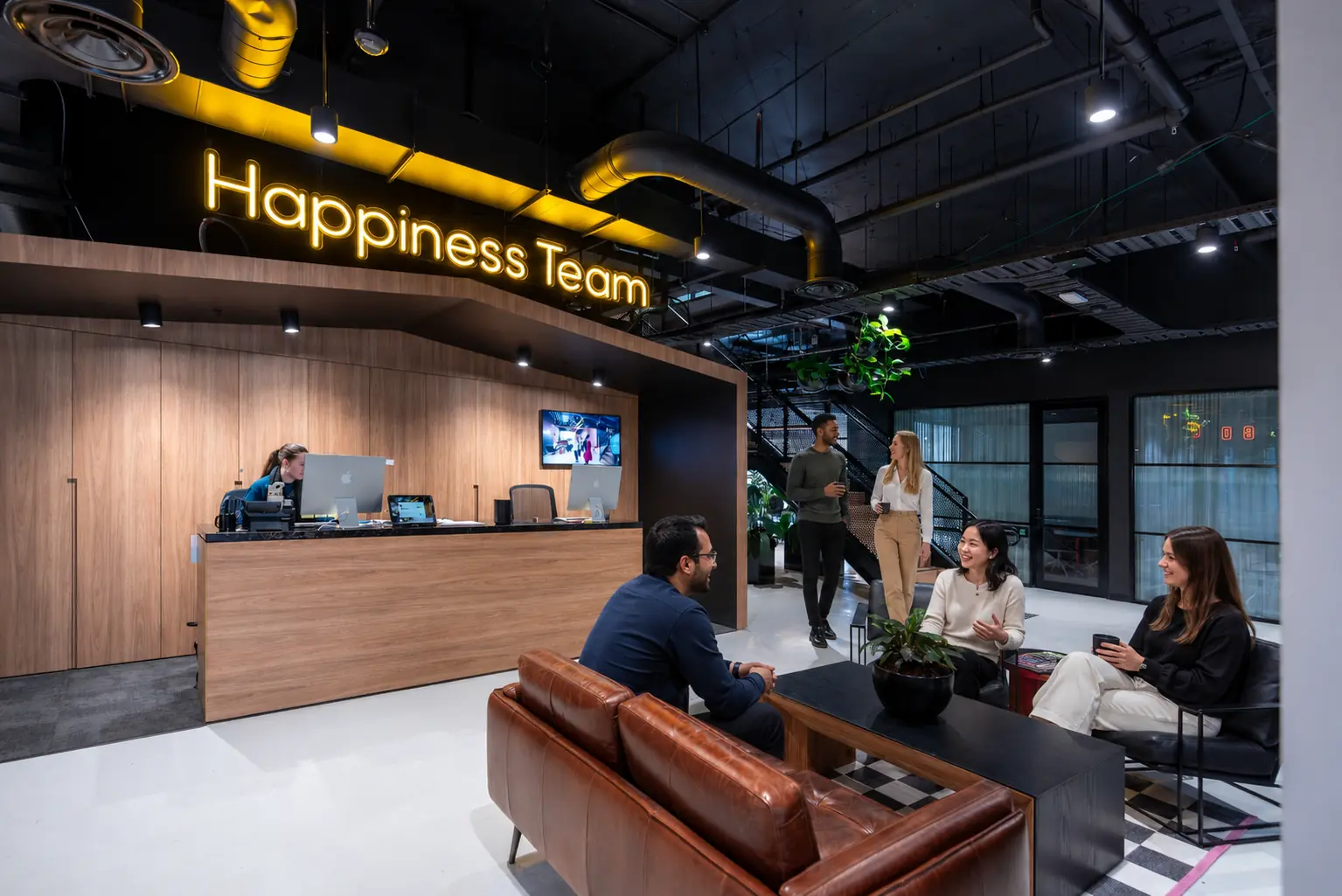
Your business needs space to focus, meet clients and bring people together. But when your team is growing and working across different locations, choosing an office can feel like predicting next season’s line-up before recruitment has finished.
Serviced private offices give small firms a dedicated workspace within a managed environment, with access to shared facilities and support. They can offer a practical balance between privacy, professional presentation and flexibility, without requiring your team to organise every part of an office from scratch.
For small business owners and operations managers, the goal is straightforward: find a workspace that supports today’s team and gives you options for tomorrow.
What are serviced private offices?
Serviced private offices are enclosed workspaces reserved for an individual business within a larger managed workspace. Unlike a hot desk in a shared area, a private office gives your team its own room for everyday work.
Depending on the location and agreement, the offering may include furniture, internet, utilities, cleaning and access to communal facilities. Meeting rooms and reception services may also be available, with inclusions and additional charges varying between packages.
The appeal is the combination: a dedicated base for your business, supported by facilities you do not have to establish and manage independently.
Before choosing an office, ask for a clear breakdown of what is included, what is bookable and what costs extra.
Why serviced private offices make sense for small firms
A dedicated space for focus and teamwork
Working from home can suit individual tasks. Shared desks can provide a useful change of scene. However, some teams reach a point where they need a consistent place to work together.
Private offices for small businesses create that base. Your team can settle into a routine, work through projects and keep everyday collaboration close at hand.
An enclosed office also provides more separation from shared areas, although privacy requirements still deserve attention. If your work involves sensitive conversations, check sound transfer, access controls and available spaces for confidential meetings during your tour.
A professional setting for clients
The client experience starts before the meeting begins.
Clear arrival instructions, a welcoming reception area and a suitable meeting room all contribute to how prepared your business feels. For a small firm, access to this infrastructure can make hosting clients more straightforward.
Rather than holding a presentation beside someone else’s video call, you can book a room suited to the conversation. That might mean a smaller space for a consultation or a larger room for a workshop.
Less office administration
Running an independent office can involve coordinating furniture, cleaning, internet, utilities, maintenance and building access.
A serviced environment can bring several of these responsibilities under one provider. For a founder or operations manager, that can mean fewer suppliers to coordinate and less time spent resolving routine workspace issues.
The value is not simply having an office ready to use. It is keeping your attention available for customers, staff and the work that moves your business forward.
Meeting rooms and reception services: check the details
Access to meeting rooms and reception services can be a major reason to choose flexible office space. However, access does not always mean unlimited use.
Match meeting rooms to your working week
Consider how your team actually meets. Do you need regular client consultations, weekly planning sessions or occasional full-team workshops?
Ask about:
- Room sizes and availability on your busiest days.
- Booking processes and cancellation conditions.
- Included credits, member rates and additional charges.
- Screens, video conferencing equipment and internet connectivity.
- Guest access, accessibility and catering options.
A room that looks impressive on a tour still needs to work when you need it. Ask about peak periods and how far ahead regular meetings can be booked.
Understand what reception support covers
Reception support may include welcoming visitors and notifying your team when guests arrive. Other services, such as mail handling, telephone answering or administrative assistance, may be separate or unavailable.
Confirm the service scope and staffed hours. If clients often visit early or late, understand how arrivals work outside those hours.
The right arrangement should support your client experience and make responsibilities clear.
How serviced private offices support hybrid office setups
Hybrid work changes the way businesses use space. A team may have eight employees but rarely have all eight in the office at once.
That does not automatically mean a four-person office is the right answer. The useful question is how many people need to work comfortably on the same day.
For example, imagine an eight-person consultancy where four people usually attend, but everyone comes in on Wednesdays. It could consider:
- An office that accommodates the full team throughout the week.
- A smaller office with agreed access to additional workspaces.
- Staggered attendance, with a bookable room for scheduled team sessions.
These are planning options, subject to the provider’s capacity and agreement. A meeting room should not be assumed to replace everyday desk capacity.
Effective hybrid office setups also need reliable video calls, somewhere for focused work and a clear booking routine. Plan around your busiest realistic day, then check whether the proposed arrangement still works when a client visit or new starter is added.
What flexible lease terms should mean in practice
Flexibility is most useful when you understand exactly how it works.
When comparing flexible lease terms, ask about the initial commitment, notice periods, renewal process and options for changing office size. Depending on the provider, the arrangement may be described as a membership, licence or lease.
Useful questions include:
- What is the minimum commitment?
- How much notice is needed to leave or change the arrangement?
- Can we move to a larger or smaller office, and on what conditions?
- Are changes subject to availability or a new agreement?
- When can pricing change?
- What deposits, setup fees or departure costs apply?
Shorter commitments can help a business respond to change, but they do not automatically make every option available immediately. Discuss likely hiring plans and attendance changes before committing.
Compare the full cost of your workspace
The monthly office fee is one part of the decision.
An independently leased office may involve separate spending on furniture, connectivity, utilities, cleaning and maintenance. A serviced office may bundle several of these items, while charging separately for others.
Compare equivalent requirements across the same period:
| Cost area | What to check |
|---|---|
| Office fee | Capacity, commitment period and scheduled price changes |
| Setup | Furniture, deposits, onboarding and connectivity |
| Daily operations | Internet, utilities, cleaning and support |
| Meetings | Expected monthly room use and any additional charges |
| Optional services | Parking, printing, catering or other extras |
| Changes and departure | Notice requirements, relocation costs and exit obligations |
Serviced private offices are not automatically the lowest-cost option for every business. Their value depends on what is included, how much you use and how much operational responsibility the provider takes on.
Choose the arrangement that fits your working pattern and budget, rather than comparing headline prices alone.
Choosing startup office solutions with room to grow
For an early-stage business, office needs can change quickly. A new client, funding milestone or key hire may affect both headcount and how the team works.
When evaluating startup office solutions, focus on the next practical stage of growth. You need enough capacity to work effectively now, plus a clear understanding of what happens if the team expands.
Ask whether the location has other office sizes, how moves are handled and what happens if your preferred space is unavailable.
Location matters too. Consider staff travel, public transport, client convenience and the surrounding amenities. An office your team can comfortably reach is more useful than one that looks good on a proposal but complicates every working day.
Find your fit at CreativeCubes.Co
At CreativeCubes.Co, our focus is on spaces where people can work, connect and grow within a vibrant business community.
For a small firm, choosing the right private office starts with a conversation about your business: how many people attend, how you host clients, what support you need and where you want to go next.
Bring those priorities to a tour. Look at the workspace through the lens of a normal working week, from the first team arrival to the final client meeting. Discuss current private office availability, meeting room access, reception support and agreement options for your preferred location.
Give your team a professional base and a plan for what comes next. Contact CreativeCubes.Co to arrange a tour and explore a workspace that fits your business.
FAQs about serviced private offices
What is the difference between a serviced private office and coworking?
A serviced private office is an enclosed space reserved for your business. Coworking often refers to desks in a shared environment, although private offices can sit within a coworking location. A private office offers a dedicated team base while retaining access to shared facilities according to your agreement.
Are serviced private offices suitable for small businesses?
Yes. They can suit small businesses that want a dedicated workspace and access to managed facilities. Suitability depends on team size, attendance, privacy requirements, budget and the services included in the agreement.
Are meeting rooms included in a serviced private office?
This varies by provider and package. Some agreements include booking credits or allowances, while others charge separately or offer member rates. Confirm the allowance, room availability and expected cost of additional bookings.
What reception services should a small firm expect?
Reception support may cover greeting visitors and notifying your team of their arrival. Mail handling, telephone answering and administrative support should be checked separately. Ask about staffed hours and arrangements for guests arriving outside those times.
Can serviced private offices work for hybrid teams?
Yes, provided the office capacity and supporting facilities match attendance. Plan for your busiest days, check how additional space can be accessed and confirm any rules around rotating team members or sharing desks.
Can I increase or reduce my office size?
Some providers offer options to change office size, but moves typically depend on availability and agreement conditions. Ask about notice, pricing and any new commitment required before relying on an upgrade or reduction.
How much do serviced private offices cost?
Pricing depends on location, office size, commitment period and included services. Request a tailored quote that accounts for your expected meeting room use and any additional support, then compare the total cost against your requirements.
How do I choose the right CreativeCubes.Co private office?
Start with your team’s attendance pattern, preferred location, client meeting needs and growth plans. Arrange a tour and ask the team to explain current availability, inclusions and agreement options. This helps you assess the workspace against how your business actually operates.
How do I choose the right CreativeCubes.Co location?
Consider where you live, where your clients are based and how frequently you travel. Compare the workspace options, meeting facilities, transport connections and surrounding amenities available at each CreativeCubes.Co location.