



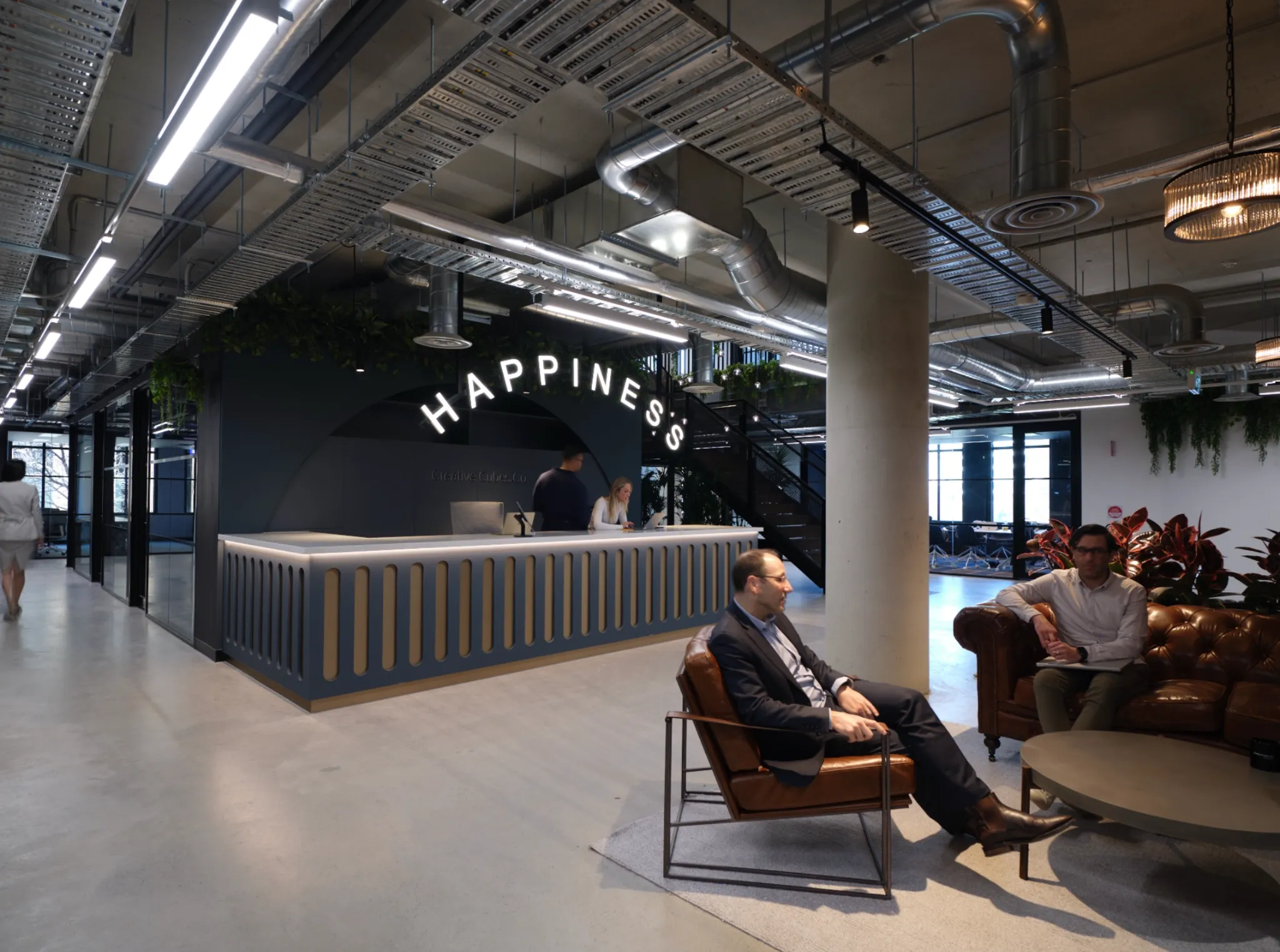
The way people work has changed. In many professional firms, the office has not.
Traditional offices were typically designed around fixed desks, private rooms, rigid hierarchies and predictable attendance. Today, employees expect greater flexibility, stronger collaboration and an environment that makes commuting worthwhile.
When the workplace no longer supports how people perform, communicate and connect, motivation can decline. Over time, that disconnect may affect productivity, culture and employee retention.
Improving employee engagement in traditional offices does not always require a complete rebuild. Strategic design changes can transform an underperforming workplace into an environment where people feel focused, connected and motivated to contribute.
Why Traditional Offices Can Reduce Staff Motivation
An office can be functional without being engaging.
A traditional layout might provide every employee with a desk, yet still fail to support the different activities involved in modern professional work. Employees need spaces for concentration, confidential conversations, collaboration, video meetings, social connection and recovery throughout the day.
When every task is expected to happen in the same environment, friction builds.
Common problems include:
- Excessive noise and interruptions
- Limited access to private meeting spaces
- Poor lighting or uncomfortable furniture
- Empty desks caused by hybrid work patterns
- Insufficient areas for collaboration
- Little visual energy or connection to company culture
- Breakout spaces that feel like an afterthought
- Technology that does not support remote participants
These conditions can make employees feel that the office is working against them. That is a serious challenge for professional firms competing to attract and retain capable people.
The Connection Between Office Design and Workplace Engagement
Workplace engagement is influenced by more than compensation, job titles and career progression. The physical environment also sends a message about how a firm values its people.
A considered office environment can help employees feel:
- Comfortable completing focused work
- Confident hosting clients
- Connected to colleagues
- Supported during hybrid meetings
- Trusted to choose how they work
- Proud of the organisation they represent
The best workplaces operate like high-performing sporting facilities. Different zones support different moments: preparation, concentration, collaboration, recovery and performance.
Professional firms should take the same approach. Instead of designing an office around where people sit, design it around what people need to achieve.
1. Create Different Zones for Different Types of Work
A single desk is no longer expected to support every part of the working day.
Professional firms can improve staff motivation by creating a variety of work settings, including:
- Quiet areas for detailed individual work
- Enclosed rooms for confidential conversations
- Collaboration zones for project teams
- Phone booths for video calls
- Informal spaces for short discussions
- Meeting rooms for clients and presentations
- Social spaces for team connection
This choice gives employees more control over how they work. It can also reduce noise, distractions and competition for meeting rooms.
The goal is not to remove structure. It is to give people the right environment for the task in front of them.
2. Make the Office Worth the Commute
Hybrid work has changed the value equation of office attendance.
Employees may already have a functional workspace at home. To encourage meaningful attendance, the office needs to offer something home cannot consistently provide.
That could include:
- High-quality meeting facilities
- Stronger opportunities for collaboration
- Professional hospitality and reception
- Better technology
- Social connection
- Learning and networking opportunities
- Access to wellness facilities
- A sense of energy and momentum
This is central to improving employee engagement in traditional offices. Mandating attendance may bring people through the door, but a compelling workplace gives them a reason to participate once they arrive.
3. Improve Access to Natural Light and Greenery
Lighting has an immediate influence on how a workplace feels.
Where possible, workstations and shared areas should benefit from natural light. Offices can also use layered artificial lighting to avoid spaces feeling overly clinical or flat.
Plants, natural textures and greenery can soften the office environment and create a more welcoming atmosphere. These additions are particularly valuable in professional firms where traditional finishes may otherwise feel formal or impersonal.
A professional workplace does not need to feel sterile. It can communicate credibility while still feeling warm, energised and human.
4. Design for Collaboration Without Creating Constant Distraction
Collaboration is important, but poorly planned collaboration areas can disrupt the entire workplace.
Open discussion zones should be positioned away from quiet work areas. Acoustic treatments, screens, meeting pods and enclosed rooms can help contain noise without isolating teams.
Professional firms should also consider the way employees collaborate in practice.
Ask:
- Are project discussions usually planned or spontaneous?
- How many people generally attend?
- Do teams need screens, whiteboards or writable surfaces?
- Are remote participants commonly involved?
- Is confidentiality required?
Design should respond to these behaviours. A large boardroom will not solve a shortage of small rooms for two-person calls.
5. Protect Privacy and Confidentiality
Privacy remains essential across legal, accounting, financial, consulting and other professional services environments.
An effective redesign must balance collaboration with confidentiality.
Practical solutions include:
- Sound-controlled meeting rooms
- Private phone booths
- Screen positioning that protects sensitive information
- Lockable storage
- Secure access systems
- Designated rooms for client discussions
- Appropriate spacing between workstations
Employees need confidence that they can handle sensitive conversations without being overheard. Clients need the same assurance when visiting the office.
Privacy should be integrated into the design, not patched in after complaints arise.
6. Improve the Hybrid Meeting Experience
Hybrid meetings can quickly reduce workplace engagement when remote employees feel disconnected from the room.
A redesign should ensure meeting spaces include:
- Reliable video conferencing technology
- Clear audio coverage
- Screens visible to every participant
- Cameras positioned to capture the room properly
- Simple connection and booking systems
- Appropriate lighting for video calls
Technology should feel intuitive. If every meeting begins with ten minutes of troubleshooting, the office becomes a source of frustration rather than performance.
The strongest hybrid environments create an equal experience for people in the room and those joining remotely.
7. Build Social Connection Into the Workplace
Professional firms often focus heavily on productivity while underestimating the role of informal interaction.
Social spaces help employees build trust, exchange knowledge and form stronger working relationships. This is particularly important for new starters and younger employees who benefit from exposure to experienced colleagues.
Useful social spaces might include:
- Communal kitchens
- Business lounges
- Café-style seating
- Shared lunch areas
- Rooftops or outdoor spaces
- Informal event areas
These environments can create the spontaneous conversations that rarely happen in scheduled video meetings.
A stronger social connection can support workplace engagement and make employees feel part of something larger than their individual workload.
8. Use the Office to Reinforce Culture
An office should communicate what the organisation stands for.
Brand identity can be reflected through colour, artwork, materials, signage and shared spaces. More importantly, the layout should reflect how the firm wants people to behave.
If collaboration is a stated value, employees need places to collaborate. If wellbeing matters, the office should offer comfort, natural light and space to reset. If innovation is important, teams need flexible areas where ideas can be explored.
Culture cannot live only in a values statement. Employees should be able to experience it in the environment around them.
9. Give Employees a Voice in the Redesign
Workplace decisions are stronger when they are informed by the people using the space.
Before changing the office, professional firms can gather feedback through:
- Employee surveys
- Team workshops
- Workplace observations
- Occupancy data
- Meeting room booking patterns
- Interviews with team leaders
- Post-redesign feedback sessions
Employees do not need to make every design decision. They should, however, have an opportunity to explain what currently helps or hinders their work.
Consultation can also strengthen buy-in. People are more likely to embrace a redesigned workplace when they understand why changes were made.
10. Build Flexibility Into the Workplace Strategy
A redesign should support the firm today without locking it into one way of working tomorrow.
Moveable furniture, modular meeting spaces and flexible membership options can help businesses respond to changing team sizes and attendance patterns.
For some firms, improving employee engagement in traditional offices may require more than redesigning an existing lease. A flexible workspace can provide an alternative with private offices, shared business lounges, meeting rooms and professional amenities already in place.
This approach can reduce the time, capital and operational effort involved in managing a traditional office.
How Office Redesign Can Support Employee Retention
Employees rarely leave an organisation because of one chair, one meeting room or one noisy afternoon. Workplace friction becomes significant when it is experienced repeatedly.
An office that makes work unnecessarily difficult can reinforce broader feelings of disconnection. In contrast, a workplace that supports focus, flexibility and connection demonstrates that the organisation understands how its people operate.
A stronger office environment can contribute to employee retention by:
- Reducing everyday workplace frustrations
- Supporting different working styles
- Strengthening relationships between colleagues
- Improving the experience of hybrid work
- Increasing pride in the workplace
- Helping employees feel heard and supported
Office redesign is not a replacement for strong leadership or meaningful career development. It is part of the complete employee experience.
Rethinking the Traditional Office Model
Professional firms do not need to choose between a conventional long-term office and a completely remote workforce.
Flexible workspace models can provide:
- Secure private offices
- Professional meeting rooms
- Reception and hospitality services
- Shared collaboration areas
- Business lounges
- Event spaces
- Flexible terms
- Room to expand or contract
This allows firms to maintain privacy and professionalism while giving employees a more dynamic workplace experience.
CreativeCubes.Co brings together private workspaces, shared amenities and community-led experiences designed to help teams connect, perform and grow.
Create a Workplace Where People Want to Perform
The workplace should help people do their best work. If the current office creates more barriers than momentum, redesigning the environment can be a practical step towards stronger staff motivation, workplace engagement and retention.
Start by understanding how employees actually use the office. Identify the moments that create friction, then build an environment that supports focus, connection and flexibility.
Ready to rethink your professional firm’s workplace? Explore CreativeCubes.Co locations and discover flexible private offices, meeting rooms and collaborative spaces designed for modern teams.
FAQs
How does office design affect staff motivation?
Office design affects how easily employees can focus, collaborate, communicate and connect with colleagues. Comfortable furniture, suitable lighting, reliable technology and access to different work zones can reduce everyday frustration and improve staff motivation.
How can professional firms improve employee engagement in traditional offices?
Professional firms can improve employee engagement in traditional offices by creating quiet zones, collaborative areas, private meeting rooms and social spaces. They should also improve hybrid meeting technology, seek employee feedback and align the workplace with current attendance patterns.
Can redesigning an office improve employee retention?
Office redesign alone cannot guarantee employee retention, but it can improve the daily employee experience. A workplace that supports flexibility, comfort, privacy and connection may help employees feel more valued and engaged.
What office features are most important for professional firms?
Professional firms typically need private offices, confidential meeting rooms, high-quality video conferencing, reliable connectivity, secure access, acoustic control and polished spaces for hosting clients.
How should an office support hybrid work?
A hybrid office should provide a range of work settings rather than assigning every employee the same type of desk. It should include collaboration areas, quiet spaces, bookable rooms, phone booths and technology that allows remote employees to participate effectively.
Should employees be involved in an office redesign?
Yes. Employee surveys, workshops and usage data can help decision-makers understand how the office is currently performing. Staff feedback can identify problems that may not be visible from floor plans or occupancy figures alone.
Is flexible workspace suitable for professional firms?
Yes. Flexible workspaces can provide private, secure and professional environments while offering shorter commitments, shared amenities and room to scale. Firms should confirm that the provider meets their requirements for privacy, technology, access and client presentation.
What is the first step in redesigning a traditional office?
Begin with a workplace audit. Review attendance patterns, employee feedback, meeting room usage, noise levels and the types of work employees complete. This creates a clearer brief for future design decisions.
How do I choose the right CreativeCubes.Co location?
Consider where you live, where your clients are based and how frequently you travel. Compare the workspace options, meeting facilities, transport connections and surrounding amenities available at each CreativeCubes.Co location.