



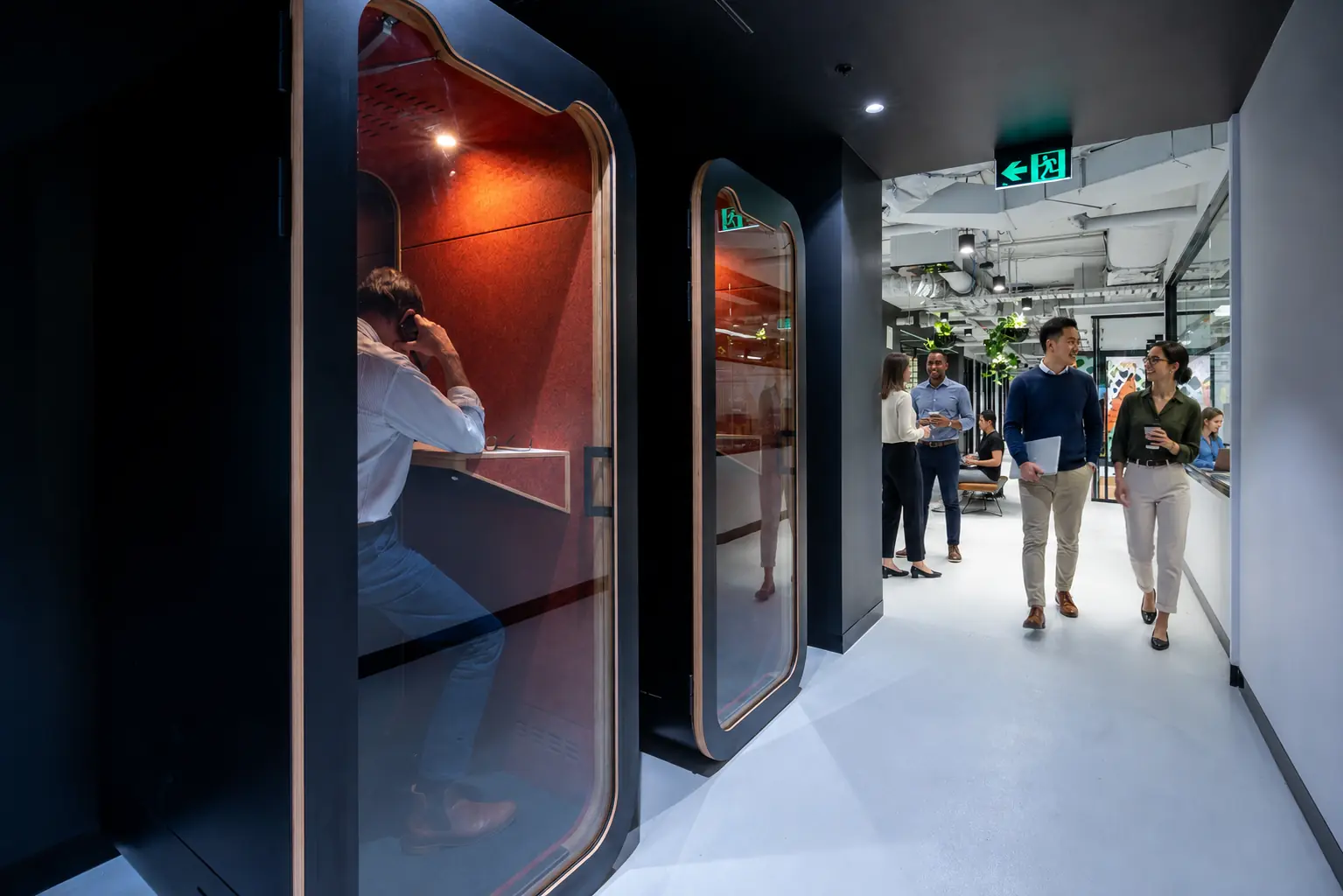
Growth is the goal for every ambitious business. But when a team expands, contracts or changes how it works, a traditional office lease can quickly shift from an asset to an anchor.
Many small businesses and mid-sized professional firms begin with an office that suits their immediate needs. Over time, however, changing headcounts, hybrid work, rising operating costs and new client expectations can expose the limitations of a fixed workplace.
This is why more Australian businesses are considering coworking spaces and other flexible workspaces as a practical traditional office replacement. They provide the infrastructure of a professional office while giving businesses more control over space, costs and future growth.
Why do businesses outgrow traditional office leases?
A business does not necessarily outgrow an office because it has run out of desks. It may outgrow the commercial structure surrounding the space.
Traditional leases typically require a business to predict its workplace needs years in advance. That is difficult when team size, market conditions, technology and working patterns can change significantly within a much shorter period.
The most common pressures include:
- Rapid or unpredictable team growth
- Too much unused space during hybrid working days
- Limited room to restructure teams
- Rising rent and operating expenses
- Expensive fitouts, furniture and technology
- Greater demand for meeting and collaboration spaces
- Long lease commitments that no longer match business plans
- Increased administrative and facilities responsibilities
When these pressures combine, the office can begin working against the business rather than supporting it.
1. Team growth happens faster than leases can adapt
A traditional lease locks a business into a defined footprint. That may work when headcount remains stable, but growing businesses rarely follow a perfect forecast.
A team of 12 might become a team of 20 following a major contract. Another business may bring in project teams for six months before reducing its permanent headcount. A professional firm might need additional space for a new service division without knowing exactly how quickly it will grow.
This creates an office space scalability problem.
Businesses can be forced to choose between:
- Squeezing more people into an undersized office
- Leasing additional space in another building
- Relocating the entire team
- Paying for excess space before it is required
None of these options is particularly efficient.
Coworking spaces give growing teams access to a broader mix of workspace products, including private offices, business lounges, meeting rooms and event spaces. This allows the workplace to expand alongside the business without requiring a complete relocation every time headcount changes.
2. Long lease terms create unnecessary risk
Commercial office leases often involve multi-year commitments. A long term can provide certainty, but it can also reduce a business’s ability to respond to change.
Future workplace requirements are difficult to predict. A business may win a major client, enter a new market, adopt hybrid work or restructure its operations long before the lease expires.
This is where long-term lease flexibility becomes a serious consideration.
A fixed lease can restrict a business when it needs to:
- Increase or reduce its footprint
- Trial a new location
- Accommodate a temporary project team
- Move closer to clients or talent
- Respond to changing market conditions
- Introduce more flexible working arrangements
Flexible workspaces provide a more adaptable model. Instead of making one large workplace decision for the next five or ten years, businesses can make smarter decisions based on what they need now and where they are heading next.
3. The real cost of an office extends beyond rent
Base rent is only one part of the cost of operating a traditional office.
Businesses may also need to fund:
- Office design and fitout
- Furniture and equipment
- Internet and technology infrastructure
- Electricity and utilities
- Cleaning
- Repairs and maintenance
- Security and access systems
- Insurance
- Kitchen supplies
- Reception support
- Meeting room technology
- End-of-lease make-good obligations
These costs can absorb capital that could otherwise be invested in people, marketing, technology or growth.
They also create operational complexity. Someone within the business must manage suppliers, resolve facilities issues and keep the workplace functioning. For a small business or professional firm, that responsibility often falls to an operations manager, office manager or senior leader whose time is better spent elsewhere.
Coworking spaces bring many of these expenses and responsibilities into one managed workplace solution. Businesses gain access to a professional environment without having to build and operate every element themselves.
4. Hybrid work changes how much space businesses need
Hybrid work has made traditional office planning more complicated.
If employees are not in the office every day, assigning a permanent desk to every person can create significant underutilisation. Yet reducing the office too aggressively can leave teams without enough space when everyone attends for meetings, training or collaboration.
The challenge is no longer simply calculating the number of employees. Businesses must consider how people actually use the workplace.
Important questions include:
- Which days have the highest attendance?
- How many people need permanent desks?
- How often are meeting rooms required?
- Where does focused work happen?
- How frequently do clients visit?
- Does the team need project or event space?
- Can the workplace adapt to peak demand?
Flexible workspaces help businesses combine private team areas with shared amenities. This creates a more efficient small business workspace without sacrificing access to meeting rooms, breakout areas or collaborative environments.
5. Growing businesses need more than desks
As a business develops, its workplace must support more sophisticated requirements.
A small team may initially need little more than desks and reliable internet. A growing professional firm may require private meeting rooms, presentation facilities, event space, reception support and a polished environment for clients.
The office becomes part of the customer experience and the employer brand.
A workplace that feels crowded, dated or poorly equipped can influence how clients, employees and candidates perceive the business. By contrast, a well-managed environment can create confidence, improve team energy and help a growing business present at its best.
Coworking spaces can provide access to a wider range of facilities than many SMEs could justify building into a traditional leased office.
6. Operational demands distract from core business
Running an office takes work.
Internet outages, broken equipment, cleaning issues, access requests and room bookings may appear minor individually. Together, they create a steady stream of interruptions.
For smaller businesses, workplace administration is often spread across employees who already have full workloads. This can reduce productivity and pull attention away from customers, revenue and business development.
Managed coworking spaces remove much of this operational burden. A dedicated workplace team handles the day-to-day environment, allowing members to focus on their business.
It is the workplace equivalent of having a strong support team around a high-performing athlete. The athlete still does the work, but the right infrastructure helps them perform at a higher level.
7. A fixed office can limit geographic growth
Growth does not always happen in one location.
A business may need to establish a presence in another city, support employees who live further from headquarters or create a professional base near important clients. Opening another traditional office can require substantial capital and a long commitment before local demand is proven.
Coworking spaces allow businesses to test new markets with less risk. Teams can access professional workspaces without immediately committing to another complete office.
This can support:
- Interstate expansion
- Satellite teams
- Client project locations
- Distributed employees
- Temporary market entry
- Recruitment across a wider geographic area
For businesses considering expansion, access to multiple locations can become an important part of their workplace strategy.
8. Workplace expectations have changed
Employees increasingly expect the workplace to offer something they cannot get from home.
A long commute to sit at a desk on video calls is unlikely to strengthen workplace engagement. People are more likely to value environments that support collaboration, connection, wellbeing and productive face-to-face work.
Modern SME office needs may include:
- High-quality meeting rooms
- Quiet areas for focused work
- Comfortable shared spaces
- Reliable workplace technology
- Food and beverage options
- Community events
- Professional networking
- Convenient locations
- Wellness facilities
- A genuine sense of energy
Flexible workspaces are designed around these broader workplace experiences. They can help businesses create a more compelling reason for employees to come together.
Signs your business has outgrown its office lease
Your business may have outgrown its current workplace if:
- Meeting rooms are constantly unavailable
- Employees are working in unsuitable areas
- The office feels empty on some days and overcrowded on others
- Facilities management is consuming too much internal time
- You are paying for space your team rarely uses
- The current location is limiting recruitment or client access
- The fitout no longer reflects your brand
- Growth plans do not fit within the remaining lease term
- Moving or expanding would require significant new capital
- Your team needs more collaboration, event or project space
These signals should not be ignored. Workplace friction tends to increase as a business grows, much like playing on a court that has become too small for the team.
How coworking spaces support business growth
The strongest coworking spaces do more than provide shared desks. They give businesses a flexible platform from which to operate, connect and grow.
Depending on the provider and membership, businesses may gain access to:
- Serviced private offices
- Coworking and business lounge access
- Meeting and boardrooms
- High-speed internet
- Reception and workplace support
- Breakout and collaboration areas
- Event facilities
- Flexible membership arrangements
- Multiple workspace locations
- Community and networking opportunities
This model can help businesses align workplace costs with actual requirements while retaining the professional infrastructure their employees and clients expect.
Coworking space vs traditional office lease
| Consideration | Traditional office lease | Coworking space |
|---|---|---|
| Commitment | Typically longer-term | More flexible membership options |
| Scalability | Limited by the leased footprint | Ability to change office size or workspace mix |
| Fitout | Usually funded and managed by the tenant | Workspace is generally ready to use |
| Operating costs | Multiple separate expenses | Many services may be consolidated |
| Facilities management | Managed internally | Supported by an on-site workplace team |
| Meeting rooms | Limited to what is built into the office | Bookable rooms may be available as required |
| Expansion | May require relocation or another lease | Additional offices or locations may be accessible |
| Community | Primarily limited to the internal team | Opportunities to connect with other businesses |
The right option depends on the business. However, organisations facing uncertain growth, hybrid work or changing space requirements may benefit from the additional agility offered by flexible workspaces.
What should businesses look for in a coworking space?
Not every coworking environment will suit every business. Before choosing a provider, assess the space against your operational priorities.
Location
Consider accessibility for employees, clients and partners. Public transport, parking, nearby amenities and proximity to key commercial areas can all influence workplace adoption.
Privacy
Professional firms may require private offices, secure access, confidential meeting rooms and reliable call spaces.
Scalability
Ask whether the workspace can accommodate future team growth, temporary project requirements or expansion into other locations.
Meeting and event facilities
Review the number, size and quality of meeting rooms. If your business hosts presentations, training sessions or community events, make sure suitable facilities are available.
Technology
Reliable internet, video conferencing facilities, printing and access systems are fundamental to business continuity.
Workplace support
A responsive on-site team can significantly reduce administrative pressure and improve the experience for employees and guests.
Community
Look beyond the furniture. Consider whether the environment creates useful opportunities for connection, collaboration and business growth.
Membership structure
Review what is included, how additional services are charged and how easily the agreement can change as your requirements evolve.
A more flexible path to business growth
Outgrowing an office lease is often a positive sign. It means the business has moved beyond the assumptions that shaped its original workplace decision.
The challenge is choosing a new model that supports the next stage without recreating the same limitations.
For many small businesses and professional firms, coworking spaces offer a stronger balance of professionalism, flexibility and operational support. They make it possible to access high-quality workplaces while retaining the freedom to respond to growth, changing team structures and new opportunities.
CreativeCubes.Co provides flexible workspaces designed to help businesses work at their best. From private offices and business lounges to meeting rooms and event spaces, our locations give growing teams the space, support and community to build momentum.
Explore CreativeCubes.Co and find a workspace that can move as quickly as your business.
FAQs
Why do growing businesses outgrow traditional office leases?
Growing businesses often outgrow traditional leases because their headcount, working patterns and operational requirements change faster than the office can adapt. Fixed footprints and long commitments can make it difficult to expand, reduce or reconfigure the workplace efficiently.
Are coworking spaces suitable for professional firms?
Yes. Many coworking spaces offer private offices, confidential meeting rooms, reception support and professional facilities suited to consultants, legal teams, financial services firms and other client-facing businesses.
Can coworking spaces accommodate growing teams?
Coworking spaces can provide greater office space scalability by allowing businesses to change office size, add memberships or access additional shared facilities. Availability and terms will vary between providers and locations.
Are flexible workspaces more cost-effective than traditional offices?
They can be, particularly when the total cost of a traditional office is considered. This includes fitout, furniture, technology, utilities, cleaning, maintenance and internal administration. Businesses should compare the complete cost of each option rather than rent alone.
What is a traditional office replacement?
A traditional office replacement is a workspace solution that provides the facilities of a conventional office without requiring the business to build and manage the entire environment. This may include a serviced private office, coworking membership or flexible workspace agreement.
How do coworking spaces support hybrid teams?
Coworking spaces allow hybrid teams to combine private work areas with shared meeting rooms, lounges and collaboration spaces. This helps businesses access different types of space based on daily attendance and working requirements.
What should an SME consider before moving to a coworking space?
An SME should consider location, privacy, internet reliability, meeting room access, operating hours, workplace support, membership inclusions and the ability to scale. The environment should align with the team’s working style, client needs and growth plans.
When is the right time to leave a traditional office lease?
The right time depends on lease obligations and business priorities. Common triggers include rapid growth, persistent underutilisation, rising operating costs, hybrid work adoption or a need for greater geographic flexibility. Planning early provides more options and reduces relocation pressure.
How do I choose the right CreativeCubes.Co location?
Consider where you live, where your clients are based and how frequently you travel. Compare the workspace options, meeting facilities, transport connections and surrounding amenities available at each CreativeCubes.Co location.