

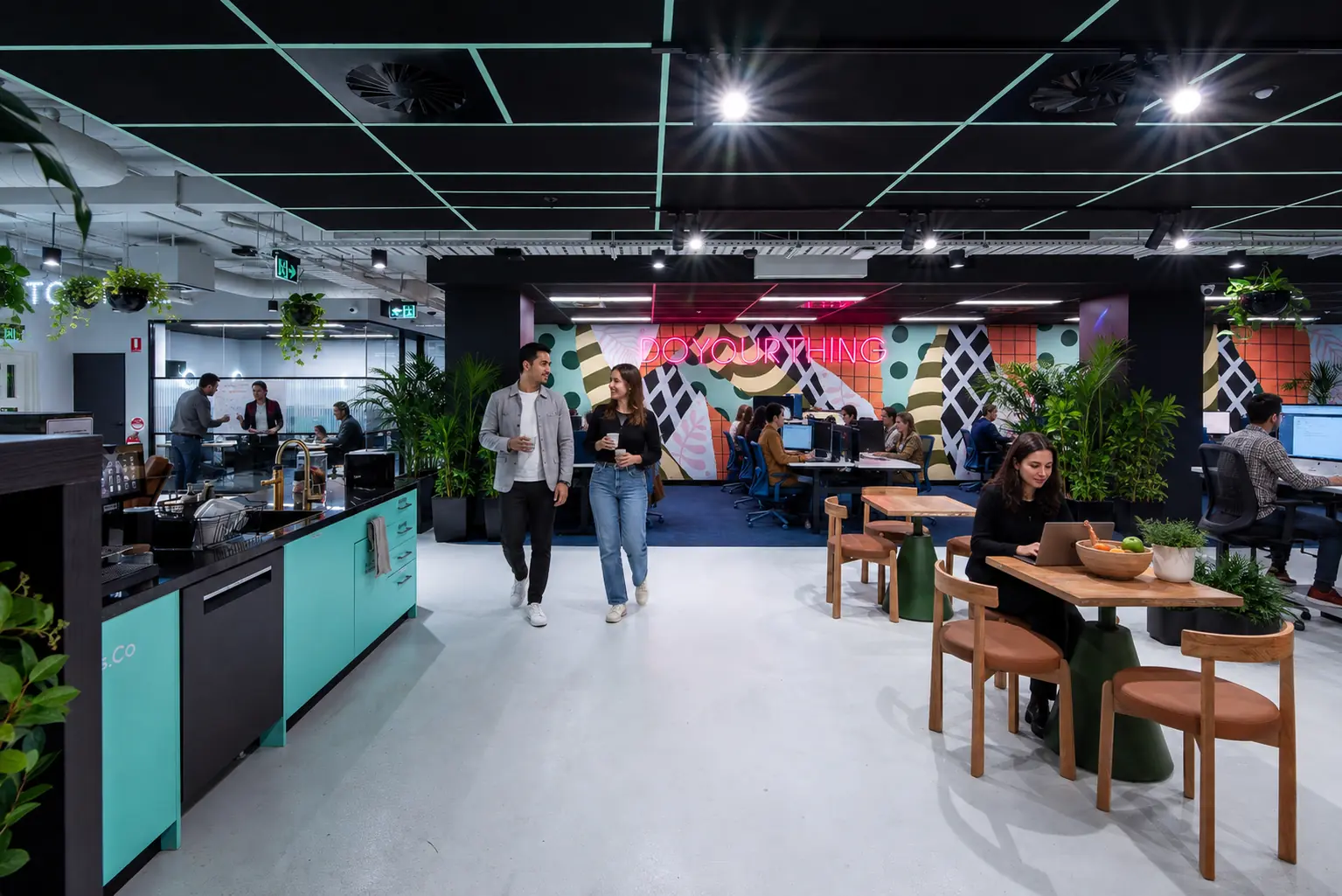
How to Scale Workspace Without a Long-Term Lease
Growth is exciting. Being locked into the wrong office for years is not.
For a growing business, workspace needs can change quickly. A new client win may trigger a hiring sprint. A project team may need to assemble for six months. Hybrid attendance may rise and fall across the week. A new market may become important before the business is ready to establish a permanent headquarters.
Traditional long-term office leases ask leaders to predict all of that well in advance. Flexible office space offers a smarter alternative: secure the space your team needs now, then expand, contract or reconfigure as the business changes.
This guide explains how small business owners and operations managers can plan workspace expansion step by step, without carrying the cost, complexity and rigidity of a conventional lease.
Why long-term office leases can work against business growth
A traditional lease can provide control over a workplace, but it can also place a growing business in a difficult position. Lease terms are often measured in years, while headcount plans can change within months.
The true commitment can also extend well beyond base rent. A business may need to budget for a bond or bank guarantee, design, fit-out, furniture, technology, utilities, cleaning, maintenance, insurance and make-good obligations at the end of the term.
This creates two common risks:
- Lease too little space: the team outgrows the office, meeting rooms become scarce and the workplace starts limiting performance.
- Lease too much space: the business pays for empty desks while waiting for forecast growth to arrive.
Hybrid work makes the calculation even harder. The Australian Bureau of Statistics reported that 36% of employed people usually worked from home in August 2025. That means many businesses are no longer planning for a workforce that attends one location, five days a week.
Flexible workspaces help close the gap between forecast demand and actual use. Instead of making one oversized property decision, a business can make a series of smaller, evidence-led moves.
What flexible office space actually gives a growing business
Flexible office space is professionally managed workspace available through more adaptable commercial terms than a traditional office lease. Depending on the provider and location, it may include private offices, team rooms, coworking memberships, meeting rooms, reception, internet, utilities, cleaning and shared amenities.
The real value is not simply a shorter agreement. It is operational flexibility.
A strong flexible workspace strategy can give a business:
- Faster access to a ready-to-use workplace
- Lower upfront fit-out and furnishing requirements
- One clearer recurring workspace cost
- The ability to add offices, desks or memberships as the team grows
- Access to meeting and project space only when required
- A professional environment for employees, clients and candidates
- Less time spent managing facilities and office suppliers
- Greater freedom to test a location before making a larger commitment
Think of it like building a strong bench in sport. You do not put every possible player on the court at once. You maintain enough capacity to perform today, with options ready when the game changes.
How to plan workspace expansion step by step
1. Start with the business plan, not the floor plan
Before comparing offices, define what the next 6, 12 and 24 months could look like.
Review:
- Current headcount and approved hires
- Likely hiring scenarios, not just the most optimistic forecast
- Team attendance patterns by day
- Planned projects, contracts or market launches
- Client meeting and event requirements
- Privacy, security and technology needs
- The locations employees and customers can reach easily
Create three scenarios: expected growth, slower growth and accelerated growth. Your workspace should support the expected case and provide a clear path for the other two.
2. Measure real attendance before adding desks
Headcount and daily office attendance are not the same number.
A 20-person hybrid team may not need 20 permanent desks, but it may need a private team base, excellent meeting rooms, breakout areas and additional capacity on peak days. Track attendance for at least four representative weeks and note:
- Peak attendance by day and time
- Average desk use
- Meeting room demand
- Quiet work and call-space demand
- Visitor numbers
- Team or project days that create sudden peaks
Do not design around the quietest day or the busiest exceptional day. Plan for normal demand, then use shared facilities and bookable space to absorb peaks.
3. Separate permanent needs from variable needs
Some workspace requirements should remain stable. Others can flex.
Permanent needs may include a secure private office, storage, a consistent business address and dedicated technology. Variable needs may include extra desks for project staff, larger meeting rooms, event space or workspace in another city.
This distinction supports better office scalability. The business can secure a reliable home base without paying permanently for occasional demand.
4. Build a complete occupancy budget
Comparing monthly rent alone can produce the wrong answer. Compare the total cost of occupancy.
For a conventional lease, include:
- Rent and outgoings
- Security deposit or bank guarantee
- Design and fit-out
- Furniture and equipment
- Internet and technology setup
- Electricity, cleaning and waste
- Repairs and maintenance
- Insurance and compliance
- Internal facilities management time
- End-of-term make-good costs
For flexible office space, confirm what the membership or licence fee includes and identify any usage-based costs, such as meeting rooms, printing, parking or after-hours services.
The right comparison is the all-in cost per occupied workstation or employee, not simply the advertised cost per square metre.
5. Choose a flexible workspace model that matches the team
Not every growing business needs the same setup.
Private offices suit teams that need privacy, consistency and a space they can make their own.
Team rooms provide a dedicated base while retaining access to shared amenities and bookable meeting spaces.
Coworking memberships work well for mobile employees, distributed teams and businesses with variable attendance.
Project space can support a temporary team, client delivery program or market entry without creating a permanent property commitment.
Multi-location access helps businesses support employees and customers across different suburbs or cities.
The strongest solution may combine several models. For example, a business could use one private office as its core, coworking memberships for mobile team members and meeting rooms booked as needed.
6. Test the workspace before committing
A brochure cannot tell you how a workplace performs at 10 am on a Tuesday.
Tour the location when your team would normally use it. Test the internet, mobile reception, meeting room technology, noise levels, natural light and common areas. Check the commute and surrounding amenity. Ask several team members to work from the space for a day if a trial is available.
Also assess the operational experience:
- Is the reception team responsive?
- Is booking a room straightforward?
- Are shared areas clean and well managed?
- Does the environment feel professional enough for clients?
- Is there genuine energy in the community?
The goal is not merely to find available desks. It is to find a workplace your team will choose to use.
7. Negotiate for the flexibility you may need next
Lease flexibility should be clear before the agreement is signed. Ask practical questions about change, not just commencement.
Confirm:
- Minimum term and notice period
- Options to add or remove desks
- Ability to move into a larger or smaller office
- Access to other locations
- Meeting room allowances and rates
- Guest access and after-hours use
- Branding, storage and privacy options
- Renewal process and price-review terms
- Exit conditions and any reinstatement obligations
The cheapest starting price is not necessarily the best deal. A slightly higher rate with a workable expansion path can prevent an expensive move six months later.
8. Set clear triggers for the next workspace move
Do not wait until the office becomes painful. Agree on the signals that will trigger a review.
Useful triggers include:
- Peak-day occupancy regularly exceeding 80%
- Meeting rooms becoming difficult to book
- A confirmed hiring plan that exceeds current capacity
- Teams losing focus because quiet space is unavailable
- A new customer base emerging in another location
- Workspace cost per employee moving outside the agreed range
- Employee feedback showing that the current setup is affecting attendance or performance
Review these indicators quarterly. Workspace planning should be a rhythm, not a rescue mission.
A practical three-stage workspace growth model
Stage 1: Establish the base
Choose a private office or team room sized for the people who attend consistently. Use shared meeting rooms, kitchens, lounges and breakout spaces instead of building every amenity inside your tenancy.
Stage 2: Add capacity around the core
As hiring increases, add adjacent offices, coworking memberships or project space. This allows the business to grow without disrupting the entire team.
Stage 3: Expand the network
When employees or clients are distributed, add access to other locations rather than immediately taking another permanent lease. Validate demand first. Once usage becomes consistent, decide whether a larger dedicated footprint is justified.
This staged model keeps workspace investment aligned with genuine business growth.
Common workspace expansion mistakes to avoid
Planning from headcount alone
A workplace designed for total payroll headcount may sit half-empty under a hybrid model. Use attendance and activity data as well.
Chasing the lowest advertised rate
Low rent can be overwhelmed by fit-out, technology, utilities and management costs. Compare the complete operating cost.
Ignoring peak days
An office that works on Friday but fails on Tuesday will frustrate the team. Flexible overflow capacity matters.
Choosing flexibility without standards
Short terms are useful, but the workspace still needs reliable infrastructure, privacy, service and a professional atmosphere.
Waiting until capacity is exhausted
Rushed moves are expensive and distracting. Set growth triggers early and review them regularly.
Why flexible workspaces create room for smarter growth
The purpose of flexibility is not to avoid commitment. It is to commit at the right level, at the right time.
Flexible office space lets a growing business protect cash, reduce property risk and respond faster when its team changes. It also gives operations leaders a clearer way to match space with real demand, while maintaining the quality, privacy and professionalism employees and customers expect.
CreativeCubes.Co provides flexible workspaces designed for growing teams, from coworking memberships and private offices to meeting rooms and event spaces. Your business gets a professional base, a connected community and room to move as the next chapter takes shape.
Ready to build a workspace around where your business is going? Book a tour of CreativeCubes.Co and explore a flexible office solution that can grow with your team.
FAQ’s
What is flexible office space?
Flexible office space is a professionally managed workplace offered through adaptable membership or licence terms. It can include private offices, team rooms, coworking areas, meeting rooms and shared amenities, with many operating costs bundled into one recurring fee.
How does flexible office space support business growth?
It allows a business to add or adjust workspace as headcount, attendance and project needs change. This reduces the need to predict space requirements years in advance and can limit spending on unused capacity.
Is flexible office space more expensive than a traditional lease?
The advertised monthly rate may appear higher, but the comparison should include the complete cost of occupancy. A traditional lease may involve fit-out, furniture, utilities, cleaning, maintenance, technology, insurance and make-good costs. Flexible workspace can bundle many of these costs and reduce upfront capital requirements.
Can a business have privacy in a flexible workspace?
Yes. Private offices and team rooms provide dedicated, lockable space, while meeting rooms and call spaces can support confidential conversations. Businesses should confirm access controls, acoustic privacy and technology requirements before signing.
What agreement length is available with flexible workspaces?
Terms vary by provider, location and product. Options may range from casual access and monthly memberships to longer licences for dedicated offices. Ask about minimum terms, notice periods, renewals and the ability to change office size.
How much office space does a hybrid team need?
Start with actual attendance rather than total headcount. Measure peak use, meeting demand, visitor numbers and the types of work employees perform. A hybrid team may need fewer dedicated desks but more collaboration rooms, quiet areas and bookable overflow space.
When should a growing business expand its workspace?
Review capacity before the workplace becomes crowded. Consistent peak occupancy above 80%, limited meeting room availability, confirmed hiring or falling employee satisfaction can all signal that it is time to add space.
Can flexible office space help a business enter a new market?
Yes. A business can establish a professional presence, support a project team and test local demand without immediately taking a long-term office lease. If the market develops, the workspace footprint can expand with it.