

Coworking Spaces in Australia: What Creative Freelancers Need
Freelancing offers freedom, independence and control. However, working alone does not always provide the environment, technology or professional energy needed to produce your best work.
Home can be comfortable, but it is also filled with distractions. Cafés offer atmosphere, although unreliable Wi-Fi, limited privacy and background noise can quickly reduce productivity. As a result, more creative professionals are exploring coworking spaces in Australia as a practical alternative.
The right workspace should do more than provide a chair and an internet connection. It should support focus, inspire ideas, strengthen your professional image and connect you with a broader business community.
Here are the most important factors creative freelancers should evaluate when choosing a coworking space.
1. A Workspace That Supports Focus
Creative work requires different modes of thinking. At times, you need energy and conversation. At other times, you need complete focus.
Strong creative freelancer workspaces provide a mix of environments, including:
- Open business lounges
- Quiet working areas
- Private offices
- Focus rooms
- Breakout spaces
- Phone booths
- Outdoor or wellness areas
This variety allows you to choose the right setting for each task. For example, you might complete administrative work in a shared lounge, take a private client call in a phone booth and develop a major proposal in a quiet area.
Consequently, the workspace can adapt to your workday instead of forcing every task into the same environment.
2. Fast, Reliable Technology
Technology is not an optional extra for creative freelancers. It is essential infrastructure.
Designers, photographers, videographers, strategists, developers and content creators often work with large files, cloud-based platforms and video conferencing tools. Therefore, unreliable internet can create delays, disrupt meetings and affect client delivery.
When comparing coworking spaces in Australia, look for:
- Fast and secure Wi-Fi
- Reliable backup connectivity
- Accessible power points
- Video conferencing facilities
- Presentation screens
- Wireless display technology
- Printing and scanning services
- On-site technical support
The best flexible workspaces make technology feel almost invisible. You arrive, connect and get moving.
3. Professional Meeting Rooms
A freelancer’s workspace can influence how clients perceive their business.
Meeting at home or searching for a quiet café may work occasionally. However, important presentations, discovery sessions and strategy meetings require a more professional setting.
Quality meeting rooms should include:
- High-resolution screens
- Video conferencing technology
- Whiteboards or collaboration tools
- Strong acoustic privacy
- Comfortable seating
- Reliable internet
- Simple room booking
- Professional presentation areas
Access to meeting rooms gives freelancers the ability to operate with the presence of a larger business without carrying the cost of a traditional office.
At CreativeCubes.Co, members can access meeting rooms across the wider network, subject to their membership and available credits. Therefore, a freelancer can work locally while still meeting clients professionally in other locations.
4. Flexible Membership Options
Freelance workloads rarely follow a perfect routine. Some weeks are filled with client meetings and production deadlines. Others may involve travel, research or working on location.
For that reason, flexible office space should offer membership options that reflect how freelancers actually work.
Useful options may include:
- Casual day passes
- Business lounge memberships
- Flexible coworking memberships
- Dedicated desks
- Private offices
- Meeting room access
- Virtual office services
Before committing, consider how often you will use the space and which services you genuinely need.
Flexibility matters because your business may change quickly. A suitable workspace should allow you to scale up, scale down or move into a more private environment as your client base grows.
5. A Genuine Professional Community
A room filled with desks is not automatically a community.
The strongest Australian coworking communities create meaningful opportunities for members to meet, collaborate and support one another. That could include introductions, professional events, workshops, social gatherings and everyday conversations.
For creative freelancers, these connections can lead to:
- New clients
- Trusted suppliers
- Project collaborators
- Referral opportunities
- Business advice
- Professional friendships
- Reduced isolation
A videographer may meet a marketing agency. A copywriter may connect with a web developer. Meanwhile, a designer may be introduced to a growing business that needs a complete brand refresh.
The value comes from being visible and participating. As in sport, sitting in the stands will not create the same opportunities as stepping onto the court.
6. Spaces That Inspire Better Work
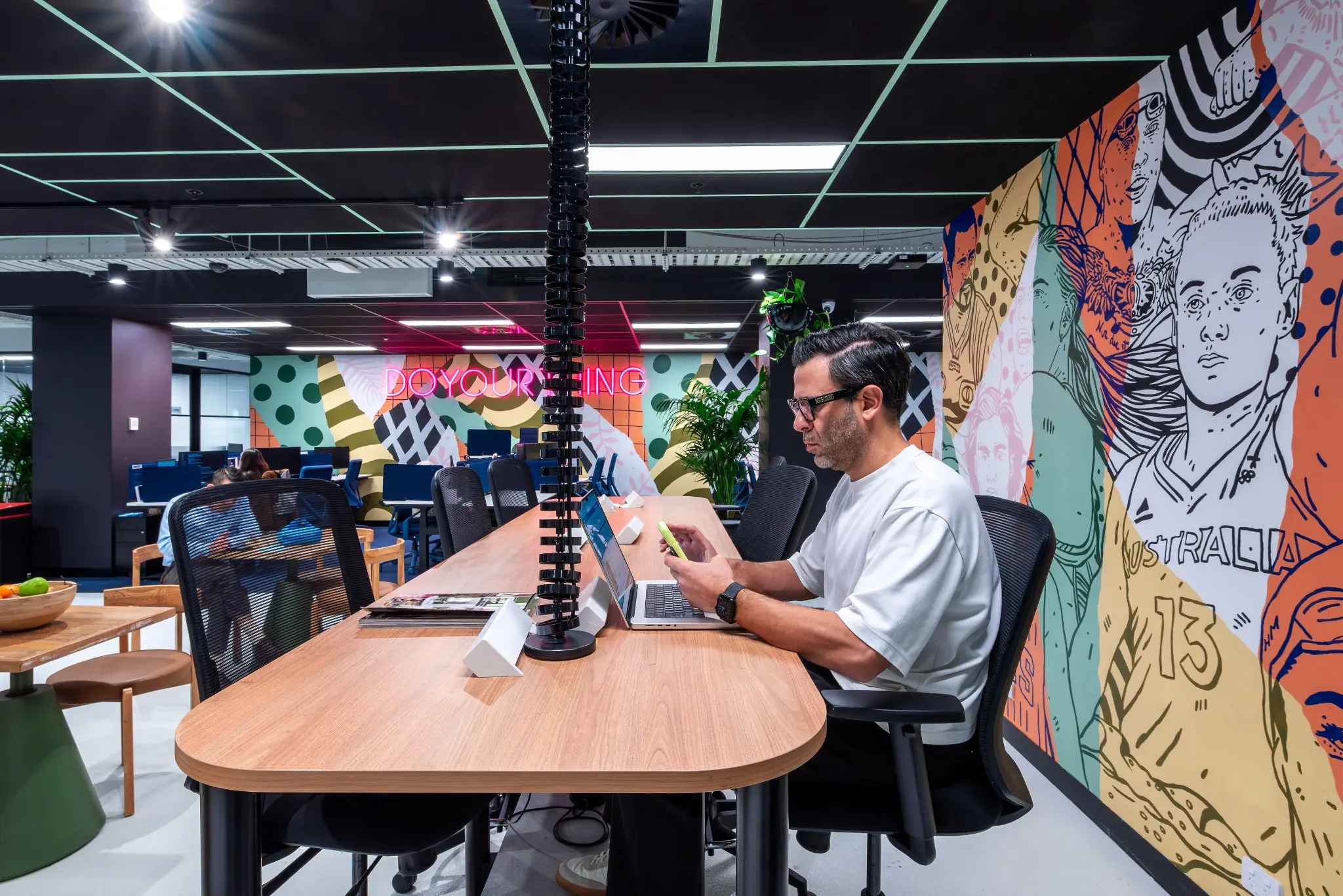
Creative professionals are often influenced by their surroundings. Light, colour, sound, greenery, furniture and spatial design can all affect the way a workspace feels.
A strong creative environment should feel energising without becoming distracting.
Look for features such as:
- Natural light
- Thoughtful interior design
- Comfortable furniture
- Artwork and visual interest
- Indoor greenery
- Well-designed communal areas
- Access to fresh air
- Quality lighting for calls and content
The best coworking spaces balance visual energy with functionality. They should inspire ideas while still making it easy to concentrate.
7. Strong Acoustics and Call Privacy
Noise is one of the most important factors to test during a coworking tour.
A lively workspace can create momentum. However, constant interruptions and poor acoustic management can make detailed creative work difficult.
Creative freelancers should check whether the space provides:
- Dedicated phone booths
- Quiet working zones
- Acoustic treatments
- Private meeting rooms
- Enclosed spaces for confidential calls
- Clear expectations around noise
If your work involves client strategy, commercially sensitive information or regular video calls, privacy should sit high on your checklist.
8. A Professional Business Address
Perception plays an important role in winning work.
Using a residential address may not support the professional image you want to present. In addition, publishing your home address online can create privacy concerns.
Many small business coworking providers offer virtual office services, which may include:
- A professional business address
- Mail collection
- Mail notifications
- Parcel management
- Meeting room access
- Reception support
A recognised business address can strengthen your website, proposals, email signatures and online business listings. It helps a freelance operation present with confidence while remaining flexible.
9. Convenient Locations and Transport Access
A beautifully designed workspace is less valuable if reaching it becomes a daily challenge.
Consider the location from both your perspective and your clients’ perspective. Ideally, your coworking space should be close to transport, parking, food, coffee and other useful services.
Ask yourself:
- Is public transport nearby?
- Can clients find the location easily?
- Are cafés and restaurants within walking distance?
- Is parking available nearby?
- Can I access other locations when travelling?
- Does the surrounding area match my professional image?
Location can also affect consistency. If getting to the workspace is easy, you are more likely to use it regularly and build a productive routine.
10. Hospitality and On-Site Support
Coworking is partly a property experience, but it is also a service experience.
An engaged on-site team can solve problems quickly, welcome your clients and help you connect with other members. In contrast, an unsupported office may leave freelancers managing every small issue themselves.
Look for a workspace team that can assist with:
- Guest arrivals
- Room bookings
- Technology
- Mail and deliveries
- Member introductions
- Local recommendations
- Day-to-day workspace needs
Good hospitality removes friction. Instead of worrying about the space, you can focus on your work and your clients.
11. Wellness and Everyday Amenities
Productivity is difficult to sustain without opportunities to reset.
The most effective workdays often include short breaks, movement and a change of environment. Therefore, wellness features can make a meaningful difference to freelancer productivity.
Depending on the location, useful amenities may include:
- End-of-trip facilities
- Showers
- Bike storage
- Gyms
- Wellness rooms
- Kitchens
- Quality coffee
- Outdoor areas
- Comfortable breakout zones
These features are particularly valuable for freelancers who want to build a consistent routine around work, exercise and personal wellbeing.
12. Events and Business Growth Opportunities
Community events should offer more than free drinks.
The best programs help members learn, connect and become more visible. This may include expert panels, founder conversations, professional workshops, pitch opportunities and curated introductions.
Before choosing a space, ask:
- What events are available to members?
- Are the events professionally relevant?
- Does the team actively introduce members?
- Are there opportunities to showcase my expertise?
- Can I meet potential clients or collaborators?
For freelancers, the right event could deliver a useful skill, a strong relationship or the next major project.
13. Room to Grow
You may operate independently today, but your business model could look very different in 12 months.
Perhaps you will hire a junior team member, form a project group or begin working with regular contractors. A strong coworking provider should make that transition simple.
Growth options might include:
- Moving from casual access to a dedicated desk
- Upgrading into a private office
- Adding memberships for contractors
- Booking project rooms
- Accessing larger meeting spaces
- Using event venues for launches or workshops
The best workspace grows with your ambition. It provides the infrastructure of an established business while preserving the agility that made freelancing attractive in the first place.
Questions to Ask During a Coworking Tour
Before selecting a workspace, ask the following questions:
- What is included in the membership price?
- Are meeting room credits included?
- Can I access multiple locations?
- How fast and reliable is the internet?
- Are there private areas for calls?
- What are the access hours?
- Can I bring clients or collaborators?
- Are there additional charges for printing or amenities?
- What community events are available?
- Can I upgrade my membership as my business grows?
- Is a virtual office or business address available?
- What support does the on-site team provide?
A tour should help you assess both the physical workspace and the atmosphere. Pay attention to how the space feels, how members interact and whether the team appears engaged.
Why Creative Freelancers Choose CreativeCubes.Co
CreativeCubes.Co provides flexible workspaces designed for people who want to do their best work around a strong professional community.
Freelancers can access a range of workspace solutions, including business lounges, coworking areas, meeting rooms, private offices, event spaces and virtual office services. Moreover, our locations are supported by dedicated teams who help members stay productive, welcome clients and connect with the wider community.
Rather than working alone or committing to a rigid traditional lease, creative professionals can choose a workspace that reflects their current needs and future direction.
With access to inspiring environments, professional technology and a growing national network, CreativeCubes.Co gives freelancers more than somewhere to work. It gives them a stronger platform from which to build.
Find the Right Workspace for Your Creative Business
Choosing between coworking spaces in Australia is not simply a property decision. It is a decision about how you want to work, connect and grow.
Look beyond the desk. Consider the technology, privacy, flexibility, hospitality and community surrounding it. Most importantly, choose a workspace that gives your ideas the environment they need to move forward.
Ready to experience a better way to work? Explore CreativeCubes.Co locations, book a tour or try the space with a day pass.
FAQs
What should creative freelancers look for in a coworking space?
Creative freelancers should look for reliable internet, quiet working areas, private call spaces, professional meeting rooms and flexible memberships. Strong community programming, convenient locations and inspiring design are also important.
Are coworking spaces worth it for freelancers?
Coworking spaces can be valuable for freelancers who want greater structure, professional facilities and access to a business community. They may also reduce isolation and remove the overheads associated with leasing a traditional office.
How can coworking improve freelancer productivity?
Coworking can improve freelancer productivity by separating work from home, reducing everyday distractions and providing purpose-built areas for different tasks. Access to professional technology and on-site support can also reduce delays.
What is included in a coworking membership?
Inclusions vary between providers and membership types. Common features include shared workspace access, Wi-Fi, communal facilities and member events. Meeting rooms, printing, parking, lockers and multi-location access may be included or charged separately.
Can freelancers meet clients in a coworking space?
Yes. Many coworking spaces provide professional meeting rooms, reception services and shared areas suitable for client conversations. Always check guest access rules and meeting room costs before joining.
Are coworking spaces suitable for confidential creative work?
They can be, provided the space offers private meeting rooms, phone booths and quiet zones. Freelancers working with confidential information should also use secure digital practices, including encrypted devices and trusted networks.
What is the difference between coworking and a serviced private office?
Coworking usually involves working in shared business lounges or open areas. A serviced private office provides a dedicated, lockable workspace while still offering shared amenities, meeting rooms and on-site support.
Can a freelancer use a coworking space as a business address?
Many providers offer virtual office or business address services. These services may include mail collection, parcel handling and access to meeting rooms. However, inclusions and eligibility requirements vary by location.
Can coworking help freelancers find clients?
Coworking can create opportunities to meet potential clients, referral partners and collaborators. However, results depend on the quality of the community and how actively the freelancer participates.
Are flexible office spaces suitable for growing freelance businesses?
Yes. Flexible office space can support growth by allowing freelancers to add memberships, book larger rooms or upgrade to a private office without taking on a long-term traditional lease.
Tour CreativeCubes.Co and find a workplace built to help your people connect, grow and perform.