

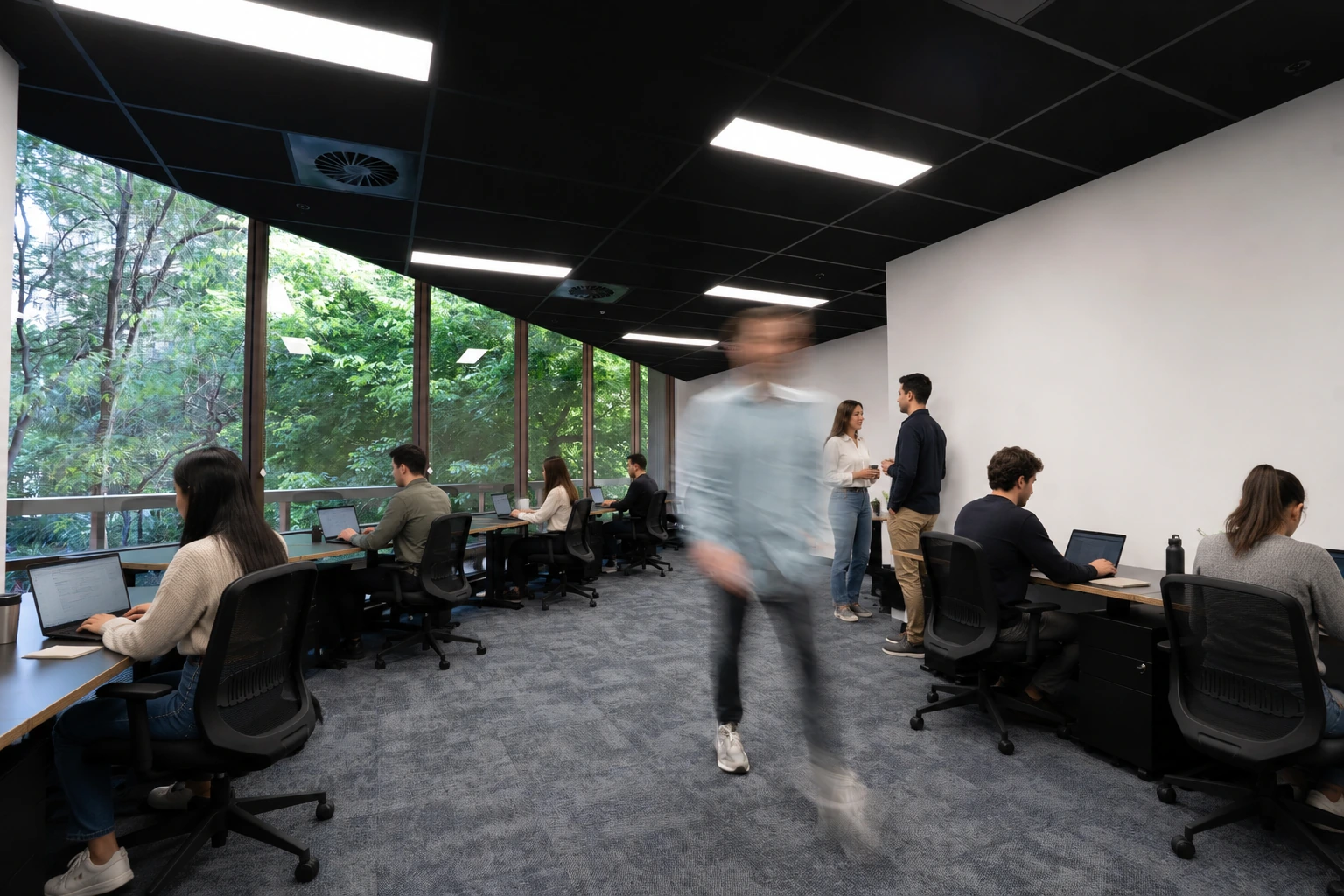
For professional firms, an office is more than a place to work. It is where clients form impressions, teams solve complex problems and relationships are built.
The challenge is finding a workspace that delivers professionalism without locking the business into an expensive, inflexible commercial lease.
That is why more firms are considering coworking spaces in Australia as a practical alternative. The right flexible workspace provides the privacy, infrastructure and presentation of a traditional office, with the ability to adjust as the business changes.
CreativeCubes.Co gives professional firms access to private offices, meeting rooms, shared amenities and an active business community without the rigidity of a conventional long-term lease.
Why traditional office leases can restrict professional firms
Traditional commercial leases can work for established businesses with predictable headcounts and long-term property requirements. However, many professional firms operate in a less predictable environment.
A new client engagement may require additional staff. A project team may need to work together for six months. A growing practice may need another office before its current lease permits it to expand.
Traditional offices can also introduce costs and responsibilities beyond the advertised rent, including:
- Office design and fit-out
- Furniture and equipment
- Utilities and internet
- Cleaning and maintenance
- Reception and workplace management
- Meeting-room technology
- Security and access systems
- Make-good obligations at the end of the lease
These commitments can absorb capital and management attention that would otherwise support people, clients and growth.
Flexible office leases and coworking arrangements allow firms to secure the workspace they need now while preserving the ability to respond to what happens next.
What do professional firms need from a coworking space?
A professional firm should not select a workspace based on appearance alone. A beautiful foyer is valuable, but the real test is whether the space supports focused work, confidential conversations and a credible client experience.
Before choosing a location, decision-makers should assess six essential requirements.
1. Private and secure workspaces
Professional firms regularly manage commercially sensitive, personal or confidential information. Privacy must therefore be considered from the beginning.
Private offices provide a dedicated environment for focused work, internal conversations and document management. Firms should also ask about building access, visitor procedures, network security and the availability of private meeting rooms.
The aim is to combine the energy of a broader community with the control of a dedicated professional environment.
2. Client-ready meeting rooms
Client meetings can shape trust before the substantive conversation even begins.
Professional collaboration spaces should feel considered, calm and technically reliable. Meeting rooms should provide appropriate seating, presentation technology, strong connectivity and access to shared amenities.
At CreativeCubes.Co, professional firms can access bookable meeting rooms without carrying the cost of maintaining several underused rooms inside a private tenancy.
This gives smaller firms the presentation capability of a larger organisation while maintaining a more efficient property footprint.
3. Flexible office capacity
Headcount rarely moves in a perfectly straight line.
Firms may grow, restructure, form project teams or adopt hybrid working arrangements. A flexible workspace allows the office footprint to respond without forcing the business through a relocation every time its requirements change.
Depending on availability and membership structure, a firm may be able to:
- Add desks as the team expands
- Move into a larger private office
- Use additional meeting rooms during busy periods
- Provide workspace for visiting employees
- Support hybrid schedules without paying for permanently empty desks
- Establish project teams for defined periods
Like a strong sporting squad, the workspace should have enough depth to respond when the game changes.
4. Reliable business infrastructure
Professional teams should not lose productive time managing printers, connectivity, cleaning or meeting-room equipment.
A well-operated coworking space brings these services together within one managed environment. This can include:
- Business-grade internet
- Furnished private offices
- Reception and visitor support
- Printing facilities
- Meeting rooms
- Shared kitchens and breakout areas
- Cleaning and maintenance
- Building access systems
- Community and member support
This ready-to-use infrastructure is one reason coworking has become an attractive option among SME workspace solutions and small business office rentals.
5. A credible business address
The location and presentation of an office contribute to how a firm is perceived.
A professional address can strengthen credibility, make client meetings easier and help a growing firm establish a presence in an important commercial market.
CreativeCubes.Co locations are designed to provide more than a desk. They give members access to thoughtfully designed environments where teams can work, meet and represent their businesses confidently.
6. Community without forced networking
Professional firms benefit from strong commercial networks, but valuable relationships rarely begin with a forced sales pitch.
A well-curated coworking community creates natural opportunities to meet founders, executives, advisers, specialists and potential partners. These connections can lead to referrals, new perspectives and collaborative opportunities.
The best communities create proximity. They make conversations possible, then allow trust to develop naturally.
How coworking supports different professional firms
Different firms require different balances of privacy, collaboration and flexibility.
Accounting and advisory firms
Accountants and business advisers need quiet offices for concentrated work alongside professional rooms for client reviews and strategic conversations.
A flexible workspace can also help these firms respond to seasonal demand without maintaining excess space throughout the year.
Legal practices
Legal teams need privacy, discretion and access to formal meeting environments. Private offices and reservable meeting rooms can provide separation from shared areas while supporting client consultations and team collaboration.
Each practice should still assess the workspace against its own professional, confidentiality and data-handling obligations.
Recruitment and consulting firms
Recruitment and consulting teams often move between independent work, internal collaboration and client meetings.
Coworking provides the variety these firms need, from private offices and meeting rooms to breakout areas and informal collaboration spaces.
Financial and specialist advisers
Advisers need an environment that reassures clients while remaining commercially efficient.
A professional workspace can provide the right presentation without requiring a small practice to fund an entire standalone office and its supporting infrastructure.
Independent professionals
Freelancer workspaces are also relevant to consultants, designers, strategists and independent specialists who have moved beyond working from home.
Coworking gives these professionals a clearer separation between work and personal life, along with meeting facilities and access to a wider business community.
The commercial advantages of flexible workspace
The value of coworking is not limited to flexibility. It can change how a firm allocates capital and manages operational risk.
More predictable occupancy costs
Traditional office costs are often spread across several contracts and suppliers. Flexible workspace arrangements can consolidate many everyday workplace services into a simpler recurring cost.
Decision-makers should compare the total cost of occupancy rather than comparing membership fees with base rent alone.
The comparison should account for fit-out, furniture, utilities, internet, cleaning, maintenance, meeting-room infrastructure and internal workplace administration.
Lower upfront commitment
A conventional office may require significant expenditure before the team can move in.
A furnished, managed office reduces the need to invest in infrastructure that does not directly produce client value. This can preserve capital for recruitment, technology, marketing and business development.
Faster occupation
A growing firm may need space within weeks, not after a lengthy search, negotiation and fit-out program.
Ready-to-use offices allow teams to establish or expand their operations more quickly, subject to location and availability.
Greater resilience
No business can predict its requirements perfectly.
The commercial advantage of flexibility is not knowing exactly what will happen. It is retaining options when it does.
Coworking allows a professional firm to make a confident workspace decision without pretending its headcount, client base or operating model will remain unchanged for years.
Coworking versus a traditional office
| Consideration | Coworking or managed office | Traditional office |
|---|---|---|
| Commitment | Flexible membership or licence arrangements | Usually a longer lease |
| Fit-out | Typically ready to use | Often funded and managed by the tenant |
| Furniture | Commonly included | Usually purchased separately |
| Meeting rooms | Shared and bookable | Maintained within the tenancy |
| Growth | Capacity may be adjusted subject to availability | Expansion can require another lease or relocation |
| Operations | Managed by the workspace provider | Managed by the tenant |
| Community | Built-in business ecosystem | Dependent on the tenant and building |
| Branding and control | Varies by product and location | Greater scope for complete customisation |
Neither model is automatically right for every firm.
A traditional lease may suit an organisation that requires extensive customisation, specialised infrastructure or complete control over a large, stable workplace.
Coworking is often better suited to firms that value speed, adaptability, managed services and access to high-quality shared facilities.
How to compare coworking spaces in Australia
Before selecting a provider, create a scorecard based on the way your firm operates.
Assess:
- Location and transport accessibility
- Private office configuration
- Acoustic and visual privacy
- Internet and technology reliability
- Meeting-room quality and availability
- Visitor and reception experience
- Access hours and security
- Membership inclusions
- Additional usage charges
- Options to expand or reduce space
- Contract length and exit conditions
- Community quality
- Service responsiveness
- Brand presentation
- End-of-term obligations
Tour the space at the time your team would normally use it. This gives you a more accurate view of noise levels, shared-area demand and the overall working environment.
The cheapest option on paper may become expensive if it compromises productivity, client confidence or the ability to grow.
Why CreativeCubes.Co works for professional firms
CreativeCubes.Co combines the energy of coworking with the infrastructure professional teams expect from a well-managed business environment.
Our spaces are designed to support different modes of work, including private concentration, team collaboration, client meetings and informal connection.
Professional firms can access:
- Furnished private offices
- Flexible workspace arrangements
- Bookable meeting rooms
- Professional shared amenities
- Business-grade connectivity
- Community support and member experiences
- Locations across key Australian business markets
- Options that can adapt as requirements change
Rather than spending time operating an office, firms can focus on serving clients, developing their people and building the next stage of the business.
A workspace should strengthen the firm, not restrict it
The right office creates confidence. It helps people focus, gives clients a strong experience and provides the flexibility to respond to opportunity.
For Australian professional firms, coworking is no longer simply an alternative to the traditional office. It is a strategic workspace model that combines professional presentation, managed infrastructure and commercial adaptability.
CreativeCubes.Co provides the environment and community firms need today, with the flexibility to move when the business moves.
Ready to find a workspace that fits your firm? Explore CreativeCubes.Co locations and book a tour at creativecubes.co.
Frequently Asked Questions
Are coworking spaces suitable for professional firms?
Yes. Coworking spaces can suit accounting, legal, consulting, recruitment, advisory and other professional firms when they provide the required privacy, security, meeting facilities and client experience. Firms should assess each space against their own regulatory and confidentiality obligations.
What should a professional firm look for in a coworking space?
Look for private offices, reliable connectivity, secure access, well-equipped meeting rooms, strong acoustic privacy, professional visitor facilities and flexible options for changing team requirements.
Are coworking spaces more flexible than traditional office leases?
Coworking and managed office agreements will often provide shorter or more adaptable commitments than conventional commercial leases. Exact terms vary, so firms should review notice periods, inclusions, expansion options and additional charges before signing.
Can a professional firm meet clients in a coworking space?
Yes. Quality coworking providers offer professional meeting rooms for consultations, presentations and workshops. Firms should check room availability, booking costs, privacy and included technology.
Can coworking support a growing team?
Coworking can allow a firm to add desks, access larger offices or use extra meeting space as requirements change, subject to availability. This can reduce the disruption associated with repeatedly relocating the business.
Is coworking appropriate for confidential work?
It can be, provided the chosen environment and the firm’s own procedures meet the required standard. Decision-makers should assess private office security, meeting-room privacy, visitor access, internet arrangements and document-handling practices.
What is included in a CreativeCubes.Co workspace?
Inclusions vary by location, office and membership type. Available solutions may include furnished workspace, connectivity, shared amenities, meeting facilities, reception support and community experiences. Firms should confirm the exact inclusions when touring a location.
Is coworking only for startups and freelancers?
No. Modern coworking spaces support independent professionals, small businesses, established professional firms, project teams and larger organisations. The deciding factor is whether the workspace matches the organisation’s operational, privacy and flexibility requirements.