

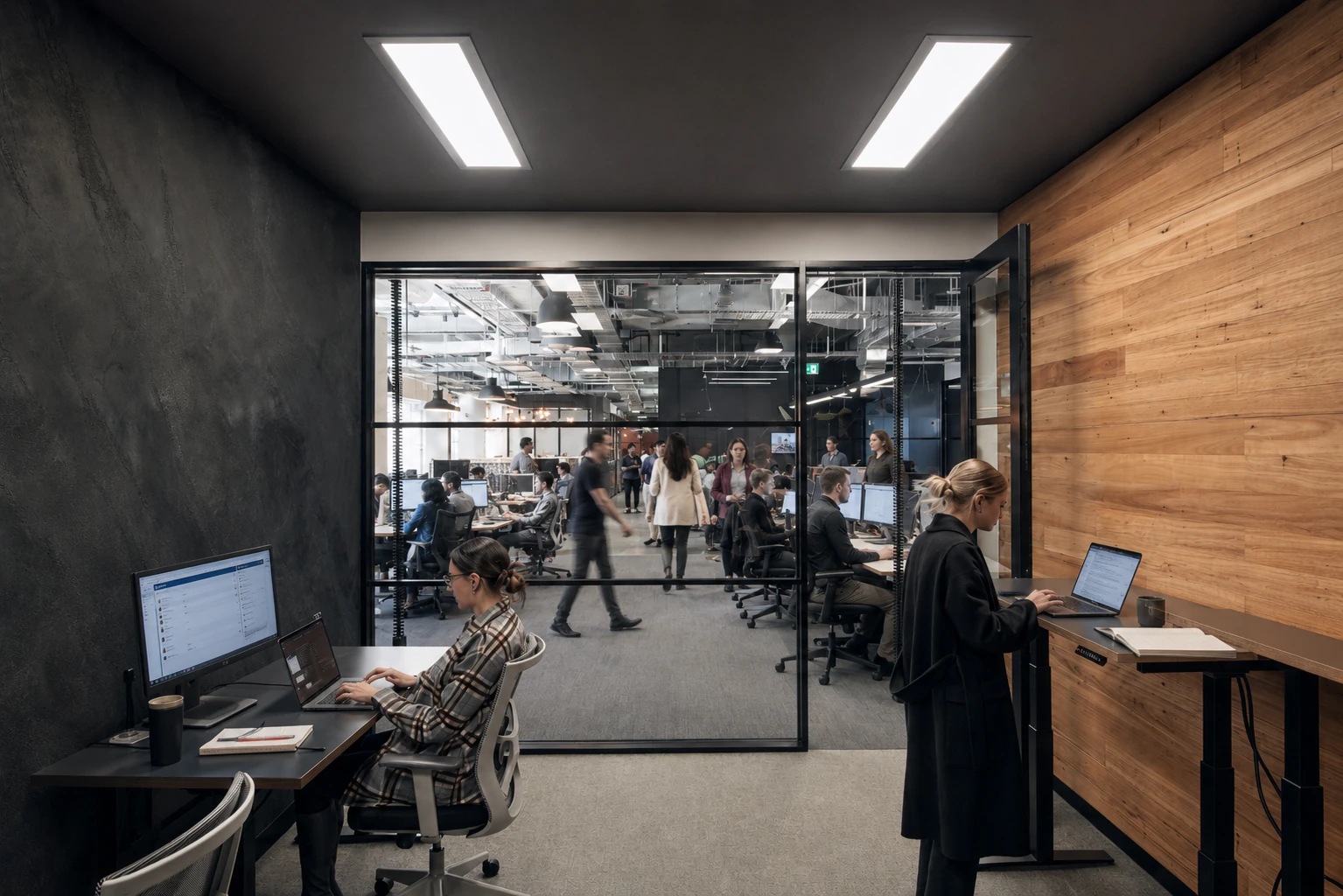
Coworking Spaces for SMEs in Australia: Top 9 Features That Help Teams Work Better
Coworking spaces for SMEs in Australia have moved well beyond hot desks and shared WiFi. Today, they are serious small business workspace solutions for teams that need flexibility, professional presentation, collaboration, and day-to-day productivity without being locked into traditional office commitments.
For small Melbourne businesses, mid-sized professional firms, and freelancers, the right coworking environment can do more than provide a desk. It can sharpen focus, improve team rhythm, reduce operational friction, and create the kind of community energy that helps people perform at their best.
As SME real estate trends continue to favour agility, businesses are looking closely at flexible office leases Australia-wide. Instead of asking, “Should we take office space?” smarter teams are asking, “Which coworking features actually move the needle?”
Below are the top 9 coworking features collaborative teams should compare before choosing a workspace.
1. Flexible Office Options That Scale With Your Team
The best coworking spaces for SMEs in Australia give businesses room to move. A team might start with a few desks, upgrade into a private office, add meeting room access, or shift into a larger suite as the business grows.
Compared with traditional leases, coworking offers more breathing room. A long lease can feel like buying a team uniform before you know who is playing next season. By contrast, flexible coworking lets SMEs adjust workspace needs as the business evolves.
For growing teams, that flexibility matters because headcount is rarely static. New hires, project teams, hybrid work patterns, contractors, and client-facing days all change the way space is used. As a result, workspace flexibility becomes a commercial advantage, not just a convenience.
Why it helps collaboration
Scalable workspace reduces operational drag. Teams can focus on momentum instead of worrying about whether their office still fits.
What to look for
- Private offices for small teams
- Hot desks and dedicated desks
- Ability to expand or contract
- Shorter commitment options
- Simple upgrade pathways
2. Professional Meeting Rooms Built for Real Conversations
Meeting room facilities are one of the most valuable features in collaborative workspaces for professionals. Whether it is a client pitch, team planning session, mediation, board meeting, training workshop, or project sprint, the right room changes the tone immediately.
A strong meeting room should feel polished, practical, and easy to use. Nobody wants to spend the first 15 minutes fighting with cables, screens, or echoey audio. That is not collaboration. That is warm-up cardio nobody asked for.
Importantly, professional meeting rooms also help small businesses look established. For SMEs and freelancers, that first impression can carry serious weight. Moreover, the right setting gives clients confidence before the conversation even starts.
Why it helps collaboration
Purpose-built meeting rooms create focus. They give teams the right setting to make decisions, align quickly, and present professionally.
What to look for
- Bookable meeting rooms
- Presentation screens
- Video conferencing equipment
- Whiteboards or writable walls
- Sound privacy
- Easy guest access
3. Breakout Areas That Encourage Informal Collaboration
Not every good idea happens in a boardroom. In fact, many of the best ideas come from quick side conversations, hallway chats, coffee catch-ups, and casual working sessions.
Breakout areas are essential in coworking spaces for SMEs in Australia because they create natural places for people to connect without needing to schedule a formal meeting. These spaces help turn small moments into useful momentum.
For SMEs and freelancers, this matters because collaboration often needs to happen quickly. Instead of waiting for a formal catch-up, teams can brainstorm, troubleshoot, debrief, or reset in the moment.
Why it helps collaboration
Informal spaces reduce friction. They help people move from “let’s book a meeting” to “let’s solve this now.”
What to look for
- Lounge areas
- Casual tables
- Soft seating
- Quiet corners
- Coffee-adjacent collaboration zones
- Natural light and good design
4. Reliable Technology and Connectivity
Technology is one of the most important freelancer productivity tools and small business workspace solutions. Without strong connectivity, good work slows down quickly.
Modern teams need fast internet, reliable access systems, working printers, digital meeting tools, secure networks, and support when something breaks. Ideally, technology should feel invisible because it simply works.
For professional firms, this is especially important. Client calls, confidential documents, video meetings, cloud platforms, and project tools all depend on stable infrastructure. Consequently, reliable technology is not a nice-to-have. It is the foundation.
Why it helps collaboration
Reliable technology keeps teams moving. It removes distractions and allows people to focus on work, not troubleshooting.
What to look for
- Fast and stable WiFi
- Secure network options
- Video conferencing support
- Printing and scanning
- Smart access systems
- Onsite support
5. Private Offices for Focus and Team Identity
Open coworking has its place. However, many SMEs and professional firms still need private space for focus, security, team culture, and client work.
A private office gives teams a regular home base while still providing access to the wider coworking environment. This setup is especially useful for accounting firms, consultants, legal teams, creative studios, recruiters, finance professionals, and growing startups.
The strongest coworking spaces for SMEs in Australia blend both worlds. Teams can work privately when they need deep focus, then step into meeting rooms, lounges, events, and shared areas when collaboration calls. In other words, they get privacy without isolation.
Why it helps collaboration
Private offices give teams a base camp. From there, they can connect with the broader workspace community without sacrificing privacy.
What to look for
- Lockable private offices
- Team suites
- Secure storage
- Branding options
- 24/7 access
- Access to shared amenities
6. Community Programming and Networking
Community is one of the biggest advantages coworking has over traditional office leasing. For SMEs, freelancers, and professional firms, access to a wider business community can lead to referrals, partnerships, fresh ideas, and new opportunities.
The best collaborative workspaces for professionals do not leave community to chance. Instead, they create moments that bring people together through events, founder sessions, workshops, networking breakfasts, and member activations.
This is where coworking becomes more than real estate. It becomes a growth environment. Like a strong sporting club, the space gives people a place to train, connect, compete, and lift each other.
Why it helps collaboration
Community expands the playing field. Teams can connect with founders, advisors, creatives, operators, and other professionals who may become clients, suppliers, partners, or sounding boards.
What to look for
- Member events
- Networking opportunities
- Business workshops
- Community managers
- Founder or professional services events
- Local business partnerships
7. Onsite Support That Removes Daily Friction
Strong coworking spaces provide more than desks. They provide service. This may include reception support, guest management, mail handling, onboarding, room bookings, event support, IT assistance, and day-to-day help from an onsite team.
For SMEs and freelancers, that support is a serious advantage. Rather than hiring internal admin support or wasting time managing workspace issues, businesses can plug into an environment where key operational pieces are already handled.
In practical terms, good onsite support gives teams time back. It also gives clients and visitors a more polished experience from the moment they arrive. Therefore, service quality should sit high on any workspace comparison list.
Why it helps collaboration
When the basics are taken care of, teams can concentrate on clients, delivery, sales, and culture.
What to look for
- Reception or concierge support
- Visitor management
- Mail and parcel handling
- Room booking assistance
- Onsite team support
- Event coordination
8. Hybrid Work Features for Modern Teams
Hybrid work is now part of the operating system for many SMEs and professional firms. While teams may not need everyone in the office five days a week, they still need a shared place to connect, collaborate, and build trust.
That shift is one reason flexible office leases Australia-wide are becoming more attractive. Businesses want workspace that matches actual usage, not outdated assumptions.
A strong coworking model gives hybrid teams access to offices, desks, meeting rooms, event spaces, and collaboration zones when they need them. Consequently, teams can gather with purpose instead of paying for underused space.
Why it helps collaboration
Hybrid-friendly coworking spaces create rhythm. They give teams a place to meet intentionally, align quickly, and avoid the drift that can come from disconnected remote work.
What to look for
- Flexible access options
- Part-time desk access
- Meeting room packages
- Team day options
- Bookable collaboration spaces
- Easy visitor access
9. Amenities That Support Day-to-Day Productivity
Productivity is not just about desks and chairs. The everyday experience matters. Good lighting, quality coffee, end-of-trip facilities, phone booths, kitchens, wellness spaces, podcast rooms, quiet zones, and event areas all shape how people feel and perform.
For freelancers, these features can be powerful productivity tools. For SMEs, they can help attract and retain talent. Meanwhile, professional firms can use strong amenities to create a better client and employee experience.
Over time, the little things become the culture. Better still, they make people more likely to use the space consistently.
Why it helps collaboration
Great amenities keep people comfortable, energised, and more likely to work well together.
What to look for
- Phone booths
- Quality coffee
- Kitchens and breakout spaces
- End-of-trip facilities
- Event spaces
- Quiet focus zones
- Natural light
- Podcast or media rooms
Why Coworking Spaces for SMEs in Australia Are Gaining Momentum
SME real estate trends are moving toward agility, service, and smarter use of space. Businesses no longer want to carry the cost and complexity of oversized offices, long leases, fitouts, utilities, cleaning, reception, meeting rooms, and technology on their own.
Instead, they want small business workspace solutions that give them professional infrastructure without slowing them down. That is exactly where coworking spaces for SMEs in Australia are gaining ground.
For freelancers, coworking offers structure and connection. For small businesses, it provides a professional home without heavy lease risk. For mid-sized professional firms, it creates scalable, client-ready environments that support hybrid teams.
In sport, the best teams do not rely on talent alone. They rely on systems, rhythm, facilities, coaching, and culture. Business is no different. The right coworking space creates the conditions for better performance.
How to Compare Coworking Spaces Before You Choose
Before choosing a coworking space, SMEs and professionals should compare more than price. The cheapest option is rarely the best value if it lacks meeting rooms, support, privacy, flexibility, or the right community.
Use these questions as a practical checklist:
- Can the space grow with your team?
- Are meeting rooms easy to book and professionally equipped?
- Is there enough privacy for focused work and client conversations?
- Does the location suit your team, clients, and transport needs?
- Is the technology reliable?
- Are flexible lease terms available?
- Does the community feel relevant to your business?
- Are onsite support services included?
- Does the environment feel energising, polished, and productive?
Ultimately, the right coworking space should feel like a performance advantage, not just a place to park a laptop.
Choose Coworking Features That Drive Momentum
Coworking spaces for SMEs in Australia are now a serious alternative to traditional offices. However, not all coworking spaces are created equal.
The best spaces combine flexibility, professional meeting rooms, strong technology, private offices, community, onsite support, hybrid work options, and productivity-focused amenities. Together, these features help businesses reduce friction and increase momentum.
For small Melbourne businesses, mid-sized professional firms, and freelancers, the right coworking environment can help teams collaborate better, move faster, and stay focused on growth.
That is the real win. Not just a desk. A smarter way to work.
FAQs
What are the best coworking spaces for SMEs in Australia?
The best coworking spaces for SMEs in Australia offer flexible office options, private offices, meeting rooms, fast internet, onsite support, and community programming. SMEs should choose a space that supports collaboration, flexibility, client meetings, and future growth.
Why are coworking spaces useful for small businesses?
Coworking spaces give small businesses access to professional offices, meeting rooms, technology, amenities, and support without the commitment of a traditional lease. Therefore, they are practical small business workspace solutions for growing teams.
Are coworking spaces suitable for professional firms?
Yes. Many professional firms use coworking spaces because they offer private offices, meeting rooms, reception support, and flexible terms. These environments are especially useful for consultants, accountants, lawyers, recruiters, finance teams, and advisory businesses.
How do coworking spaces improve collaboration?
Coworking spaces improve collaboration by providing meeting rooms, breakout zones, shared lounges, event areas, and informal spaces where teams can connect. In addition, they create community, which can lead to new partnerships and referrals.
What should freelancers look for in a coworking space?
Freelancers should look for fast WiFi, quiet work zones, meeting rooms, phone booths, networking events, good coffee, and flexible access. Together, these freelancer productivity tools help create structure, focus, and professional credibility.
Are flexible office leases available in Australia?
Yes. Flexible office leases Australia-wide are increasingly common through coworking spaces and serviced office providers. As a result, businesses can avoid long-term commitments and adjust their workspace as needs change.
What is the difference between coworking and a traditional office lease?
A traditional office lease usually involves a longer commitment, fitout costs, utilities, furniture, maintenance, and management. By contrast, coworking spaces typically bundle workspace, services, amenities, meeting rooms, and support into a more flexible model.
How can SMEs compare coworking spaces?
SMEs should compare location, flexibility, meeting room access, private office options, technology, onsite support, community, amenities, and total value. Price matters, but the right workspace should also improve productivity and collaboration.
Do coworking spaces support hybrid teams?
Yes. Coworking spaces are well suited to hybrid teams because they offer flexible access, shared meeting spaces, private offices, and collaboration zones. As a result, teams can gather when needed without paying for unused office space every day.