
Flexible Office Australia: The Office Lease Is Getting Rewritten
The old office lease is starting to look like a fax machine in a cloud-tech world.
For decades, businesses were told that growth meant signing a long lease, carrying fit-out costs, locking into fixed space, and hoping the team size matched the floorplan five years later.
That model is breaking.
Across Australia, businesses are no longer asking, “How much space can we lease?” They are asking, “How much flexibility can we access?”
That is the real shift behind flexible office Australia.
It is not just startups chasing cheap rent. It is SMEs, enterprise teams, national businesses, remote workers, founders, project teams and corporate occupiers looking for smarter ways to work.
Flexible Office Is No Longer Just Coworking
One of the biggest misconceptions about flexible office space is that it only serves early-stage startups.
That may have been true in the early innings. It is not true now.
Today, enterprise teams are one of the fastest-growing users of flexible workspace. Larger businesses are shrinking fixed footprints, reducing long-term exposure and giving staff access to high-quality environments closer to where they actually need to work.
Meanwhile, SMEs are using flexible offices to scale up, scale down and stay agile without being trapped by traditional commercial real estate commitments.
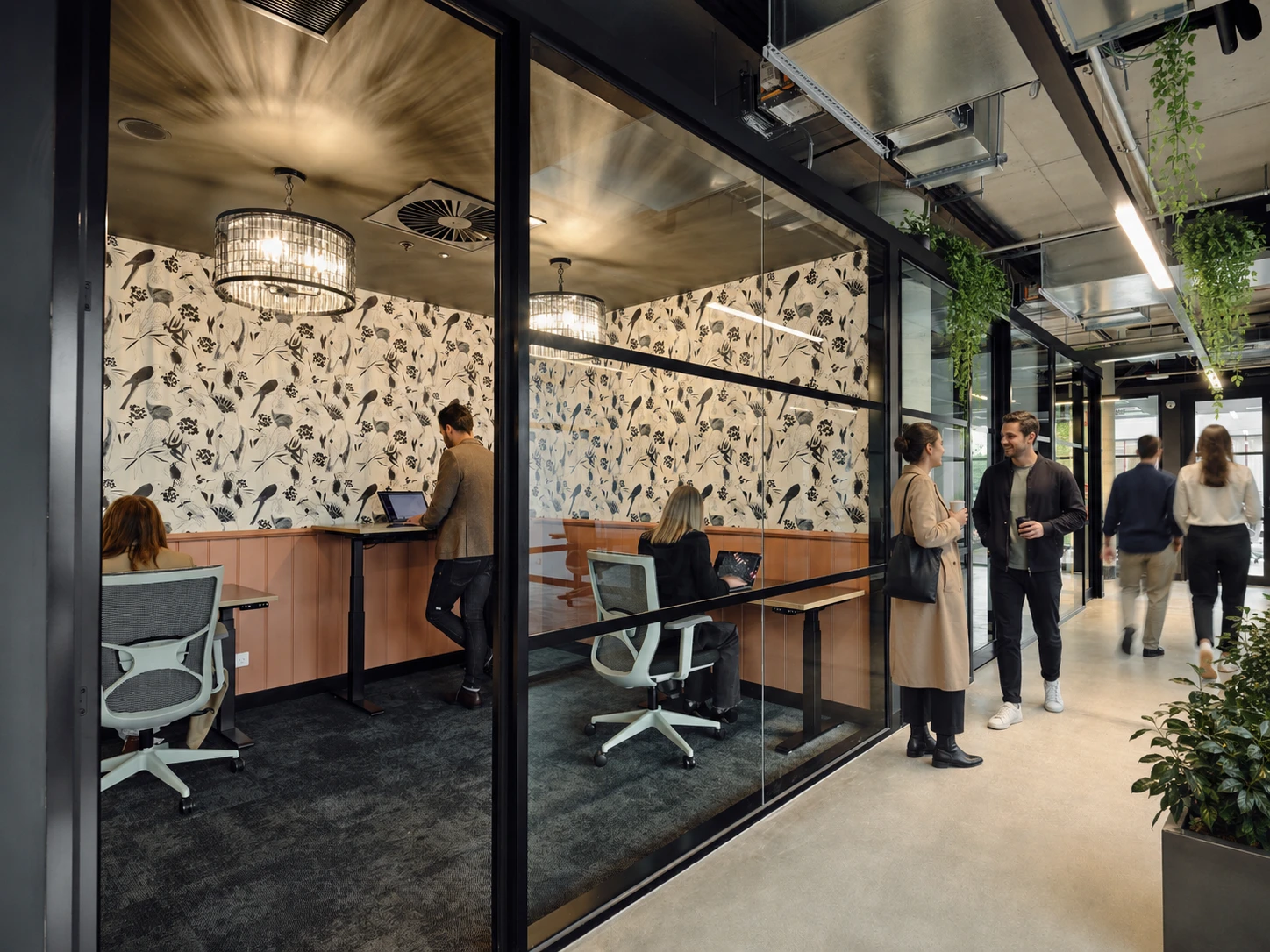
At CreativeCubes.Co, private offices for teams of 1-20 are among the most sought-after products. Meeting rooms, virtual offices, events and activations are also critical parts of the mix.
Coworking still matters, but it is only one layer. The real value comes from the curated combination of private offices, business lounges, meeting rooms, hospitality, community, technology and service.
Why Traditional Office Leases Are Losing Relevance
Fixed real estate does not serve modern business the way it once did.
Business conditions move too quickly. Teams are more distributed. Talent is no longer purely local. Hybrid work has changed expectations. Leaders need to manage cost, culture, productivity and flexibility at the same time.
That is why flexible office space is becoming a smarter operating model.
A flexible office membership sits as a business expense. It gives companies access to professional workspace without the same balance sheet burden, capital drag or long-term rigidity of a traditional lease.
More importantly, it gives businesses options.
Need a private office in South Melbourne? Done.
Need to meet a client in Sydney? Access the network.
Need a professional meeting room across town? Available.
Need to support interstate talent without opening a new office? That is the point.
This is where CreativeCubes.Co becomes more than a workspace provider. It becomes infrastructure for modern business.
One Membership. Multiple Locations. Real Flexibility.
The future of office is not one fixed address.
It is a connected network.
Access to one Cubes.Co location gives members access across the broader network. That means a business can join CreativeCubes.Co in South Melbourne and still access workspaces, meeting rooms, hot desks, breakout areas and professional facilities across multiple locations.
Think of it as the Hilton of office.
You may have a home base, but the real value is the network.
That matters in Australia because business travel is still deeply connected between Melbourne, Sydney and Adelaide. The Sydney-Melbourne route remains one of the busiest in the world, and strong interstate business links make national workspace access more valuable than ever.
For growing companies, this creates a serious advantage. You can hire talent beyond your suburb, city or state, then give that talent access to world-class facilities without signing another lease.
Culture Is the Real Retention Strategy
Companies may come to CreativeCubes.Co because they need office accommodation.
They stay because of the experience.
That is the part traditional leasing struggles to replicate.
A lease gives you space. A flexible office gives you space, service, energy, connection, meeting rooms, hospitality, community and momentum.
CreativeCubes.Co members regularly point to the atmosphere, staff, meeting room quality and overall experience as reasons they love the spaces.
One Google review says:
“Always happy with CreativeCubes.Co, easy to book, clean rooms which have all the modern tech we need.”
Another says:
“I love the flexibility of turning up to a familiar place without any planning for a last minute hot desk, the staff are always awesome and accommodating.”
That is not desk rental. That is service-led workplace experience.
The Happiness Team is a major part of this. They are the human layer that turns a workspace into a place people want to return to.
The Loneliness Problem Nobody Wants To Admit
Hybrid work has created flexibility, but it has also created isolation.
People can work from anywhere, but that does not mean they want to work alone.
This is where coworking spaces in Australia have a major role to play. They give people professional focus without social isolation. They create energy without corporate heaviness. They allow solo workers, remote employees and growing teams to feel part of something bigger.
At CreativeCubes.Co, members are not just accessing desks. They are accessing people, events, conversations, introductions, content, partnerships and community.
That includes the Cubes.Co podcast, events and activations that help elevate member businesses, generate visibility and create commercial opportunities.
In other words, the workspace is no longer just where work happens. It is where opportunity compounds.
Landlords Are Paying Attention
The commercial real estate market is under pressure.
More landlords are realising that simply offering vacant floors to traditional tenants is not enough. Occupiers want assets with flexibility built in.
However, flex cannot just be bolted onto a building and expected to perform.
It needs to be woven into the asset.
That means hospitality, operations, brand, technology, meeting rooms, activation, community and service all working together. Progressive landlords understand this. Others are still catching up.
The winners will be the assets that treat flexible workspace as part of the building’s operating system, not a leftover floor with desks in it.
The Future of Work in Australia Is Flexible
The flexible office sector in Australia will continue to grow.
Demand will increase. Supply will increase. Competition will increase.
However, the operators that win will not simply be the ones with the most desks. They will be the ones that deliver the best experience, strongest network, deepest service layer and most useful flexibility.
Traditional leases will not disappear overnight. But they will keep losing ground to smarter, more agile models.
For many businesses, the future will be a smaller core lease supported by flexible workspace access inside the asset, across the city and across the country.
That is the new office advantage.
Before You Sign Your Next Lease, Ask This
Before committing to a traditional office lease, business leaders should ask:
- Can this space scale with us?
- What happens if our team grows or shrinks?
- Can our people access other locations?
- Are meeting rooms, events and hospitality included?
- Does this environment help us attract and retain talent?
- Does it support productivity, culture and happiness?
- Are we buying space, or are we building momentum?
Because in today’s market, the smartest businesses are not just looking for an office.
They are looking for leverage.
Book a Tour
If your business is exploring flexible office space in Australia, CreativeCubes.Co gives you more than a desk, office or meeting room.
You get access to a connected network of spaces, a high-performance service layer, premium facilities, community, events and the flexibility to work where business takes you.
Book a tour at CreativeCubes.Co and see why flexible office Australia is no longer the alternative.
It is becoming the advantage.