
Your Office Shouldn’t Stop At The Front Door
Imagine joining a gym and only being allowed to use one treadmill in one location.
Sounds ridiculous.
Yet that is exactly how traditional office leasing has operated for decades.
Businesses sign a lease, occupy a single address and spend years paying for space whether they fully use it or not. Meanwhile, employees travel, clients move, teams expand and opportunities emerge in entirely different locations.
The office stays fixed.
Business does not.
As a result, a new workplace model is emerging across Australia. Instead of viewing office space as a single destination, organisations are increasingly viewing it as a connected network.
That shift is transforming how businesses think about workspace.
More importantly, it is creating a significant competitive advantage for companies that embrace it.
Why Flexible Office Space Australia Is Evolving
For years, the office was treated as a headquarters.
Today, however, businesses need something different.
Hybrid work has changed employee expectations. At the same time, talent can now be hired from virtually anywhere. Furthermore, client relationships are increasingly spread across multiple cities and states.
Consequently, companies need workplace solutions that support movement rather than restrict it.
This is where flexible office space Australia has become increasingly valuable.
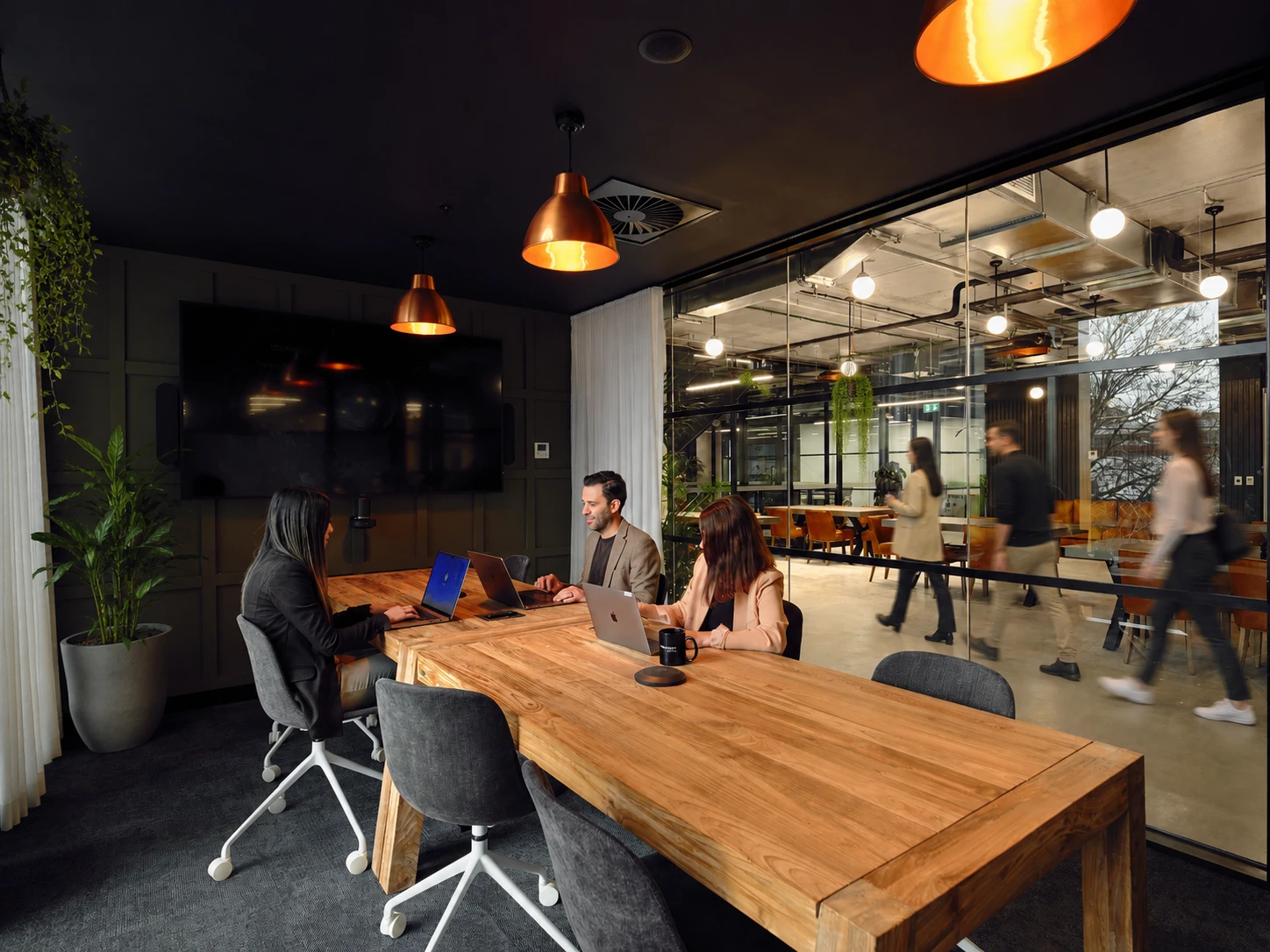
Instead of being tied to a single location, businesses can access a broader network of professional workspaces, meeting rooms, breakout areas and event venues whenever required.
The result is greater flexibility without sacrificing professionalism.
The Rise Of The Workspace Network
Historically, businesses measured office value by square metres.
Today, smart businesses measure value by access.
Think about it.
Would you rather have one office that sits partially empty for large portions of the year?
Or would you rather have access to multiple locations, premium facilities and professional environments whenever and wherever you need them?
Increasingly, Australian businesses are choosing the latter.
This shift is one reason the flexible workspace sector continues to expand. According to industry forecasts, Australia’s coworking and flexible workspace market is expected to grow significantly over the coming years as businesses seek greater agility and workplace flexibility.
In other words, companies are prioritising access over ownership.
Why National Access Matters More Than Ever
Business no longer operates within suburb boundaries.
A founder might meet investors in Sydney on Monday, host a workshop in Melbourne on Wednesday and attend client meetings in Adelaide on Friday.
Likewise, a growing company may hire team members across multiple cities rather than concentrating everyone in one office.
Because of this, workspace networks have become incredibly powerful.
At Cubes.Co, access to one location means access to the broader network.
For example, a member based at CreativeCubes.Co South Melbourne can utilise workspace facilities across multiple Cubes.Co locations when business requires it.
That flexibility creates enormous value.
Rather than maintaining multiple leases, businesses gain access to professional environments wherever they need them.
The Sydney-Melbourne-Adelaide Advantage
Australia’s major business centres remain highly connected.
The Sydney-Melbourne corridor continues to be one of the busiest domestic aviation routes globally. Meanwhile, business activity between Melbourne and Adelaide continues to strengthen as organisations expand nationally.
Consequently, having workspace access across multiple cities is becoming increasingly important.
A modern business traveller no longer wants to work from noisy cafés, crowded airport lounges or hotel lobbies.
Instead, they want access to professional meeting rooms, reliable internet, private offices and productive environments.
Flexible workspace networks provide exactly that.
As a result, organisations can operate nationally without carrying the cost burden traditionally associated with multiple office locations.
Hybrid Work Needs Flexible Infrastructure
Hybrid work is no longer an experiment.
It is now a permanent part of how many businesses operate.
However, hybrid work creates a new challenge.
Employees still need access to professional work environments, yet they do not necessarily need to be in the same building every day.
This changes the role of office space entirely.
Rather than serving as a mandatory destination, workspace becomes an optional resource that employees can access when it adds value.
Consequently, businesses are investing less in fixed square metres and more in flexible workplace infrastructure.
This approach improves employee experience while also supporting productivity and collaboration.
Why Businesses Stay Longer Than Expected
One of the most interesting observations within the flexible workspace sector is that companies often stay far longer than expected.
Many organisations initially join because they need flexibility.
However, flexibility alone is rarely what keeps them there.
Instead, businesses remain because of the experience.
At CreativeCubes.Co, members frequently highlight the quality of service, workplace atmosphere and community experience in their reviews.
One member wrote:
“The staff are always awesome and accommodating. I love the flexibility of turning up to a familiar place without any planning.”
Another shared:
“Professional, welcoming and always a great experience. The team genuinely cares about members.”
These reviews highlight an important truth.
While leases create contractual retention, experience creates voluntary retention.
The latter is significantly more powerful.
The Happiness Team Difference
Technology can automate many workplace functions.
However, it cannot replace human connection.
That is one reason the Happiness Team continues to be one of the most valued aspects of the CreativeCubes.Co experience.
From welcoming guests to solving day-to-day challenges, the team creates an environment where members feel supported and valued.
Consequently, the workspace becomes more than somewhere people work.
It becomes somewhere people belong.
In an increasingly digital world, that human element matters more than ever.
Why This Model Looks Like The Future
The future office is unlikely to be a single building.
Instead, it will be a network.
Organisations will maintain access to multiple locations, premium meeting facilities, event spaces and flexible work environments.
Meanwhile, employees will gain greater choice around where and how they work.
At the same time, businesses will reduce long-term risk while increasing operational agility.
This combination creates a compelling value proposition.
As workplace expectations continue to evolve, flexible office space Australia will increasingly move towards connected ecosystems rather than isolated locations.
The Hilton Of Office
A useful way to think about this model is through hospitality.
When people stay with a premium hotel brand, they do not join because of one building.
They join because of the network.
The same principle applies to workspace.
At Cubes.Co, members gain access to a broader ecosystem of locations, facilities, services and experiences.
Therefore, the value extends far beyond any individual office.
It becomes an ongoing business resource that grows alongside the organisation.
Book A Tour
If your business is exploring flexible office space Australia, consider what your next office should actually provide.
Is it simply four walls and a lease?
Or is it access to a connected network designed to support your growth wherever business takes you?
Book a tour with CreativeCubes.Co and discover why more Australian businesses are choosing workplace flexibility, national access and service-led experiences over traditional office constraints.