

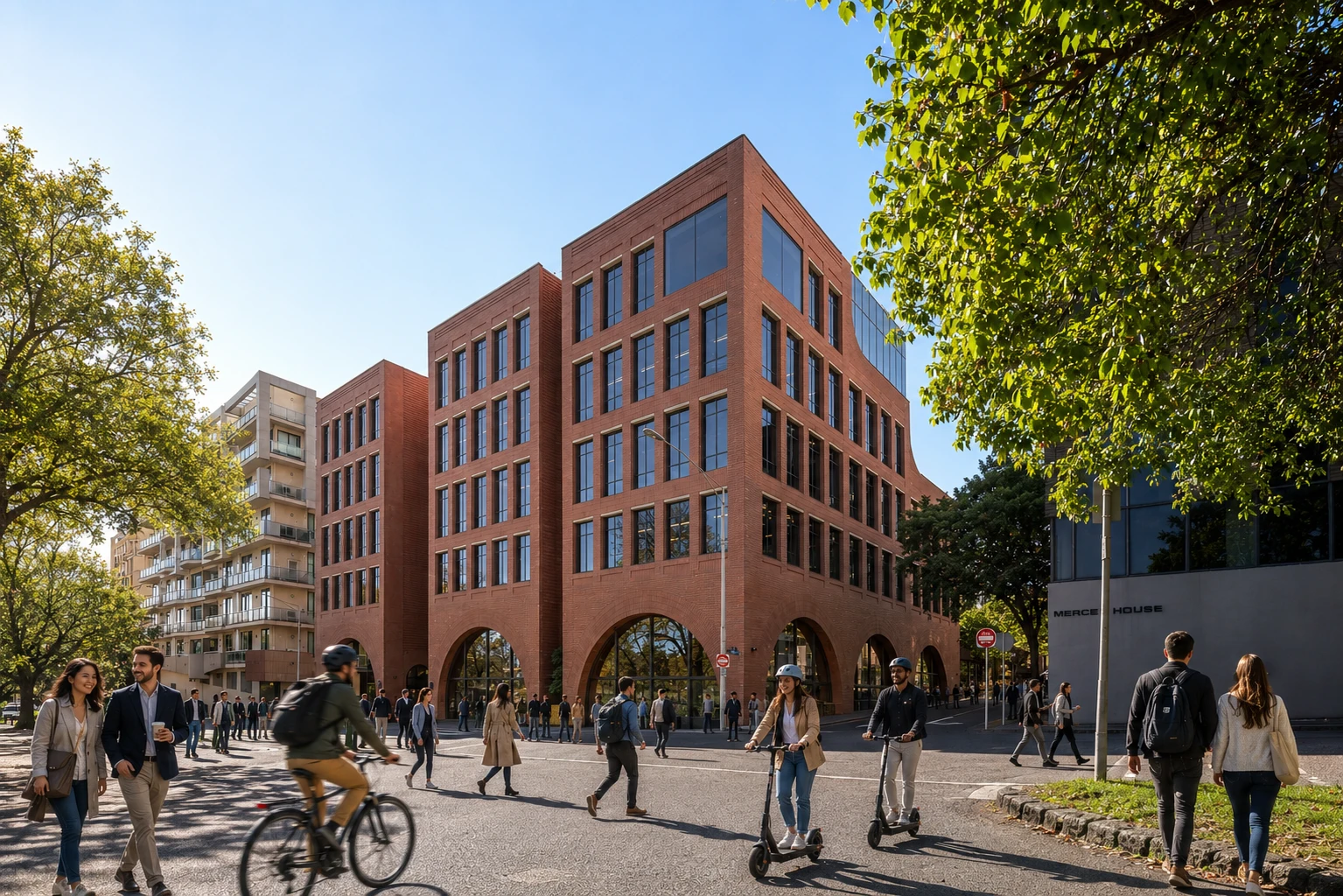
The Market Has Changed. Many Buildings Haven’t.
For decades, commercial real estate followed a relatively simple formula.
Build office space. Secure long-term tenants. Collect rent.
That model worked well when businesses were comfortable signing lengthy leases and occupying large footprints for years at a time.
However, workplace behaviour has changed dramatically.
Today, occupiers expect flexibility. Employees demand better workplace experiences. Meanwhile, businesses want more agility and less long-term risk.
As a result, many commercial buildings are struggling to keep pace with tenant expectations.
This shift is creating a clear divide across the market.
On one side are landlords adapting to the future.
On the other are landlords hoping the past returns.
The gap between the two continues to widen.
Occupiers Are Actively Seeking Flexible Solutions
One of the biggest misconceptions in commercial property is that flexible workspace remains a niche offering.
However, the market tells a very different story.
Across Australia, occupiers increasingly expect some form of flexibility within the buildings they occupy. This demand spans startups, SMEs, enterprise teams and multinational organisations alike.
Moreover, workplace flexibility has moved beyond being a nice-to-have feature. In many cases, it has become a key factor influencing leasing decisions.
Growing businesses need room to expand. Project teams often require temporary space. Meanwhile, established organisations are seeking access to premium meeting rooms, event facilities and additional workplace capacity without committing to more fixed real estate.
Consequently, buildings that provide these options often enjoy a meaningful competitive advantage when attracting and retaining tenants.
The Commercial Real Estate Market Is Facing Pressure
Commercial property owners are operating in a different environment than they were five years ago.
Hybrid work has reduced utilisation rates in many traditional offices.
At the same time, occupiers are scrutinising costs more closely than ever.
Furthermore, workplace expectations continue to evolve.
The result?
Buildings that fail to adapt risk becoming less relevant.
Across the industry, landlords are increasingly reaching out to flexible workspace operators to explore new strategies for improving asset performance.
Importantly, this trend is not limited to secondary assets.
Premium buildings are also embracing flexibility because tenant expectations have fundamentally changed.
Flexible Workspace Cannot Be Bolted On
Unfortunately, many landlords still assume flexible workspace is simply a matter of adding desks to an empty floor.
In reality, successful flexible workspace requires a much broader strategy.
Operational expertise forms the foundation. Equally important are hospitality, technology and community-building capabilities. Furthermore, the overall workplace experience must align with the needs of modern occupiers.
As a result, the highest-performing buildings do not treat flexible workspace as a separate offering.
Instead, they integrate flexibility throughout the tenant journey. Consequently, workspace becomes part of the asset’s operating model rather than a disconnected add-on.
The Integration Advantage
Progressive landlords understand something many others do not.
The most successful flexible workspace models are integrated.
For example, imagine a building where traditional tenants can access:
- Flexible offices
- Project space
- Premium meeting rooms
- Podcast studios
- Event venues
- Business lounges
- Overflow workspace
- National workspace access
Suddenly, the asset becomes significantly more useful.
Rather than serving a single purpose, the building supports multiple workplace needs simultaneously.
As a result, tenants gain flexibility while landlords increase the overall value proposition of the asset.
Everyone wins.
Why Hospitality Is Becoming Critical
Office buildings used to compete on location.
Today, experience plays a much larger role.
Employees have become more selective about where they work.
Consequently, buildings must provide reasons for people to return.
Hospitality has emerged as one of the strongest drivers of workplace engagement.
This includes:
- Exceptional customer service
- Professional reception experiences
- Curated events
- High-quality amenities
- Food and beverage offerings
- Community programming
These elements may appear secondary.
However, they often become key differentiators when occupiers compare workplace options.
The modern office is increasingly competing with the home office.
Experience matters.
Why Community Drives Building Performance
Many landlords focus heavily on physical infrastructure.
While infrastructure remains important, community is becoming increasingly valuable.
People enjoy working alongside other ambitious professionals.
Businesses benefit from networking opportunities.
Tenants appreciate feeling connected to something larger than their individual office.
As a result, community-led assets often create stronger engagement and retention outcomes.
At CreativeCubes.Co, many members initially join because of the workspace itself.
Over time, however, the community often becomes one of the strongest reasons they remain.
This dynamic benefits both operators and landlords.
What Google Reviews Reveal
One of the clearest indicators of workplace performance is member feedback.
Interestingly, the highest-rated flexible workspace environments rarely receive praise for desks or furniture.
Instead, reviews consistently reference:
- The team
- The service
- The atmosphere
- The culture
- The experience
One member recently shared:
“The staff go above and beyond. The space is always professional and welcoming.”
Another noted:
“The team make all the difference. It’s an amazing environment to work in.”
These reviews highlight an important lesson.
People remember experiences far longer than they remember floorplans.
The Future Asset Will Be More Flexible
Looking ahead, flexibility will continue expanding across commercial real estate.
That does not mean traditional leasing disappears.
Rather, traditional leasing evolves.
Increasingly, we are seeing a model emerge where occupiers maintain a core office footprint while accessing flexible workspace within the same building or network.
This hybrid approach delivers the best of both worlds.
Businesses gain stability where required.
At the same time, they retain the agility needed to respond to changing conditions.
For landlords, this creates an opportunity to improve tenant attraction, retention and overall asset relevance.
The Buildings That Win Will Think Differently
The future winners in commercial property will not simply offer space.
They will offer solutions.
They will combine flexibility, hospitality, technology, community and workplace experience into a single ecosystem.
Importantly, they will recognise that tenants no longer evaluate buildings solely on rent or location.
Today, occupiers assess how effectively a building helps them attract talent, improve culture and support productivity.
That represents a fundamental shift.
The landlords who embrace it will thrive.
The landlords who ignore it may find themselves competing for a shrinking pool of traditional demand.
Book A Tour
If you’re a landlord, asset manager or property owner exploring how flexible workspace can improve asset performance, CreativeCubes.Co can help.
Our team works closely with landlords to create integrated workplace experiences that attract tenants, improve engagement and future-proof commercial assets.
Book a tour and discover how the next generation of commercial property is being built.