

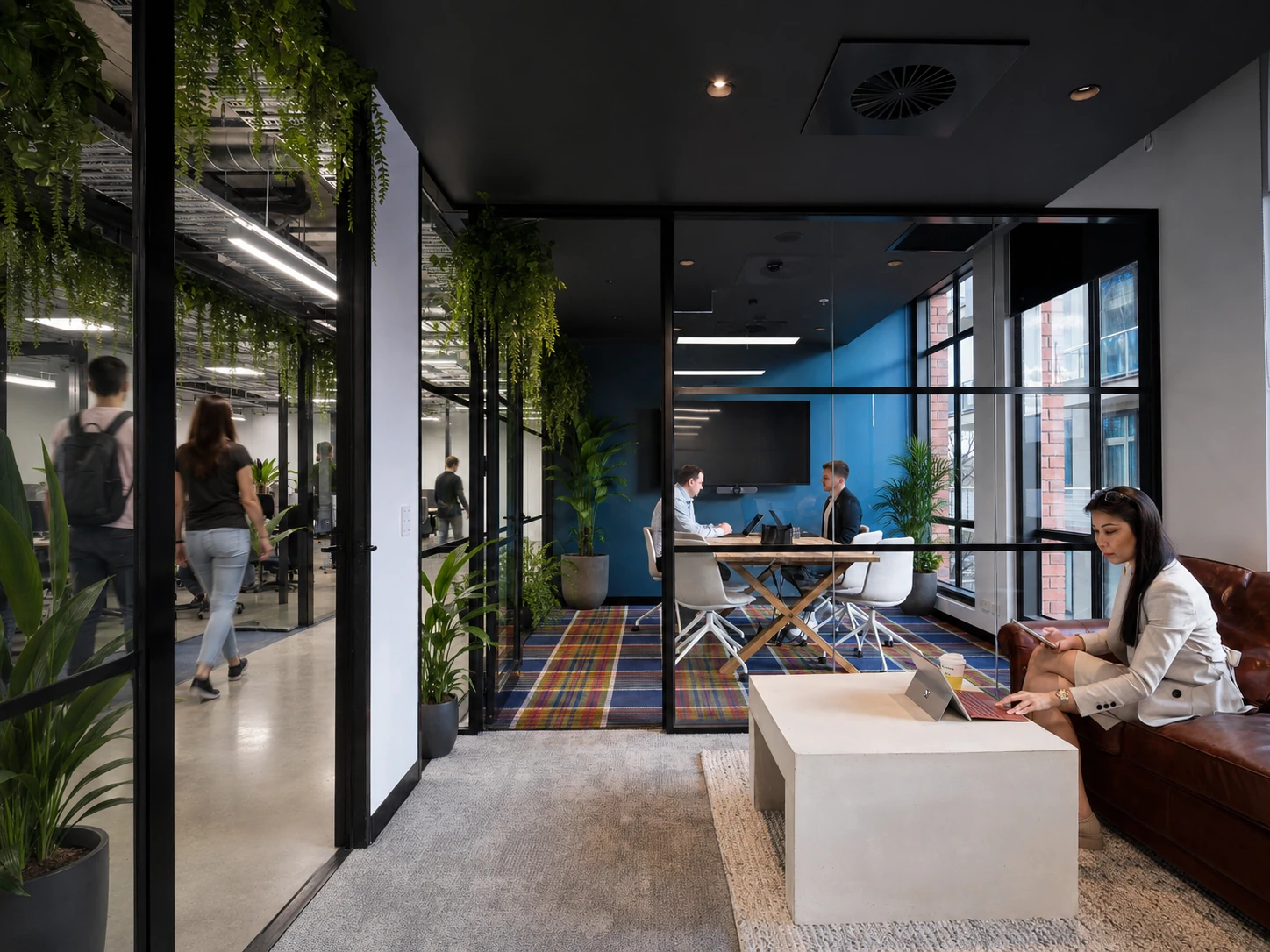
Private Offices for Hybrid Teams: How Growing Businesses Can Choose the Right Space
Hybrid work has changed the office playbook. For growing teams, the question is no longer, “Do we need an office?” It is, “What kind of office actually works for the way our team operates now?”
That is where serviced private offices come into play.
For small businesses, startup offices and professional services firms, serviced private offices offer the structure of a dedicated workspace without the heavy commitment of a traditional lease. You get privacy, meeting rooms, flexible lease terms, shared amenities and a workplace experience that supports both in-office collaboration and remote work.
In a hybrid world, the best office is not just a place to sit. It is a performance base. Think of it like a high-performance sports facility – the team may train, recover and compete in different places, but they still need a home ground that brings everyone together.
Australian hybrid work patterns have stabilised, with AHRI reporting that the most common arrangement in 2025 is full-time employees attending the physical workplace three days per week. More than 80% of surveyed employers also expect hybrid working to increase or stay the same over the next two years.
For businesses in Sydney, Melbourne, Brisbane and Adelaide, this creates a clear opportunity: choose private office space that matches how people actually work now, not how they worked five years ago.
What Are Serviced Private Offices?
Serviced private offices are fully managed office spaces that give businesses their own secure, dedicated workspace inside a professional shared environment.
Unlike traditional leases, serviced private offices usually include:
- Fully fitted private office space
- Furniture and utilities
- Internet and business-grade connectivity
- Access to meeting rooms
- Shared breakout and collaboration areas
- Reception or guest support
- Cleaning and maintenance
- Flexible lease terms
- Access to business lounges, kitchens and amenities
In short, you move in and get to work.
There is no long fitout process, no managing contractors, no buying furniture, and no waiting months before the office becomes usable. For growing teams, that speed matters.
Why Hybrid Teams Are Choosing Serviced Private Offices
Hybrid teams need more than desks. They need a workplace that supports focus, collaboration, culture and client confidence.
A serviced private office gives teams a dedicated base while still allowing flexibility around attendance, team size and growth. That is especially valuable for businesses that do not want to lock into a large long-term lease while workplace patterns are still shifting.
The model works particularly well for:
- Small businesses moving out of home offices or cafés
- Professional services firms needing client-ready meeting rooms
- Startups looking for credibility without high upfront costs
- Interstate teams needing a Sydney, Melbourne, Brisbane or Adelaide presence
- Hybrid teams that gather in-office on selected days each week
Traditional office leases can feel like signing a player on a five-year contract before you know their form. Serviced private offices let you stay agile while still giving your team a serious professional base.
Serviced Private Offices vs Traditional Office Leases
The biggest difference is control versus commitment.
A traditional office lease gives you full control over your own space, but it usually comes with longer terms, fitout costs, make-good obligations, utilities, furniture, maintenance and ongoing management.
Serviced private offices simplify the equation.
| Feature | Serviced Private Offices | Traditional Office Lease |
|---|---|---|
| Fitout | Usually included | Business usually pays |
| Furniture | Included | Purchased separately |
| Lease length | Flexible lease terms | Often longer commitment |
| Meeting rooms | Shared or bookable | Must be built into tenancy |
| Utilities | Usually included | Managed separately |
| Scalability | Easier to grow or shrink | Harder to adjust |
| Setup time | Fast move-in | Can take months |
| Upfront cost | Lower | Higher |
| Operations | Managed by provider | Managed by tenant |
For many hybrid teams, serviced private offices offer the smarter middle ground: private, professional and flexible without the drag of a traditional lease.
Key Features to Look For in Private Office Space
Not all private office space is built equally. A room with desks is not enough. The right space should help your team work better, meet clients confidently and scale without friction.
1. Flexible Lease Terms
Flexible lease terms are one of the strongest reasons businesses choose serviced private offices.
Growing teams rarely know exactly what their headcount will look like in 12, 24 or 36 months. A startup may double quickly. A professional firm may add consultants. A project team may need space for six months, then reduce again.
Look for:
- Monthly, quarterly or short-term options
- Ability to upgrade office size
- Ability to add desks as the team grows
- Clear renewal terms
- Transparent exit conditions
Flexibility is not a “nice to have”. It is risk management.
2. Access to Meeting Rooms
For hybrid office setups, meeting rooms are critical.
Your team may not be in every day, but when they are, the office needs to support high-value work: client meetings, board sessions, team workshops, interviews, planning days and presentations.
Strong serviced private offices should offer:
- Small meeting rooms for one-on-ones
- Boardrooms for client meetings
- Training rooms or workshop spaces
- Video conferencing facilities
- Easy booking systems
- Professional guest arrival experience
This is especially important for professional services firms, including lawyers, accountants, consultants, finance brokers, recruiters and advisory teams.
Your office is not just where your people work. It is where your clients judge your standards.
3. Hybrid-Ready Technology
Hybrid teams need technology that works every time.
A beautiful private office space quickly loses value if calls drop out, meeting room screens fail or remote team members cannot participate properly.
Look for:
- Fast and reliable internet
- Secure Wi-Fi
- Video conferencing support
- Screens in meeting rooms
- Phone booths or quiet call spaces
- Printing and scanning access
- App-based room bookings
- Secure access control
The goal is simple: people in the room and people online should feel equally included.
4. Collaboration Areas
Hybrid work can create disconnection if the office is only used for heads-down work. AHRI found the top perceived disadvantage of hybrid working was disconnection between colleagues, followed by collaboration challenges.
That makes collaboration areas essential.
The best serviced private offices include shared spaces where people can connect naturally before, between and after meetings.
Look for:
- Business lounges
- Breakout areas
- Café-style spaces
- Informal meeting zones
- Event spaces
- Community areas
- Quiet focus zones
The office should create collisions, not chaos. Good workspace design makes connection feel effortless.
5. Privacy and Security
Serviced private offices are popular because they combine flexibility with privacy.
For professional services firms, this matters. Teams handling confidential client work, financial records, contracts, HR matters or strategic information need secure office space.
Ask about:
- Lockable offices
- Secure access
- Visitor management
- Privacy in meeting rooms
- Data and network security
- After-hours access
- Mail handling procedures
A coworking-style environment may be energetic, but your private office should still feel controlled, secure and professional.
6. Location and Transport Access
Hybrid teams often gather less frequently, which makes location even more important.
When people come into the office, the commute needs to be worth it. A central, well-connected location helps increase attendance and makes client meetings easier.
For teams in Sydney, Melbourne, Brisbane and Adelaide, consider:
- Proximity to public transport
- Parking options
- Nearby cafés and restaurants
- Client accessibility
- Major business precincts
- End-of-trip facilities
- Surrounding amenity
A strong location gives your team fewer excuses and your clients more confidence.
Best Use Cases for Serviced Private Offices
For Small Businesses
Small businesses often need professional space without the overheads of a full lease.
Serviced private offices give small teams a polished business address, room to work, access to meeting rooms and the ability to scale when needed. Instead of spending time managing the office, owners can focus on growth.
Best fit for:
- Teams of 2-20 people
- Businesses moving out of home offices
- Teams needing client-facing space
- Local service businesses wanting a stronger presence
For Professional Services Firms
Professional services firms need privacy, presentation and trust.
A serviced private office gives these firms a secure base with client-ready meeting rooms, reception support and professional amenities. It also helps firms manage hybrid work without sacrificing standards.
Best fit for:
- Accounting firms
- Legal practices
- Financial advisers
- Consultants
- Recruiters
- Marketing and creative agencies
- Property and advisory firms
For these businesses, the office is part of the brand. A sharp workspace can say a lot before the first slide is even shown.
For Startup Offices
Startups need flexibility because growth rarely follows a neat spreadsheet.
Serviced private offices allow startups to move quickly, avoid heavy setup costs and access professional infrastructure from day one. They also create opportunities to connect with other businesses, founders and potential partners.
Best fit for:
- Funded startups
- Founder-led teams
- Project teams
- Interstate expansion teams
- Growth-stage companies testing a new market
A startup office should not slow the business down. It should help the team move faster.
How to Compare Serviced Private Offices
Before choosing a serviced private office, compare each option across these practical criteria.
Workspace Fit
Ask:
- Does the office suit our current team size?
- Can we add more desks if needed?
- Is there enough storage?
- Is the layout good for focus and collaboration?
- Does it feel like a place our team will actually use?
Commercial Fit
Review:
- Monthly cost
- Bond or deposit
- Included services
- Meeting room credits
- After-hours access costs
- Printing or admin costs
- Upgrade options
- Exit terms
The cheapest option is not always the best value. The best value is the space that removes friction and supports momentum.
Client Fit
Consider:
- Does the location suit clients?
- Are the meeting rooms professional?
- Is the arrival experience strong?
- Are there waiting areas?
- Is reception or host support available?
- Does the space reflect your brand?
For professional services firms, client experience is not decoration. It is part of the product.
Hybrid Fit
Check:
- Are there enough meeting rooms on peak office days?
- Are video calls easy?
- Are phone booths available?
- Are collaboration areas useful?
- Can the team book space when needed?
- Does the office support both quiet work and group work?
Hybrid work is not just about where people work. It is about how well the work flows.
Serviced Private Offices in Sydney, Melbourne, Brisbane and Adelaide
Each city has its own workspace rhythm.
Sydney
Sydney teams often prioritise CBD access, client proximity and premium presentation. For professional services firms, private office space in Sydney can provide a strong corporate presence without committing to a traditional long-term lease.
Melbourne
Melbourne businesses often value community, amenity and culture. Serviced private offices in Melbourne are well suited to SMEs, creative firms, consultants and hybrid teams that want energy without losing professionalism.
Brisbane
Brisbane’s business market continues to mature, with demand from project teams, professional firms and interstate businesses looking for flexible space. Serviced private offices can help teams establish presence quickly.
Adelaide
Adelaide is ideal for businesses seeking quality, accessibility and value. For startup offices and professional firms, flexible lease terms can provide a practical growth pathway without overcommitting too early.
Across all four cities, the opportunity is the same: secure a professional base that gives your team certainty while keeping your business agile.
Questions to Ask Before Signing
Before committing to a serviced private office, ask:
- What is included in the monthly fee?
- How many meeting room hours are included?
- Can we access other locations?
- What are the flexible lease terms?
- Can we upgrade or reduce our office size?
- Is internet included?
- Are utilities included?
- Is after-hours access available?
- What support is provided for guests?
- Are there extra costs for printing, mail or admin?
- How secure is the office?
- What happens if our team grows?
These questions help you avoid surprises and choose a space that supports the business properly.
Common Mistakes to Avoid
Choosing Only on Price
Low-cost space can become expensive if it lacks meeting rooms, privacy, location quality or flexibility.
Ignoring Meeting Room Demand
Hybrid teams often come in on the same days. If meeting rooms are limited, collaboration can become frustrating fast.
Overcommitting Too Early
A long lease may look stable, but if your team size changes, it can become a heavy liability.
Forgetting Culture
Hybrid teams need intentional connection. Choose a space that helps people feel part of something, not just somewhere to plug in a laptop.
Underestimating Client Experience
For client-facing businesses, the office should build trust. If the arrival experience feels average, your brand wears it.
The Best Office Is the One That Matches Your Operating Model
Serviced private offices are not just a real estate choice. They are an operating decision.
For hybrid teams, the right private office space creates a base for collaboration, culture, client meetings and focused work. It gives professional services firms the polish they need, startups the flexibility they crave and small businesses the room to grow without taking on unnecessary risk.
The modern office is no longer about filling desks five days a week. It is about creating the right environment for the right work at the right time.
Like any strong team, your business needs a home ground. Choose one that helps you perform.