

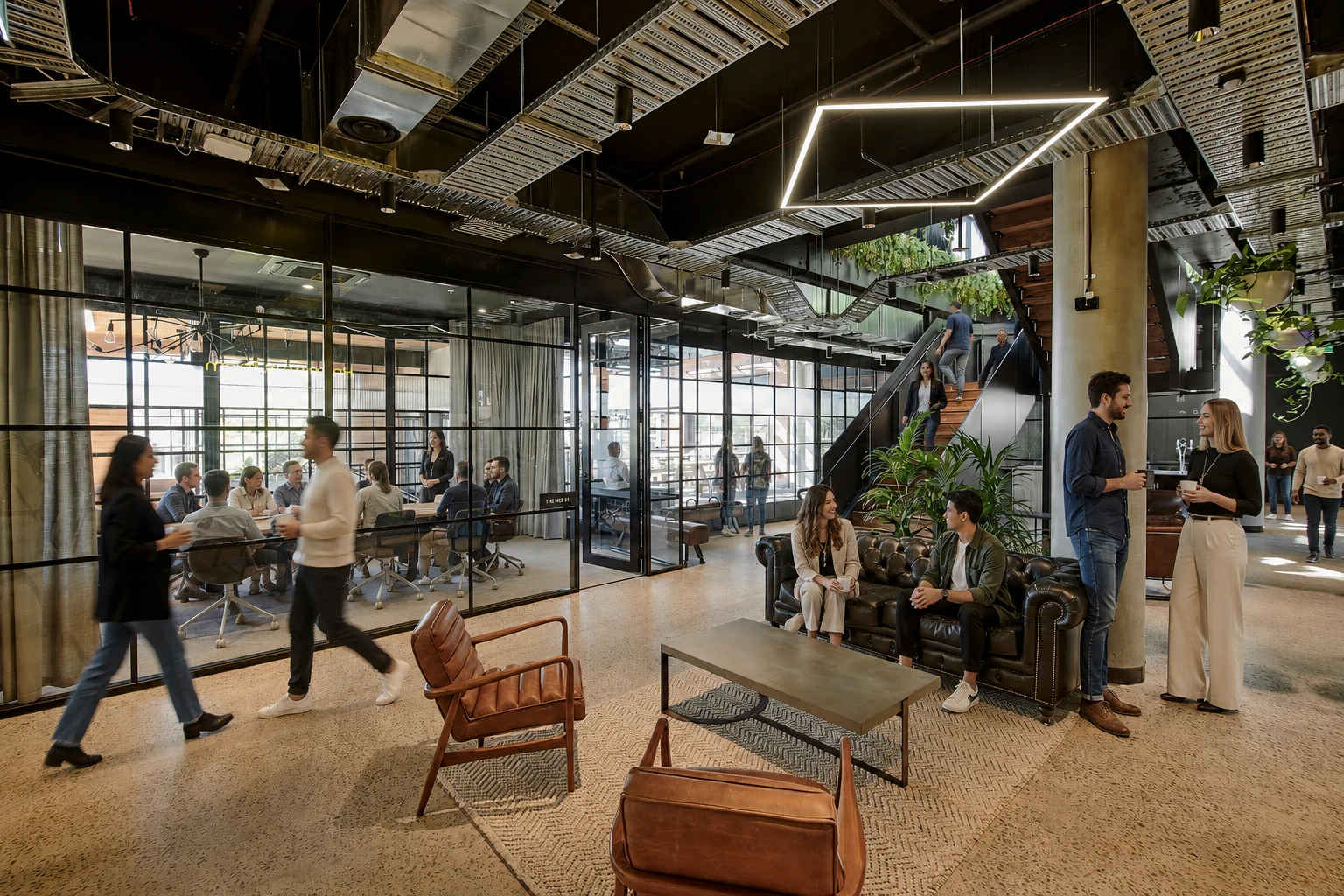
Serviced Private Office: A Practical Guide for Small Teams and Professional Firms
A serviced private office gives small teams and professional firms the structure of a traditional office without the drag of a long lease, heavy fitout costs or operational admin. For businesses that need privacy, professionalism and flexibility, it is one of the cleanest ways to secure quality workspace without locking the business into yesterday’s assumptions.
The old office model was built for fixed headcount, fixed costs and fixed ways of working. Today, most businesses are operating differently. Teams are leaner, growth is less linear, hybrid work is normal, and leaders want their office to support performance without becoming a financial anchor.
That is where a serviced private office earns its spot.
It gives a team a dedicated, lockable workspace, while also providing shared access to meeting rooms, reception, amenities, breakout areas, event spaces and business-grade infrastructure. Think of it like joining a high-performance training facility instead of building the stadium yourself. You still get the court, the change rooms, the coach’s box and the crowd energy, but you do not carry the whole venue on your balance sheet.
What Is a Serviced Private Office?
A serviced private office is a fully managed office space that is ready for a business to move into and use immediately. It typically includes furniture, internet, utilities, reception services, cleaning, meeting room access, shared amenities and flexible agreement options.
Unlike a traditional lease, where a business usually needs to commit to a long term, fund a fitout, manage suppliers and carry operational responsibility, a serviced private office is designed to be plug-and-play.
For small business office space, this can be a major advantage. Instead of spending months negotiating, designing and fitting out a workplace, teams can move quickly and focus on customers, culture and growth.
A strong serviced private office usually includes:
- A dedicated private office or suite
- Professional reception or concierge support
- High-speed internet and business-grade technology
- Meeting room facilities
- Kitchen and breakout areas
- Cleaning, utilities and building services
- Flexible lease terms
- Access to shared community and business amenities
- Options to scale up or down as team size changes
For small teams, the value is not just the desk. It is the operating system around the desk.
Why Small Teams Are Choosing Serviced Private Offices
Small businesses and mid-sized professional firms are under pressure to stay agile. Hiring can move quickly. Client needs shift. Project teams expand and contract. Hybrid work means not everyone is in the office five days a week.
A traditional lease often struggles under those conditions.
A serviced private office gives business leaders more control because the space can flex with the team. Instead of taking on a long lease and hoping the business grows into it, leaders can choose a workspace that fits the business today while keeping options open for tomorrow.
This is especially relevant for:
- Accounting firms
- Legal practices
- Finance brokers
- Consultants
- Creative agencies
- Tech startups
- Recruitment firms
- Advisory businesses
- Project-based teams
- Satellite teams
- Growing SMEs
For professional firms, first impressions matter. Clients expect privacy, polish and confidence. A professional services workspace needs to feel credible from the moment someone walks in. Serviced private offices help deliver that without forcing the business to build everything from scratch.
The Key Benefits of a Serviced Private Office
1. Flexible Lease Terms
Flexible lease terms are one of the strongest advantages of a serviced private office. Instead of being locked into a long-term traditional lease, businesses can often choose shorter, more adaptable agreements.
That matters because small teams rarely grow in a straight line.
You may need five desks today, eight next quarter, then a project room for a client sprint. With a traditional lease, every change creates friction. With the right serviced private office, flexibility is part of the model.
Flexible terms help businesses:
- Reduce long-term risk
- Avoid overcommitting to excess space
- Scale with confidence
- Preserve cash flow
- Test new locations before making larger commitments
- Support project-based or hybrid teams
In business, agility is not a buzzword. It is oxygen.
2. A Better Hybrid Office Setup
A strong hybrid office setup needs more than desks. It needs rhythm.
Teams need places to collaborate, focus, meet clients, run workshops and reconnect. If the office is only a place to sit with a laptop, people will question the commute. However, when the office gives the team energy, structure and connection, it becomes a performance tool.
A serviced private office supports hybrid work because it can provide:
- Private offices for focused team days
- Meeting rooms for client and internal sessions
- Breakout spaces for informal collaboration
- Event areas for team gatherings
- Business lounges for flexible use
- Reception support for visitors
- Technology that supports video calls and hybrid meetings
The office should not compete with home. It should do what home cannot.
That means connection, presence, momentum and professional energy.
3. Built-In Meeting Room Facilities
Meeting room facilities are critical for small teams and professional firms. Even if a business does not need a large office every day, it still needs professional spaces for client meetings, board meetings, interviews, presentations and team planning.
A serviced private office often gives teams access to meeting rooms without requiring them to lease excess space permanently.
This creates a smarter cost model.
Rather than paying for a boardroom that sits empty most of the week, businesses can use meeting rooms when needed. This is particularly valuable for consultants, advisors, agencies and firms that need to host clients but do not want to carry unused square metres.
High-quality meeting room facilities should include:
- Professional furniture
- Screens or presentation tools
- Video conferencing support
- Reliable internet
- Whiteboards or collaboration tools
- Booking flexibility
- Reception greeting for guests
- Catering options where available
Client experience counts. The room sets the tone before the meeting even starts.
4. Professional Reception and Client Experience
For many small businesses, reception support is a hidden advantage.
A professional arrival experience can make a small team feel established, trusted and organised. That is particularly important for firms working with clients, investors, partners or senior stakeholders.
Reception support can include:
- Welcoming guests
- Directing visitors
- Handling mail
- Supporting meeting arrivals
- Providing a polished front-of-house experience
This gives smaller teams the presence of a larger organisation without needing to hire internal front-desk staff.
For professional services workspace, this is not cosmetic. It is commercial. The way people enter your workspace shapes how they feel about your business.
5. Lower Setup Costs
Traditional office leases often come with major upfront costs. Fitout, furniture, utilities, internet, signage, maintenance and operational setup can quickly absorb capital that could otherwise be used for hiring, sales, product, marketing or client delivery.
A serviced private office reduces those upfront costs because the infrastructure is already in place.
This makes it a strong startup office solution and a practical option for established businesses that want to stay capital-light.
Instead of building the machine, you can step into one that is already running.
For many small teams, that is the difference between moving now and waiting six months.
6. Operational Simplicity
Running an office takes time. Someone needs to manage cleaning, internet, repairs, utilities, access, furniture, meeting rooms, supplies and day-to-day issues.
For small teams, that burden usually falls on a founder, office manager or senior team member who already has enough on their plate.
A serviced private office removes much of that operational load.
The result is simple. Your team spends less time managing the office and more time doing the work that actually grows the business.
That is the whole point.
How to Evaluate a Serviced Private Office
Not all serviced private offices are created equal. Some are simply furnished rooms. Others operate as complete business environments with strong service, community, meeting infrastructure and room to grow.
Before choosing a serviced private office, small teams should evaluate the following areas.
Location and Access
Location still matters. Even in a hybrid world, the office needs to be easy enough for staff, clients and partners to access.
Consider:
- Proximity to public transport
- Parking options
- Nearby cafés and amenities
- Client convenience
- Team commute patterns
- Brand fit for your business
- Access to surrounding business networks
A good location reduces friction. A great location adds energy.
Office Size and Scalability
Your office should fit your team now, while giving you room to move.
Ask:
- Can we add desks if the team grows?
- Can we move into a larger office within the same location?
- Can we access overflow space for project teams?
- Can we reduce space if our team structure changes?
- Are there options across multiple locations?
For growing businesses, scalability is the win. The right space lets you move like a point guard, not a cargo ship.
Meeting Room Access
Do not just ask whether meeting rooms exist. Ask how they work.
Key questions include:
- How many meeting rooms are available?
- Are they easy to book?
- Are they included or charged separately?
- What technology is included?
- Can clients be greeted professionally?
- Are rooms suitable for board meetings, workshops and video calls?
- Is catering available?
Meeting rooms are not a bonus. For many teams, they are where trust is built and deals move forward.
Hybrid Work Support
A serviced private office should support the way your team actually works.
Consider:
- How many days per week your team will attend
- Whether staff need permanent desks or shared access
- How often clients visit
- Whether collaboration spaces are available
- Whether quiet focus areas exist
- How easily remote team members can join meetings
- Whether the office helps people feel connected
Hybrid work is not about having fewer desks. It is about designing better moments together.
Service Quality
Service is where serviced offices win or lose.
Look for signs of strong operational support:
- Friendly front-of-house team
- Clean and well-maintained spaces
- Fast response times
- Reliable internet
- Smooth visitor experience
- Clear communication
- Professional meeting setup
- Well-managed amenities
The best workspace teams are like great referees. When they do their job well, everything flows and no one notices the friction.
Brand Fit
Your office says something about your business.
A professional firm may need a polished, premium environment. A startup may want energy, speed and community. A creative team may need space that feels vibrant and inspiring.
Before choosing a serviced private office, ask whether the environment reflects the business you are building.
Your workspace should help you recruit, retain, sell and perform.
That is a lot more valuable than just square metres.
Serviced Private Office vs Traditional Lease
A traditional lease can still make sense for larger, stable businesses with predictable headcount, significant capital and a long-term location strategy.
However, for many small teams, the traditional model creates unnecessary friction.
A serviced private office is usually better suited when a business wants:
- Lower upfront cost
- Faster move-in
- Flexible lease terms
- Meeting room facilities
- Reception support
- Scalability
- Reduced operational admin
- Hybrid office setup
- A professional client experience
The traditional lease asks a business to predict the future. A serviced private office gives the business room to respond to it.
That difference matters.
Serviced Private Office vs Coworking Desk
A coworking desk can be a smart solution for freelancers, solo operators and highly mobile workers. However, small teams often need more privacy, consistency and brand presence.
A serviced private office sits between open coworking and a traditional leased office.
It gives the team:
- A private base
- A secure place for equipment
- A consistent team environment
- Access to shared amenities
- Professional client-facing spaces
- Community without constant exposure
For teams handling confidential work, client files, financial information or sensitive conversations, the private office layer becomes essential.
This is especially important for legal, accounting, advisory, finance and consulting firms.
Who Should Consider a Serviced Private Office?
A serviced private office is a strong fit for teams that want flexibility without sacrificing professionalism.
It suits:
Small Businesses
Small business office space needs to be practical, affordable and easy to manage. Serviced private offices give owners a professional base without the heavy lifting of a traditional lease.
Professional Firms
A professional services workspace needs to support privacy, client meetings and brand trust. Serviced offices can provide a polished environment with reception and meeting rooms already built in.
Startups
As startup office solutions go, serviced private offices are appealing because they reduce upfront cost and allow the team to scale as the business grows.
Hybrid Teams
A hybrid office setup needs to make office days worth it. Serviced private offices support collaboration, client meetings and team rhythm without forcing everyone into a five-day office model.
Project Teams
Project teams often need space for a defined period. Flexible lease terms allow businesses to set up quickly and move when the project changes.
Common Mistakes to Avoid
Choosing the cheapest office can be expensive if it limits your team, hurts your client experience or creates operational headaches.
Avoid these common mistakes:
Choosing Only on Price
Price matters, but value matters more. A slightly better location, stronger reception experience or better meeting room access can have a real commercial impact.
Ignoring Meeting Room Availability
If your team regularly meets clients, runs workshops or collaborates in person, meeting room access must be reviewed properly.
Overcommitting to Space
Taking more space than you need can drain cash. Choose a workspace that allows you to scale rather than guessing your future headcount.
Underestimating Hybrid Behaviour
Do not design your office around theory. Design it around how your people actually work.
Forgetting Client Experience
If clients visit your office, the building, reception, meeting rooms and amenities all matter. The experience starts before you speak.
Questions to Ask Before Signing
Before committing to a serviced private office, ask:
- What is included in the monthly fee?
- What services are charged separately?
- How flexible are the lease terms?
- Can we scale up or down?
- How many meeting rooms are available?
- How are meeting room facilities booked?
- Is reception support included?
- What internet and technology are provided?
- Can clients visit easily?
- Are there other locations we can access?
- What happens if our team grows?
- What happens if our team reduces?
- Are utilities, cleaning and maintenance included?
- Is signage available?
- What is the process to move in?
The right operator will answer clearly. If the answers feel vague, keep digging.
Why the Right Office Still Matters
The office is no longer just a place where people work. It is a place where culture is reinforced, clients are hosted, ideas are sharpened and teams build momentum.
For small teams, every interaction counts. The right serviced private office can help a business look sharper, move faster and operate with more confidence.
It gives the team a home base without turning the office into a burden.
That is the sweet spot.
A serviced private office works best when it gives your business three things at once:
- Privacy when you need focus
- Professionalism when clients arrive
- Flexibility when the business changes
That combination is why more small businesses and professional firms are moving away from rigid office models and towards flexible workspace solutions that match how modern teams actually operate.
Summary
A serviced private office gives small teams, startups and professional firms a smarter way to work. It combines private workspace, flexible lease terms, meeting room facilities, reception support and hybrid office setup into one practical solution.
For businesses that need professional small business office space without taking on the full cost and complexity of a traditional lease, it is a powerful option.
The goal is not just to find an office.
The goal is to find a workspace that helps your team perform, your clients feel confident and your business stay ready for whatever comes next.
FAQs
What is a serviced private office?
A serviced private office is a fully managed, private workspace that typically includes furniture, internet, utilities, cleaning, reception support, meeting room access and shared amenities. It gives teams a professional office without the complexity of a traditional lease.
Who is a serviced private office best suited for?
A serviced private office is ideal for small businesses, startups, professional firms, consultants, hybrid teams and project-based teams that need privacy, flexibility and professional facilities.
How is a serviced private office different from coworking?
Coworking usually involves shared desks or open work areas. A serviced private office gives a business its own lockable office while still providing access to shared meeting rooms, amenities and community spaces.
Are serviced private offices good for hybrid teams?
Yes. A serviced private office can support a hybrid office setup by giving teams a dedicated base for collaboration, meetings, client visits and team connection without requiring a large long-term lease.
What should I look for in a serviced private office?
Look for flexible lease terms, meeting room facilities, reception support, reliable internet, strong location, clean amenities, scalability and a professional environment that suits your brand.
Do serviced private offices include meeting rooms?
Many serviced private offices provide access to meeting room facilities. The exact arrangement varies, so it is important to check whether meeting rooms are included, booked separately or charged by usage.
Why do professional firms use serviced private offices?
Professional firms use serviced private offices because they offer privacy, client-ready meeting rooms, reception support and a polished workspace without the cost and responsibility of managing a traditional leased office.
Are serviced private offices suitable for startups?
Yes. Serviced private offices are strong startup office solutions because they reduce upfront cost, allow faster move-in and provide flexible space as the team grows.
What are flexible lease terms?
Flexible lease terms are workspace agreements that allow businesses to avoid long-term commitments. They may offer shorter terms, scalable office options or more adaptable arrangements than traditional leases.
Is a serviced private office better than a traditional lease?
For small teams that value flexibility, speed and lower setup costs, a serviced private office can be a better fit than a traditional lease. Larger companies with stable long-term space needs may still prefer a traditional lease.